AC installation costs in Lehi typically range from $3,500 to $9,000 for a central AC replacement. A straightforward equipment swap may remain near the lower end, while ductwork changes, electrical work, premium-efficiency upgrades, or replacing the furnace at the same time can push the project above that range.
That is the useful short answer. The real number depends on what your Lehi home needs, so this guide shows where the money goes, which upgrades change the quote, and how to compare bids without getting lost in HVAC jargon.
Key Takeaways
- Central AC replacement in Lehi typically costs $3,500 to $9,000, while complex or high-efficiency projects may exceed $12,000.
- System size, efficiency, ductwork, electrical capacity, access, and code requirements shape the final installation cost.
- A Manual J load calculation provides a more reliable system size than square footage or the old unit alone.
- Rebates and financing may reduce the upfront burden, but the familiar federal 30% HVAC credit does not apply to systems installed in 2026.
How Much Does AC Installation Cost in Lehi?
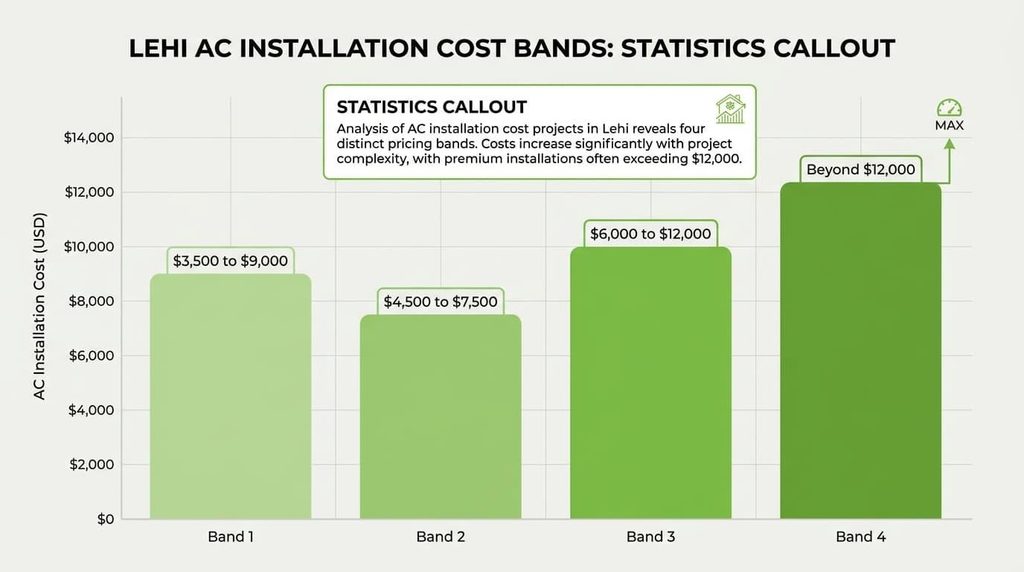
Across Utah, the broader cost in Utah of a new air conditioner typically ranges from $3,000 to $8,500, while Lehi central AC replacement commonly falls between $3,500 and $9,000. Many mid-efficiency projects fall between $4,500 and $7,500. High-efficiency equipment or major home upgrades can push the final cost beyond $12,000. Treat these as planning numbers until a contractor has inspected the property.
Adding central air for the first time generally runs $6,000 to $12,000 because the job may need ducts, refrigerant lines, drainage, wiring, and code-compliant electrical service. Replacing both the AC and the furnace is also priced as a new HVAC setup, not a simple outdoor-unit swap.
Why Does Lehi Homes Produce Such Different Quotes
Lehi is growing quickly. The U.S. Census Bureau estimates a population of 95,313 residents in 2025, a 25.6% increase from the 2020 population base. Meanwhile, Lehi City’s FY2026 budget reports 25,416 housing units and a 77.1% homeownership rate.
That growth leaves Lehi with a real mix of properties, a pattern common across Utah County given similar housing growth and summer cooling demands: newer homes near expanding developments, established neighborhoods with aging equipment, finished basements, and additions that changed the original cooling load.
One home may be ready for a clean equipment swap, while the next needs return-air improvements or electrical work. That is why a local quote should begin with the house, not a price pulled from a national calculator.
Typical Price Bands by System Type
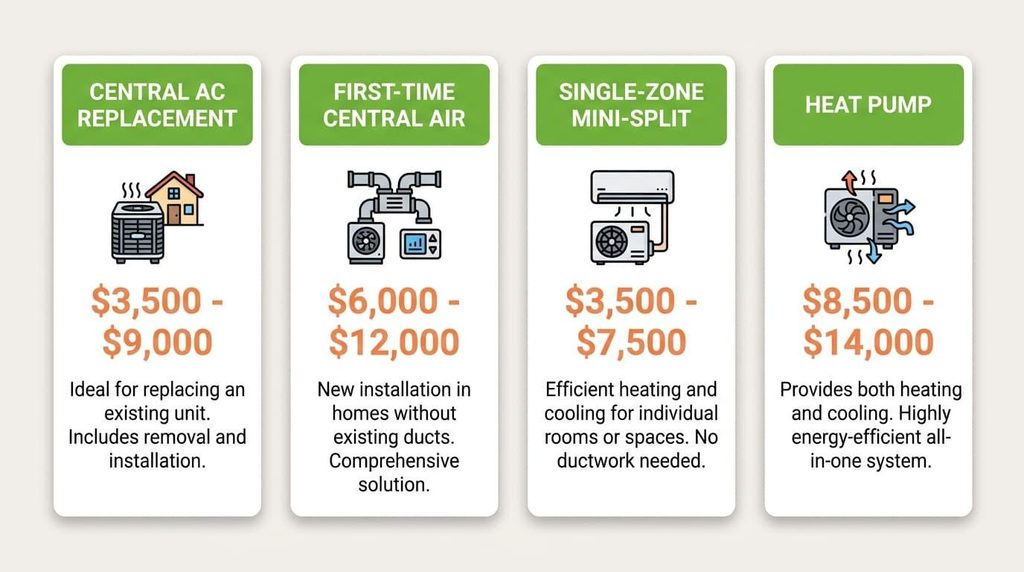
System type changes both the equipment cost and the work involved. Use these ranges to decide which options belong on your shortlist.
- Central AC replacement: Often $3,500 to $9,000, with many mid-efficiency installations between $4,500 and $7,500
- First-time central air: Often $6,000 to $12,000 when new distribution or electrical work is required
- Single-zone ductless mini-split: Often $3,500 to $7,500, depending on line-set length and access
- Heat pump: Often $8,500 to $14,000 when sized and configured for year-round heating and cooling
Some advertised prices cover equipment only. A useful bid includes labor, permits, removal, startup, and testing, so check the scope before comparing totals.
What Determines the Final AC Replacement Cost?
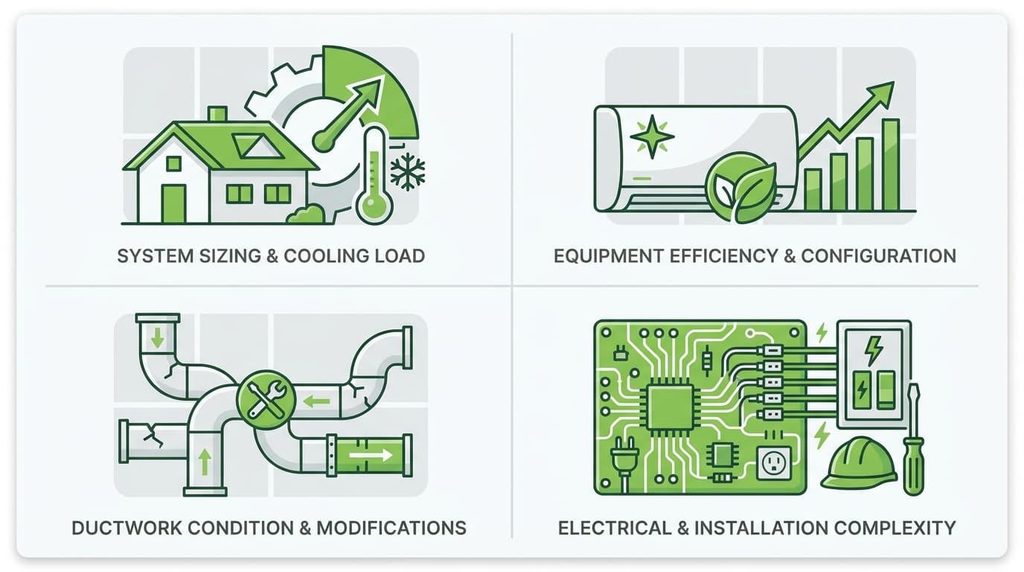
Several factors do most of the work as the main source of additional costs beyond the base equipment price: system size, efficiency, duct condition, electrical capacity, access, and code requirements. Here is how each one reaches the invoice.
System Size and Cooling Load
The right system size depends on heat gain and heat loss, not on square footage alone. Contractors match system tonnage to the home’s required cooling power.
Windows, insulation, orientation, ceiling height, air leakage, and occupancy all affect the required cooling capacity. Northern Utah homes often fall within a broad 2- to 4.5-ton range, but only a room-by-room assessment identifies the right capacity.
As a rough reference, a 2-ton AC unit may suit homes up to about 1,200 square feet before a Manual J calculation confirms sizing.
Equipment Efficiency and Configuration
Higher SEER2 equipment usually has higher installation costs, but those higher ratings also indicate better energy efficiency and can reduce energy bills when properly sized and installed. SEER ratings above 16 are generally considered high efficiency.
New AC units can be 30% to 50% more efficient than older equipment, which can help homeowners save money on utility bills. Variable-speed compressors and blowers can also improve temperature control and uneven airflow, although the cheapest option may still make sense when usage is limited.
For most Utah homeowners, equipment brands matter less than correct sizing, matched components, warranty support, and professional installation for high-efficiency systems.
Ductwork Condition and Modifications
Leaky, crushed, or undersized ducts can waste the cooling produced by a perfectly good new unit. Ductwork modifications may add hundreds or even several thousand dollars, especially when ducts are undersized or damaged and access to the attic or crawlspace is difficult. The quote should reflect an inspection of supply runs, returns, and static pressure.
Electrical and Installation Complexity
Heat pumps, dual-fuel systems, or larger equipment may require a dedicated circuit, disconnect, or panel work. Tight attic access, long refrigerant runs, crane use, and old-unit removal also add labor. None of these charges should appear as a surprise after installation starts.
Why a Manual J Load Calculation Matters
A Manual J load calculation evaluates the home’s actual heating and cooling needs. It replaces rules of thumb based only on square footage or the capacity of the old system, which may have been incorrectly sized.
Too large, and the AC may short-cycle, create temperature swings, and struggle with humidity. Too small, and it can run through a hot Utah afternoon without reaching the thermostat setting. Correct sizing protects comfort and equipment life without making you pay for unusable capacity.
What Does a Complete Installation Quote Include?

A clear quote shows what you are buying, how the full HVAC system is being handled, and what it takes to make it work. That is far easier to compare than one unexplained lump sum.
Equipment and Matched Components
The equipment portion may include the outdoor condenser or heat pump, evaporator coil, thermostat, and compatible indoor components.
Replacing only the outdoor unit while retaining an incompatible coil, blower, or old furnace can reduce performance and may affect the manufacturer’s warranty coverage, so if those parts are mismatched or near the end of their service life, a new HVAC system may be the better long-term choice. Ask for model numbers and efficiency ratings for every major component.
Labor, Permits, and Commissioning
Installation labor covers removal, placement, refrigerant piping, condensate drainage, electrical connections, startup, and testing. Lehi’s building and inspection requirements can also affect the scope of the permit. Commissioning should confirm airflow, refrigerant charge, controls, and safe operation before the new system is handed over.
Labor Warranty and Manufacturer Coverage
A manufacturer’s warranty generally covers eligible equipment parts under its terms, while a labor warranty covers qualifying installation work for a stated period. Compare the duration, exclusions, registration requirements, and who handles a future claim. The lowest initial bid can produce higher repair costs when labor coverage is weak or unclear.
SameDay evaluates the home before recommending an AC replacement, so the proposal reflects the load, ductwork, electrical capacity, and access. The team can compare central AC, heat pump, and ductless options based on the space, rather than forcing every homeowner into a single setup. SameDay also provides electrical services, which can simplify installations that require circuit or panel work. You receive the scope before deciding whether to move forward.
Schedule Your In-Home AC Estimate
Central AC, Heat Pump, or Ductless Mini-Split?
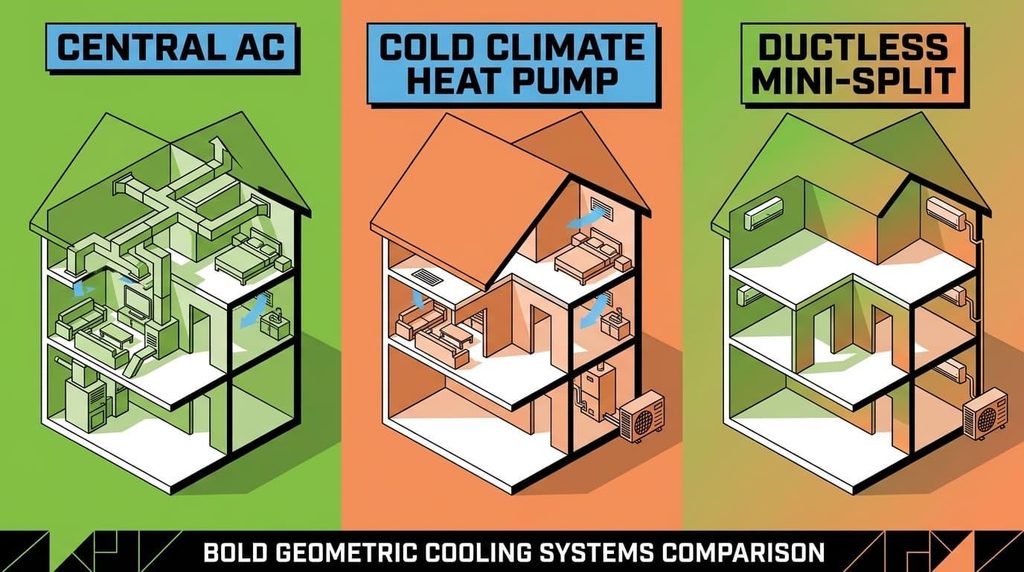
The best choice depends on the equipment already in place and the rooms that need cooling. Here is where each system earns its keep.
Central Air Conditioning
Central AC uses ductwork to cool the entire house and is often the simplest replacement when the existing gas furnace, blower, and ducts remain serviceable. Central AC replacement becomes more expensive when the evaporator coil, furnace, or duct system also needs work.
Cold Climate Heat Pumps and Dual Fuel Systems
Cold-climate heat pumps provide heating and cooling through a single outdoor unit. In northern Utah, equipment selection and low-temperature performance matter. Some homeowners pair a heat pump with a gas furnace in a dual-fuel system, allowing controls to switch heat sources as conditions change.
Ductless Mini-Splits
A ductless mini-split can be a smart fix for a finished basement, addition, or stubborn room that never cools evenly. Whole-home projects require several indoor heads, so the total capacity can meet or exceed that of a central air system. Ductless systems make the strongest case when adding ducts would require opening finished walls or ceilings.
Can Rebates or Financing Lower the Upfront Cost?
Rebates and payment plans can soften the upfront hit, but eligibility changes. Confirm the current terms before counting any incentive as money saved.
Rocky Mountain Power and Local Incentives
Rocky Mountain Power may offer Wattsmart incentives for qualifying equipment and participating customers. Eligibility, efficiency thresholds, contractor requirements, and incentive amounts can change. Utah homeowners should confirm the current terms before signing a contract.
Federal Tax Credits in 2026
The familiar federal 30% HVAC tax credit is no longer available for systems installed in 2026. The IRS states that the Energy Efficient Home Improvement Credit applies to qualifying improvements placed in service through December 31, 2025. Do not subtract that federal credit from a 2026 estimate unless a tax professional confirms eligibility under a different current program.
Flexible Payment Plans From SameDay
SameDay offers financing options through Service Finance for approved applicants, allowing a significant investment to be spread across scheduled payments. Available plans may include promotional or longer-term structures, but approval, interest rate, and final terms depend on the lender and applicant. Homeowners should compare the total financed cost, not only the monthly payment. A free estimate can help establish the project amount before choosing a plan.
Review Current Financing Options
When Should You Repair Instead of Replace?
Repair may win when the system is fairly young, the failure is isolated, and breakdowns have not become a summer tradition. Replacement becomes easier to justify when an older air conditioner needs repeated major work, uses obsolete refrigerant, or cannot keep the home comfortable.
Do not let a simple ‘$5,000 rule’ make the decision by itself. Age multiplied by repair cost is only a rough shortcut. Duct condition, past repairs, comfort, utility bills, remaining warranty, and the cost of a properly sized new system provide a more useful comparison.
How to Compare Multiple HVAC Quotes
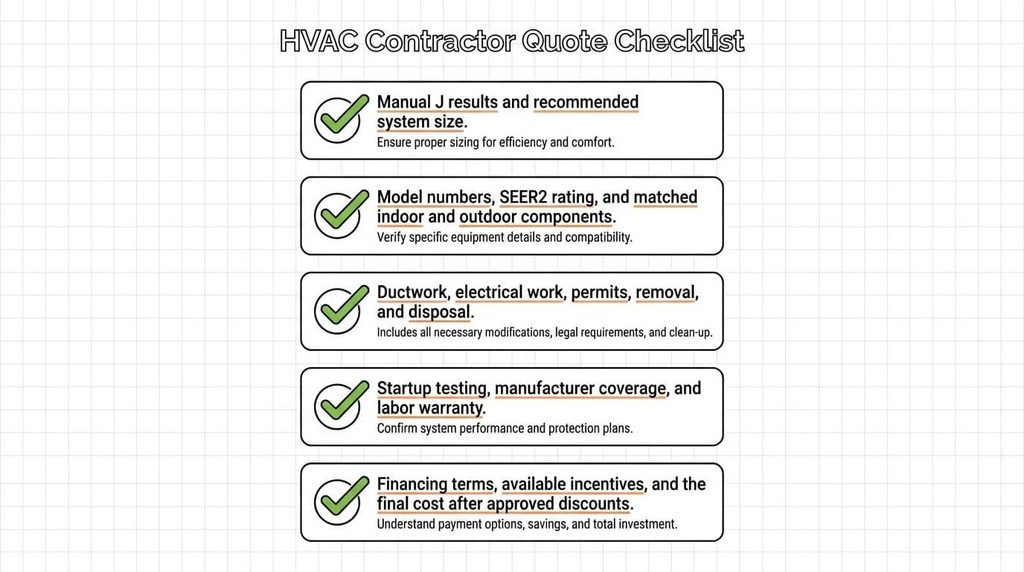
Two totals mean little when the scopes are different, and unclear low bids can lead to higher costs later if needed work is omitted. Ask every contractor to document the same details before deciding.
- Manual J results and recommended system size
- Model numbers, SEER2 rating, and matched indoor and outdoor components
- Ductwork, electrical work, permits, removal, and disposal
- Startup testing, manufacturer coverage, and labor warranty
- Financing terms, available incentives, and the final cost after approved discounts
A red flag is a quote that skips the load calculation, leaves major work undefined, pressures you to sign before you can compare equipment and coverage, or avoids clearly walking through repair versus replacement options; a good contractor should explain those choices without pressure. Professional installation should be specific enough that both parties understand what is included.
Plan Your AC Replacement With a Complete Estimate
The $3,500 to $9,000 planning range gives Lehi homeowners a starting point, not a promise. System size, efficiency, ducts, electrical needs, and access determine whether the project stays inside that band or becomes one of the larger hvac system replacements.
SameDay serves Lehi and surrounding communities with air conditioning installation and replacement options for different home layouts.
An in-home evaluation gives the team the information needed to size the system, inspect supporting components, and explain the proposal.
Financing options are available for approved applicants when paying the full replacement cost upfront is not practical. Homeowners can review the estimate before choosing the new unit and scope that fit the property.
Get Your Lehi Installation Estimate
AC Installation Cost in Lehi FAQs
How Much Is a New AC Unit for a 2,000-Square-Foot Home?
A 2,000-square-foot home may fall within common central AC pricing ranges, but area alone cannot determine system size or final cost. Insulation, windows, orientation, leakage, ductwork, and installation access must be evaluated through a load calculation.
What Raises HVAC Installation Cost the Most?
System size, higher-efficiency equipment, ductwork replacement, electrical upgrades, difficult access, and full system replacement are common cost drivers. A detailed inspection should identify these items before work begins.
Is a Heat Pump Better Than a New Central AC Unit?
A heat pump can be a strong option when the homeowner wants efficient heating and air conditioning from one system. The answer depends on low-temperature performance, electricity and gas costs, existing equipment, comfort goals, and whether a dual-fuel configuration makes sense.
How Long Does an AC System Last in Utah?
Many central cooling systems last roughly 12 to 15 years, but maintenance, sizing, installation quality, usage, and the environment all affect their lifespan. Repeated repairs, higher energy bills, weak cooling, or uneven airflow can signal that a system replacement is worth considering.
Should I Choose the Cheapest AC Quote?
The cheapest option is not automatically the lowest overall cost. Compare equipment efficiency, sizing, installation scope, commissioning, warranty coverage, and likely operating costs. A complete, well-explained quote is more useful than a low number with missing work.