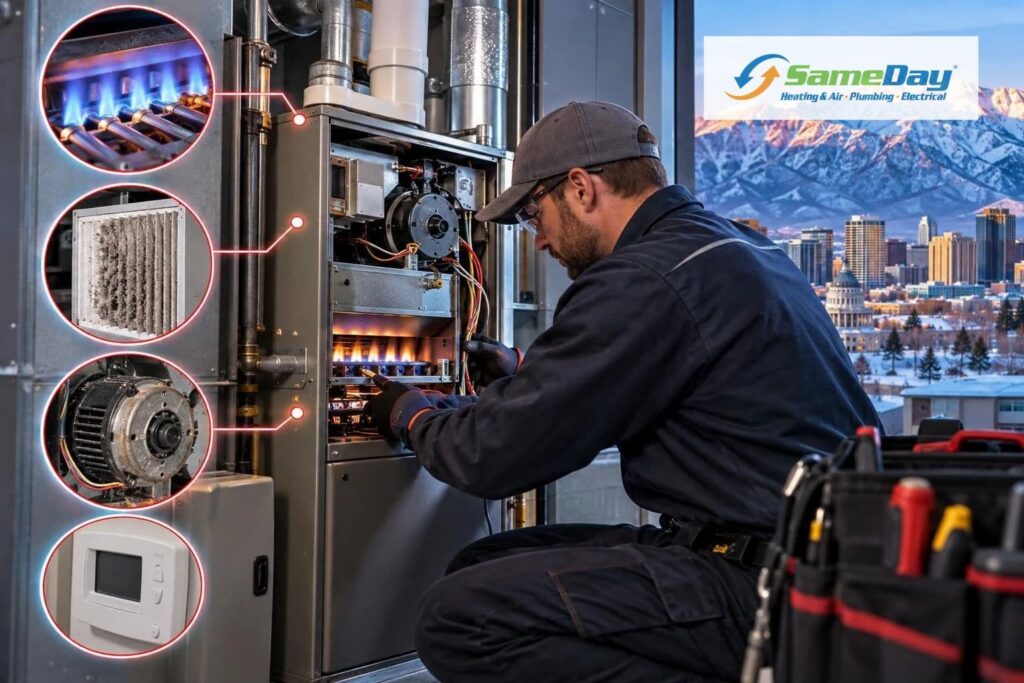
It’s a freezing Salt Lake City morning. Your thermostat is set to heat, but the vents are blowing cold air. Is it a clogged filter, a failed ignitor, or a repair that could cost hundreds of dollars? Gas furnace common problems often show up as a furnace that won’t ignite, shuts off too soon, or runs without delivering enough warm air. Knowing the symptom helps you decide what’s safe to check and when it’s time to call a technician.
This guide explains the warning signs, safe gas furnace troubleshooting checks, typical national repair-cost ranges, and when to call a qualified HVAC technician. At SameDay Heating & Air, Plumbing, and Electrical, we help Wasatch Front homeowners identify the problem, understand their options, and restore heat safely without guessing at parts.
Key Takeaways
- A furnace that won’t ignite may have an ignition, flame-sensing, gas-supply, or control problem.
- Short cycling and weak airflow can begin with a clogged air filter, but safety controls and other components may also be involved.
- You can check thermostat settings, the furnace filter, accessible vents, and a tripped breaker. Leave gas and internal electrical repairs to professionals.
- National repair estimates vary widely by component. A diagnosis and written quote are more useful than a generic price range.
- If you smell gas or a carbon monoxide alarm sounds, leave immediately and call emergency services or your gas utility from outside.
What Are the Most Common Gas Furnace Problems?
The most useful starting point is the symptom, because these are often common furnace problems: on gas units, ignition failure and restricted airflow are two of the most common issues, and several different furnace issues can look identical from the thermostat, so the table below helps you recognize the pattern without assuming you’ve found the faulty part.
| What you notice | Possible causes | What to do |
|---|---|---|
| Gas furnace not igniting | Ignitor, flame sensor, gas valve, ignition system, or pilot light on older models | Check thermostat and power; arrange a professional diagnosis |
| Furnace turns on, then off | Dirty air filter, limit switch, flame sensor, venting, or condensate issue | Check filter and vents; call if short cycling continues |
| Blower runs, but air stays cold | Burners not lighting, gas supply, or controls issue | Stop repeated resets and request service |
| Little warm air or strange noises | Clogged filters, blower motor, loose parts, or duct restrictions | Check accessible vents and filter; report rattling noises |
| Water around high-efficiency furnace | Blocked condensate drain or another drainage issue | Arrange inspection; never bypass a safety switch |
These signs help narrow the possibilities, but they don’t confirm which component failed. If the furnace still won’t heat after basic checks, a professional diagnosis is the safest next step.
A Gas Furnace That Won’t Ignite
If the furnace clicks but never lights, the ignition sequence may be stopping before the burners fire. A dirty flame sensor can also cause a flame to appear briefly and then disappear. Older furnaces may have pilot light problems; newer models often use electronic ignition. A failed gas valve or gas-supply issue is another possibility, but these natural gas components need professional testing.
A Furnace That Starts and Stops Too Soon
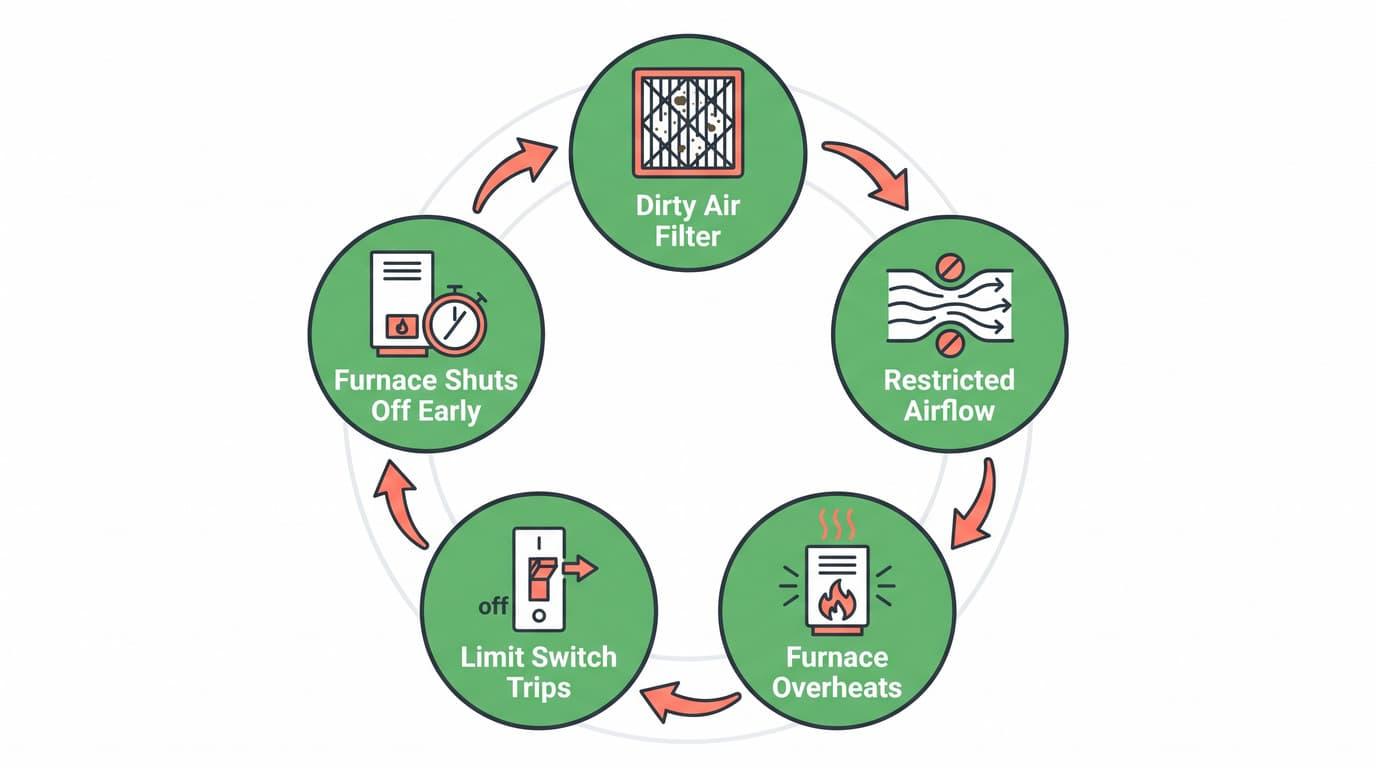
Short cycling means a heating cycle ends before the home reaches the set temperature, so the furnace shuts off before fully heating the home. A dirty air filter can restrict airflow, overheat the furnace, and trip a limit switch; clogged air filters are also a common cause of short cycling and can shut the furnace down. ENERGY STAR’s heating guidance explains that a clogged filter makes the system work harder, and blocked supply or return vents can contribute to the same problem. Restricted airflow forces the furnace to work harder, can cause overheating, and may trigger safety switches that shut it down early. A flame sensor, venting fault, or other safety shutdown can cause similar furnace issues. Repeated short cycling can raise energy bills, reduce efficiency, and lead to further damage.
Weak Airflow, Cold Vents, or Unusual Sounds
When a blower motor runs but the vents deliver cold air, the furnace may not be producing heat at all. If airflow itself is weak, check for a clogged furnace filter or blocked supply and return vents. Grinding, banging, or persistent rattling noises may indicate loose or damaged components. These airflow issues can affect comfort and indoor air quality, and continuing to run a malfunctioning unit may cause further damage.
Safe Gas Furnace Troubleshooting Before You Call
Before booking a repair, you can rule out a few simple causes of a common furnace that won’t heat. These homeowner-level checks don’t involve opening gas connections or servicing internal components.
- Thermostat: Confirm it’s powered on, set to heat, and above the current room temperature. Replace dead batteries if applicable. A malfunctioning thermostat can also prevent the furnace from starting, but don’t assume the thermostat is the cause before checking its settings.
- Power: Make sure the furnace switch wasn’t accidentally bumped off. If the furnace will not start, do a basic check of the circuit breaker or fuse box for a tripped breaker or blown fuse. If a breaker trips again, stop resetting it.
- Air filter: Inspect the filter and replace a clogged filter with the correct size and rating. Check it monthly during heavy use and replace it every 1–3 months.
- Vents: Keep all supply and return vents open and unobstructed for proper airflow. After snowfall, visually check accessible outdoor intake and exhaust openings without dismantling anything.
If these checks don’t restore heat, call a professional HVAC technician. Don’t bypass a furnace switch or safety control, attempt to fix an electrical issue, or adjust a natural gas valve. As Enbridge Gas appliance safety guidance explains, gas appliances need proper ventilation and qualified servicing. Install carbon monoxide detectors near sleeping areas and follow the manufacturer’s testing instructions.
When a Gas Furnace Problem Is an Emergency
If you smell gas, hear a carbon monoxide alarm, or suspect a serious combustion problem, stop troubleshooting and get everyone outside. Don’t operate switches, phones, or appliances inside a building where gas may be leaking. Once safely away, call 911 or your gas utility and follow emergency instructions. Don’t reenter until responders say it’s safe.
Carbon monoxide has no smell, and headache, dizziness, or nausea can signal exposure. A suspected cracked heat exchanger, blocked vent, or combustion fault warrants prompt professional evaluation; flame color alone cannot confirm safety. Smoke or a strong burning odor also calls for immediate professional or emergency help.
What Does Gas Furnace Repair Cost in Salt Lake City?
Gas furnace repair costs depend on the failed component, labor, equipment access, and the work needed to restore safe operation. The table below provides national cost estimates to help Salt Lake City homeowners understand what to expect when budgeting for repairs.
| Repair category | 2026 national estimate | What affects the quote |
| Ignitor replacement | $150-$500 | Part type, labor, and emergency timing |
| Gas valve replacement | $200-$600 | Valve type and safety testing |
| Blower motor repair or replacement | $150-$2,000 | Whether the motor can be repaired or must be replaced |
| Heat exchanger replacement | $500-$1,500 | Equipment, warranty, labor, and safety assessment |
| Flame sensor replacement | $150-$250 | Component and diagnostic labor |
| Typical furnace repair overall | $133-$505 | National range; local costs and individual jobs vary |
These estimates are a starting point, not a substitute for a diagnosis and written quote. For more on local pricing considerations, see our Salt Lake City furnace repair cost guide.
What Changes Your Repair Quote?
Before approving a repair, it’s worth understanding exactly what you’re paying for. These questions can help you evaluate a technician’s estimate:
- What failed? An ignitor, blower motor, gas valve, and heat exchanger involve very different parts and labor.
- Is another issue contributing? Restricted airflow, dirty burners, or a venting problem may need attention before a replacement part works properly.
- Is the part available? Older models or specialized components can affect scheduling and cost.
- Does a warranty apply? Manufacturer coverage may pay for certain parts but not labor.
- Is the diagnosis separate from the repair? Ask about the service fee, proposed scope, and total price before authorizing work.
At SameDay, our Green Team evaluates the actual furnace issue before recommending a fix. We can explain the repair scope and help you compare options rather than asking you to commit based on a symptom alone.
How Our Green Team Diagnoses a Gas Furnace
Our professional HVAC technician starts with the symptoms, then checks the relevant parts of the system. That may include thermostat signals, the ignition system, flame sensor, natural gas pressure, blower motor, electrical controls, condensate drainage, venting, and heat exchanger condition. We look for the actual fault and verify the furnace is working properly and safely after repair.
SameDay also holds licensing to work directly with gas utilities, an important distinction when furnace concerns involve natural gas connections. For homeowners in Draper, our Green Team can assess furnace problems, identify the appropriate repair, and explain the next steps.
Repair or Replace? How to Make the Call
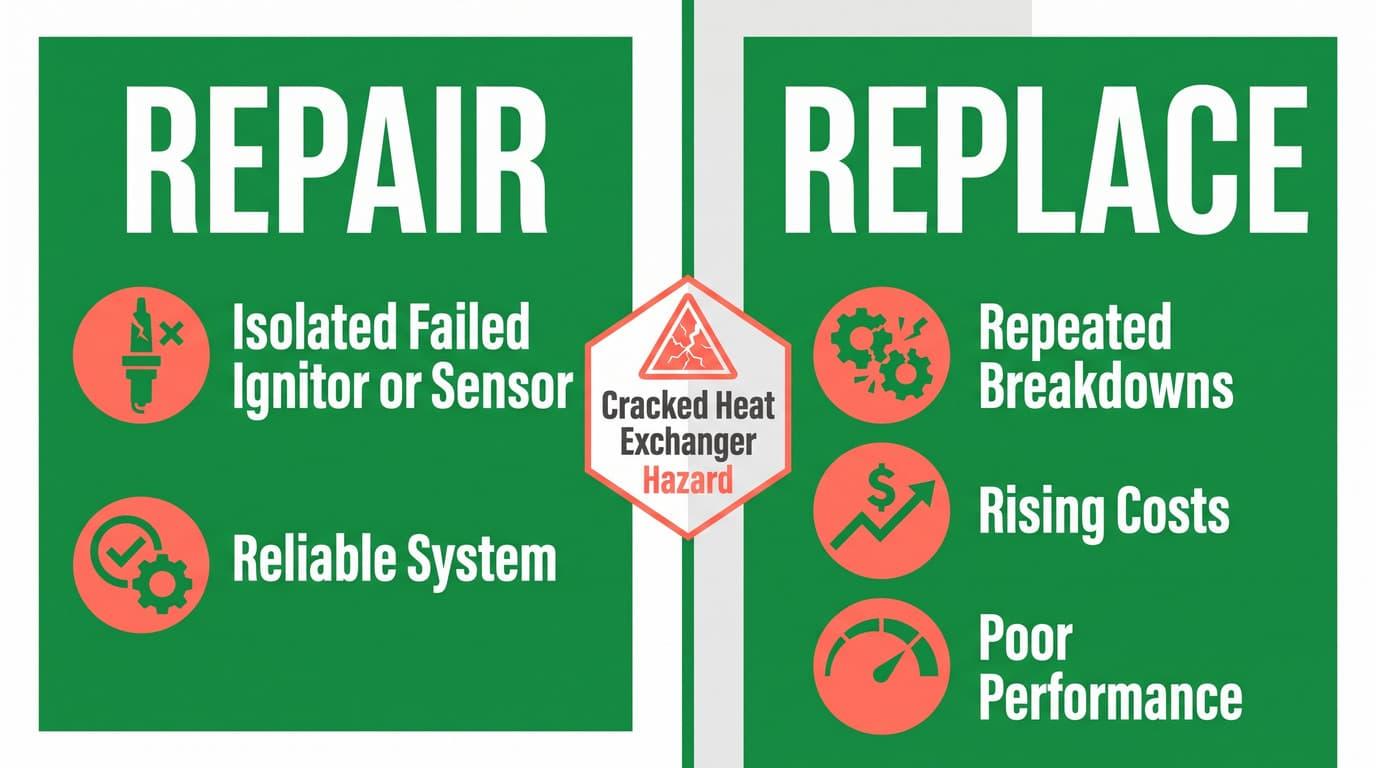
Not every furnace problem means you need a new unit. An isolated failed ignitor or sensor on an otherwise reliable system may be a sensible repair. Repeated breakdowns, rising costs, or poor performance may justify replacement. A cracked heat exchanger can allow combustion gases to escape and poses a potential carbon monoxide hazard, though a crack does not necessarily mean carbon monoxide has entered the home. A qualified technician must assess the safety concern before the furnace is used again.
Ask your technician for the diagnosis, a written repair estimate, the condition of other major components, and any remaining warranty coverage. A cracked heat exchanger is not a DIY repair, and the furnace should not be operated if a qualified technician determines it is unsafe. Age matters, but it shouldn’t be the only factor in your decision.
How to Avoid Another Furnace Breakdown
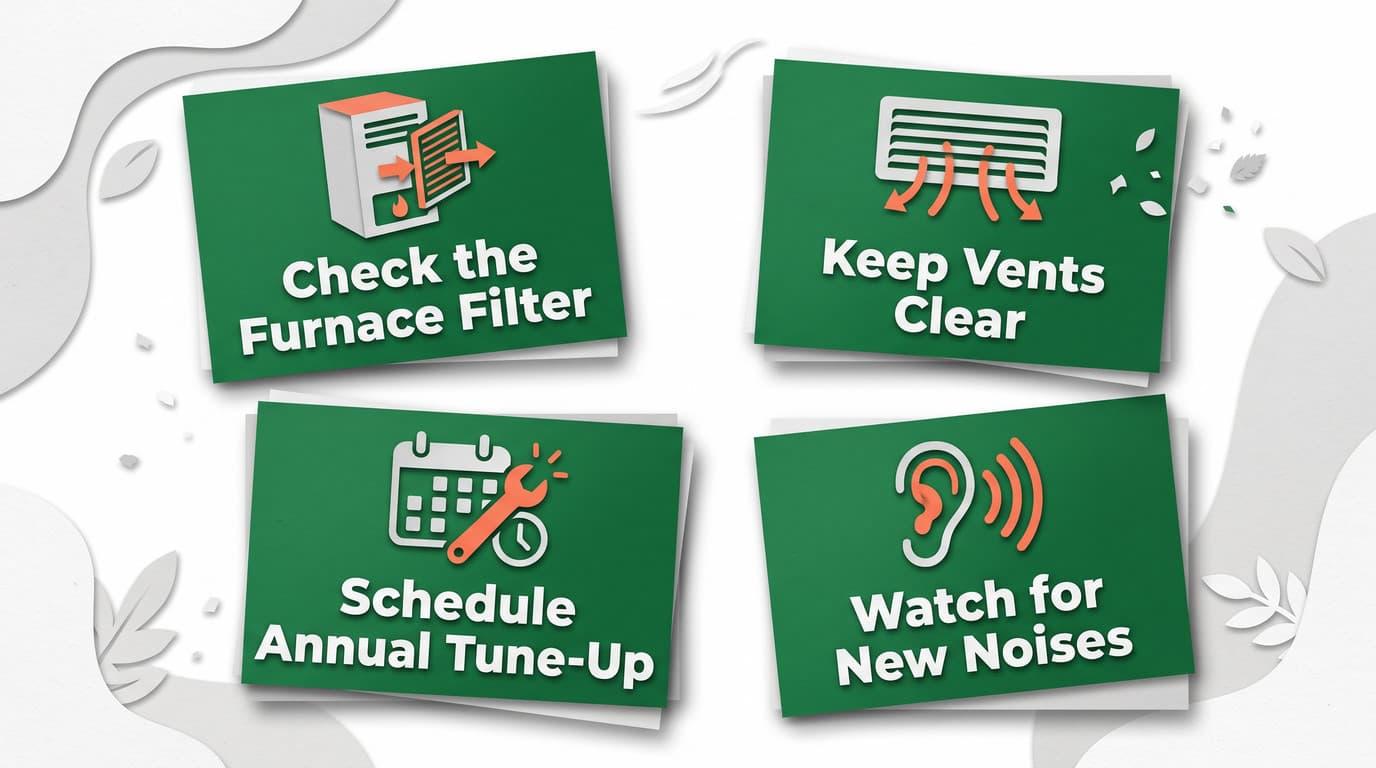
Regular maintenance can’t prevent every failure, but many gas furnace issues stem from basic maintenance gaps, and routine care helps prevent unexpected and costly breakdowns, improve energy efficiency, and extend the lifespan of your furnace. It can also help lower utility bills and catch potential issues early, while supporting indoor air quality by limiting dust buildup from neglected filters.
- Check the furnace filter regularly; dust and debris build up on the air filter over time, and it should generally be replaced every 1–3 months to avoid restricted airflow and unnecessary strain.
- Keep indoor vents and accessible outdoor exhaust openings clear.
- Schedule an annual furnace tune-up with a qualified HVAC technician to inspect combustion, safety controls, airflow, and components that wear over time; regular checks can also help prevent dangerous problems, including carbon monoxide leaks.
- Pay attention to new noises, short cycling, and uneven heat rather than waiting for a complete shutdown.
A tune-up is preventive care, not a substitute for diagnosing a furnace that’s already malfunctioning. Our Green Shield Membership includes annual tune-ups on every system and can help homeowners keep maintenance on the calendar.
What to Tell SameDay When You Need Furnace Repair
If your heat fails during a Wasatch Front cold snap, the details you share help us understand the urgency. Before calling, note the following if it’s safe to do so:
- Whether the furnace won’t ignite, shuts off quickly, or blows cold air.
- Any error code, unusual noise, or recent thermostat change.
- The furnace brand and approximate age, if known.
- Whether your household has no working heat, especially with children, older adults, or anyone vulnerable to cold.
- Any gas smell or carbon monoxide alarm. If either occurs, evacuate first rather than booking routine service.
Salt Lake City homes and Draper properties can have different equipment layouts and access challenges, but the first priority is the same: diagnose the problem safely and explain the options. If you’re searching for gas furnace repair near me, choose a team that can assess both the heating equipment and any relevant gas-related concerns.
Get Your Gas Furnace Heating Safely Again
Gas furnace common problems can look alike from the living room, but the right response depends on whether the issue is airflow, ignition, controls, or combustion safety. Start with safe thermostat, filter, power, and vent checks. If the problem persists, a professional diagnosis gives you a sound basis for comparing repair costs and deciding what comes next.
At SameDay Heating & Air, Plumbing, and Electrical, we help Salt Lake City and Wasatch Front homeowners get clear answers and dependable heating support. Our Green Team can inspect your gas furnace, explain the findings, and recommend the right repair or replacement path for your home.
Gas Furnace Repair FAQs
Still planning your service call? These answers cover a few practical questions homeowners often have after identifying the problem.
Can I Stay Home While a Technician Repairs My Furnace?
Usually, yes, during routine work, provided the technician says the area is safe. Keep children and pets away from the work zone. If a gas leak or carbon monoxide concern is suspected, leave the building and follow emergency guidance instead.
Will a Furnace Repair Affect My Manufacturer Warranty?
It depends on your warranty’s terms and the work performed. Have the furnace model and serial number ready, ask whether the replacement part is covered, and keep the service invoice for your records. Labor may not be included even when a part is covered.
How Long Does a Typical Gas Furnace Repair Take?
A straightforward component repair may be finished in one visit if the part is available and testing confirms the fix. More complex problems or special-order parts can take longer. We can discuss the likely timing after diagnosis without promising every repair will be completed the same day.
Why Does My Furnace Blow Cold Air for a Few Minutes After Starting?
Some furnaces circulate cooler air briefly before the heat exchanger warms up or after a heating cycle ends. A short period of cooler airflow isn’t always a malfunction. However, if the air stays cold or the room never reaches the set temperature, the furnace may need professional attention.
Can I Run My Gas Furnace Without an Air Filter?
No. Running a furnace without its filter can allow dust and debris to accumulate on internal components, potentially affecting performance and indoor air quality. Always use the filter size and type recommended for your system.