Your furnace quits on a freezing Salt Lake City morning. Do you replace it with another gas furnace, or could a heat pump keep your home warm in winter and cool in summer?
When comparing a heat pump vs. a furnace, the right choice depends on your home and what you need to replace. A cold-climate heat pump can make sense when your AC is aging, too; a gas furnace may be simpler when your cooling system still works. At SameDay, we help Wasatch Front homeowners weigh winter comfort, installation costs, and monthly bills before deciding.
Key Takeaways
- Cold-weather performance: A properly sized cold-climate heat pump can work below freezing; a gas furnace delivers heat without extracting it from outdoor air.
- Heating and cooling: A heat pump does both; a furnace generally needs a separate AC.
- Upfront costs: Compare the full installation, not just equipment prices.
- Operating costs: Utility rates, insulation, and backup heat determine the better value.
- Dual fuel: A heat pump and gas furnace can share the heating job.
Heat Pump vs Furnace: Utah Homeowner Comparison
Here’s how the two options compare on the factors that matter most at home.
| Decision factor | Electric heat pump | Gas furnace |
|---|---|---|
| How it heats | Moves heat from outdoor air indoors | Burns natural gas to generate heat |
| Summer cooling | Heats and cools | Needs a separate air conditioner |
| Utah cold snaps | Cold-climate models work below freezing; capacity varies | Provides reliable heat when correctly sized |
| Efficiency rating | HSPF2 for seasonal heating; COP at specific temperatures | Measured by annual fuel utilization efficiency (AFUE); typical furnace efficiency is about 80% to 98% |
| Installation needs | Outdoor unit, adequate electrical capacity, possible backup heat | Gas connection, venting, indoor furnace |
| Often a fit for | Replacing heating and AC together; homes without gas | Replacing an aging furnace while keeping a working AC |
The table shows the trade-offs. Next, consider how those differences feel inside your home and during a Utah cold snap.
How Heat Pumps and Furnaces Heat Your Home
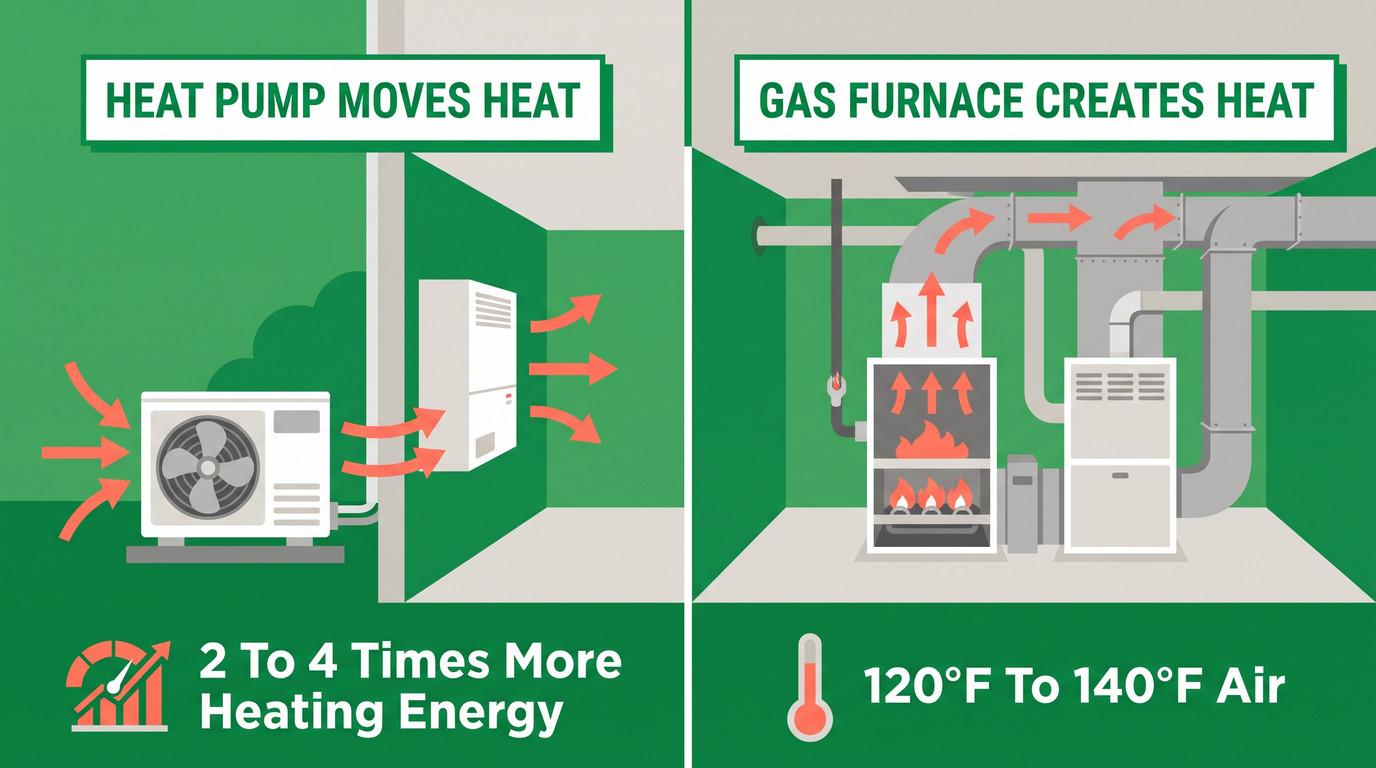
The difference is simple: one system moves heat, while the other makes it. Here’s what that means for comfort and cooling in your home.
Heat Pumps Move Heat and Provide Cooling
An electric heat pump uses refrigerant and a compressor to transfer heat by moving heat from outdoor air into your home rather than creating it. Even chilly air contains usable heat, and the unit extracts existing heat from outdoor air even in cold weather. In summer, it reverses the process to cool your rooms, replacing the need for a separate AC in many setups. The same system provides both heating and cooling and can deliver roughly 2 to 4 times more heating energy than the electricity it uses.
Gas Furnaces Create Heat
A gas furnace generates heat by burning fuel, typically natural gas, propane, or oil, to warm air and send it through your ducts. It usually delivers hotter air in shorter cycles, often around 120°F to 140°F, which is part of why it feels more intense, while variable-speed heat pumps often run longer at gentler output. Both can keep your house warm when sized correctly; the difference is that a furnace generates heat and the system is powered differently.
Will a Heat Pump Work During Utah Winters?
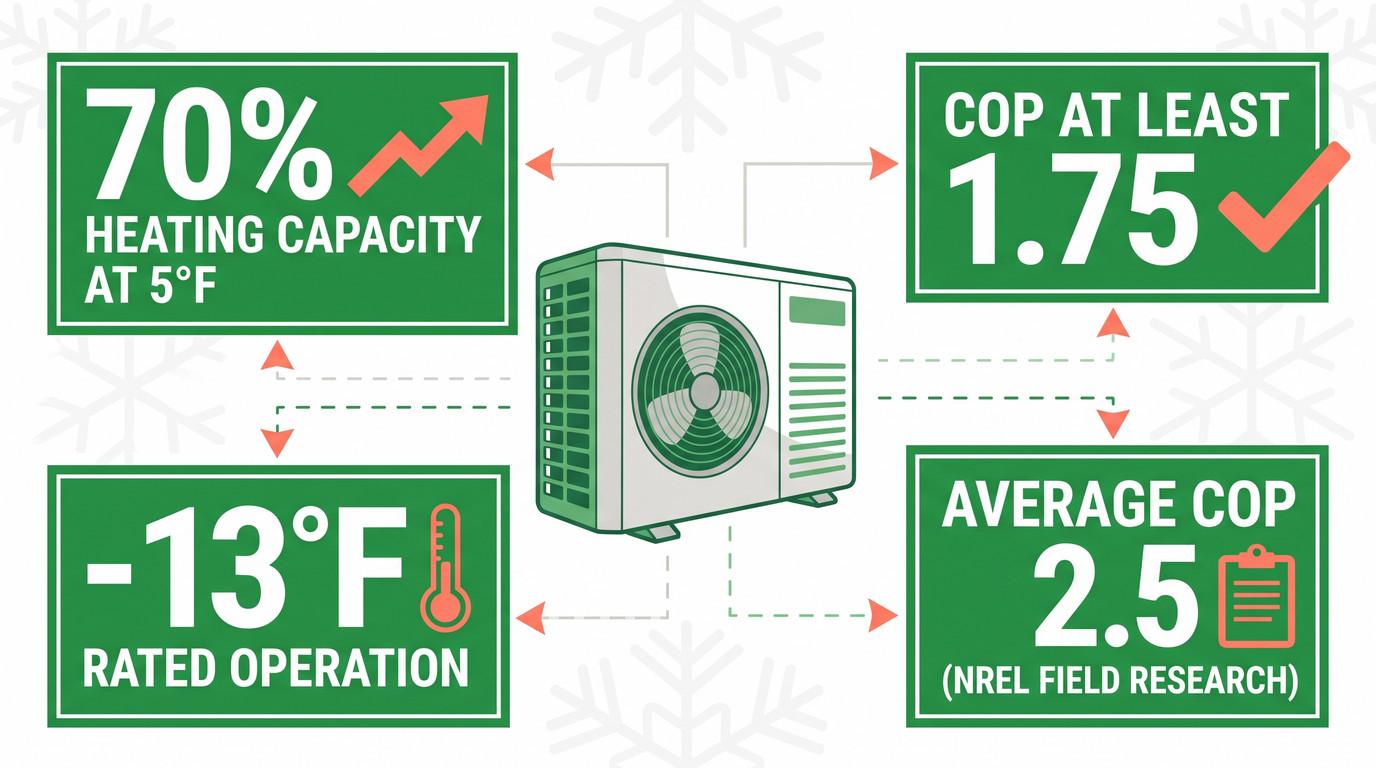
Yes. A properly selected cold-climate heat pump can heat a home below freezing, and these systems are often most advantageous in moderate climates with moderate temperatures, so the Utah question is how they perform during colder stretches. The real question is whether it can supply enough heat on the coldest days without expensive backup heating. In many cold climates, heat pumps work efficiently in winter temperatures above 5°F, and some cold-climate models are rated to operate efficiently down to about -13°F, while furnaces remain a stronger fit in places with prolonged freezing temperatures.
What Cold-Climate Ratings Tell You
Under ENERGY STAR cold-climate requirements, qualifying heat pumps must retain at least 70% of their heating capacity at 5°F compared with 47°F and achieve a COP of at least 1.75 at 5°F. Rating tests help estimate cold-weather performance, but some cold-climate heat pump systems are also advertised with minimum operating temperatures as low as about -23°F, which can matter in very cold climates. In plain terms, these tests show how well equipment performs in the cold, not how it will perform in every Utah house.
In NREL field research involving 12 centrally ducted cold-climate systems, seasonal compressor COP ranged from 1.7 to 3.5, averaging 2.5. Backup electric heat reduced efficiency at some homes. That’s why the right size and controls matter as much as the model label on specific heat pump systems.
Check Cold-Weather Capacity Before You Buy
Before choosing a model, ask how much heat it can deliver at your home’s winter design temperature because in extreme cold some systems may need backup heat, and a minimum operating temperature is not the same as delivered capacity. An advertised minimum operating temperature alone won’t tell you either.
What Happens When It Gets Extremely Cold?
When temperatures drop beyond what your heat pump can handle alone, backup electric heat or a gas furnace may step in. Electric resistance heat typically costs more per unit of warmth than the heat pump itself, so frequent use can raise bills.
You may also notice a brief defrost cycle as the outdoor unit clears ice. That’s normal. If backup heat runs constantly or bills jump unexpectedly, have the settings and equipment checked rather than assuming the heat pump cannot handle Utah weather.
Heat Pump Cost vs Furnace: What Will You Pay Upfront?
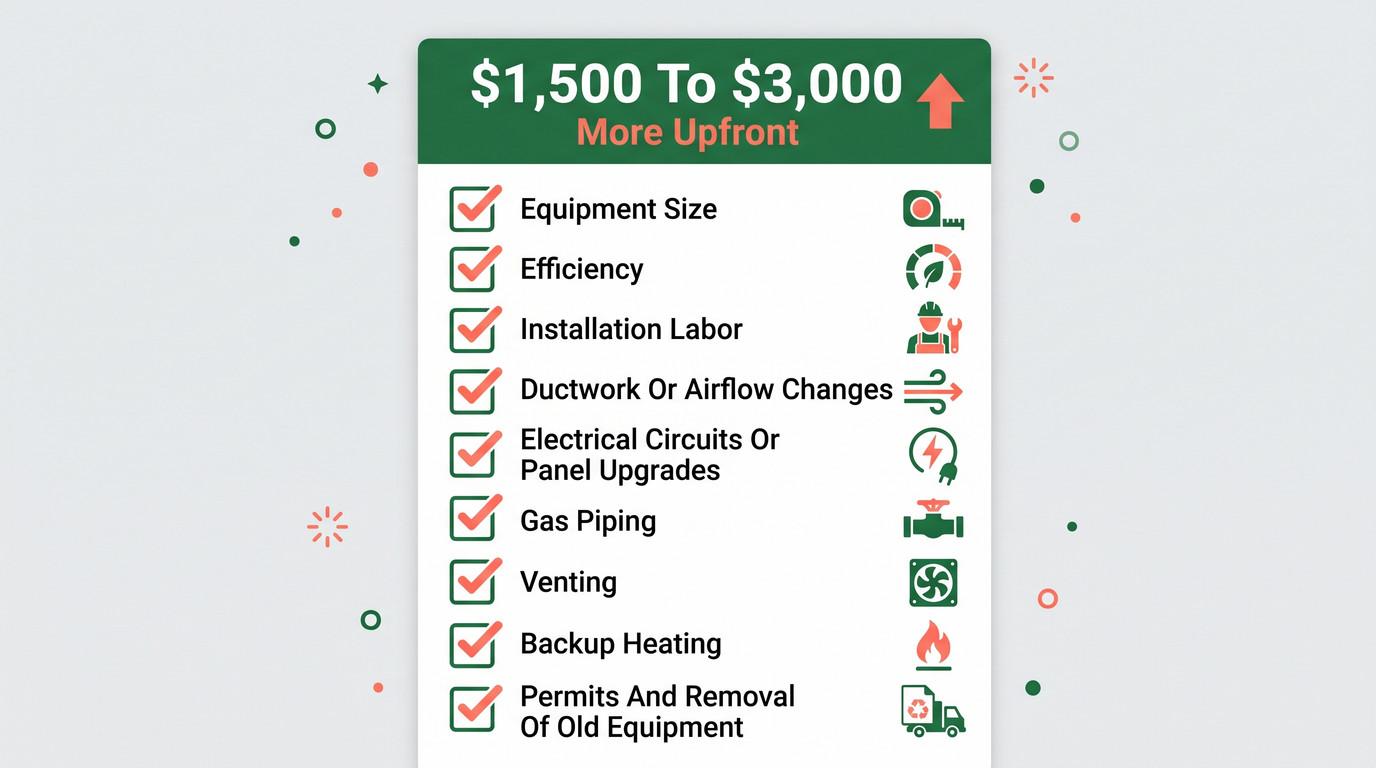
A heat pump often has a higher upfront cost than a furnace alone and may run about $1,500 to $3,000 more upfront in some installs, though a furnace-only replacement can look cheaper in part because you may still need a separate air conditioning unit for cooling.
- To compare complete quotes, make sure each estimate includes:
- Equipment size, efficiency, and installation labor
- Ductwork or airflow changes
- Electrical circuits or panel upgrades
- Gas piping, venting, or backup heating
- Permits and removal of old equipment
A Sandy homeowner keeping a newer AC may need a different setup than a South Jordan homeowner replacing both systems or swapping out an existing furnace. At SameDay, we’ll review your heating and cooling needs, electrical setup, and cold-weather requirements so you know what a complete heat pump installation involves, not just what the equipment costs.
Which System Costs Less to Run in Utah?
The most efficient system isn’t always the cheapest to operate. Heat pumps move heat instead of making it, but the operating cost depends on local energy prices, and electricity rates and gas bills differ by market. In some areas with low natural gas prices, a furnace may have the lower operating cost despite a heat pump’s strong efficiency. Your home’s insulation and how often backup heat runs also affect the bill.
How to Read Efficiency Ratings
Efficiency labels are useful, but they measure different parts of system performance. Here’s what to look for on a quote:
- AFUE (furnaces): A 96% AFUE furnace means 96 cents of every dollar spent on fuel becomes usable heat.
- HSPF2 (heat pumps): Measures seasonal heating efficiency.
- COP (heat pumps): Shows heating output relative to electricity used at a specific temperature.
- SEER2 (heat pumps): Measures cooling efficiency for summer, and some Carrier heat pumps can reach up to 23 SEER2.
These ratings help compare energy efficiency, but they measure different things, so they shouldn’t be compared as though they were the same percentage. For gas furnace efficiency, AFUE stands for annual fuel utilization efficiency, and premium models such as Carrier’s Infinity® 98 Gas Furnace can reach up to 98.5% AFUE.
How to Compare Your Actual Bills
Ask for estimated monthly operating costs and annual heating costs based on your recent utility bills, the proposed equipment, and a heating-load calculation. The result depends on local utility rates and fuel costs, not just cheap natural gas or favorable electricity prices. While some areas report heat pumps can save up to 50% on heating bills or reduce heating costs by up to 50% in some areas, actual annual heating costs still depend on climate, insulation, heating demand, and local utility rates.
If neither option is an obvious winner, a dual-fuel setup may offer another path.
Is a Dual-Fuel System the Best Middle Ground?
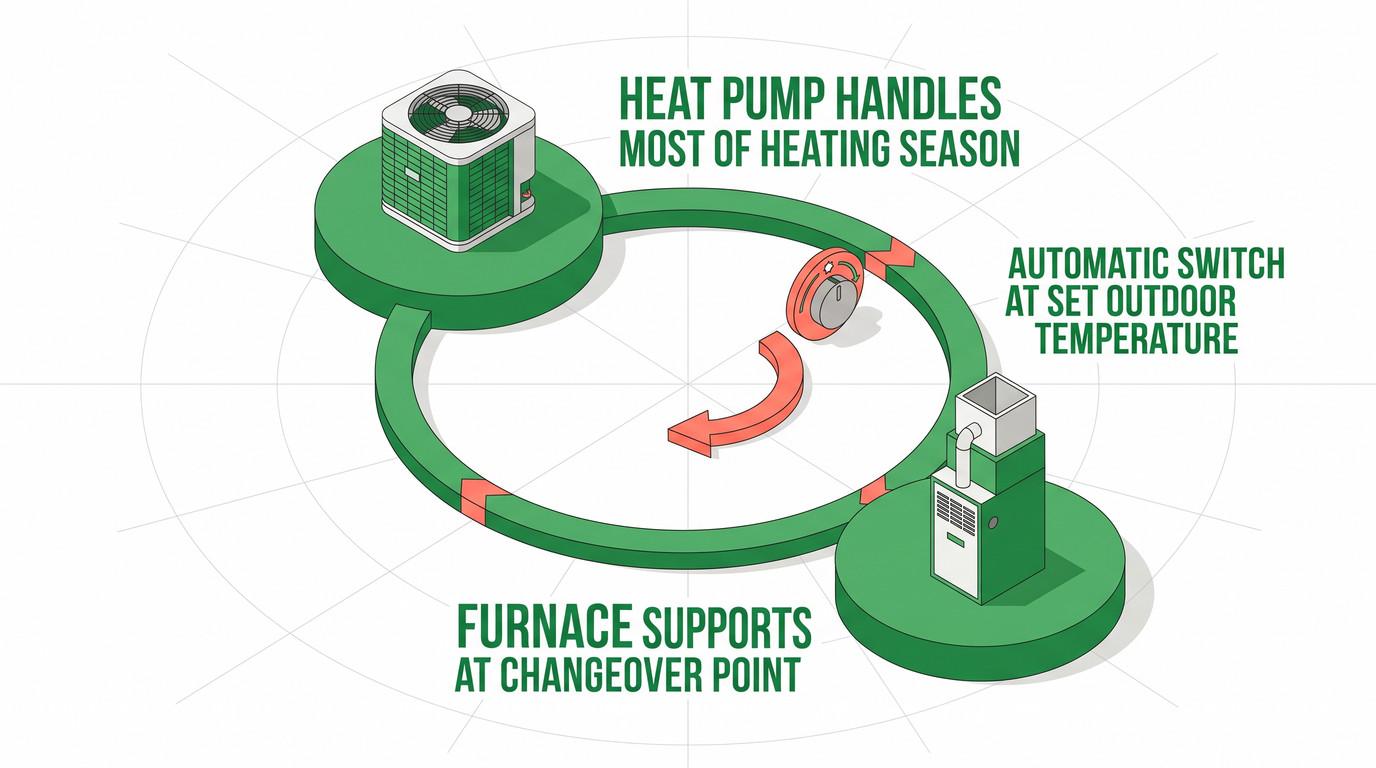
A dual-fuel system combines a heat pump with a gas furnace. The heat pump handles most of the heating season and cooling in milder weather, and the furnace supports it in colder weather when outdoor temperatures reach a programmed changeover point.
The system automatically switches between the heat pump and furnace based on a set outdoor temperature or control strategy, and that switch should be set for your equipment and local utility costs, not a generic temperature. Dual fuel may appeal to homeowners who already have natural gas service and want heat-pump benefits without relying on it alone during cold snaps. You will, however, be maintaining two heating technologies. This setup can provide efficient heating across a wide range of temperatures.
Which Heating System Fits Your Utah Home?
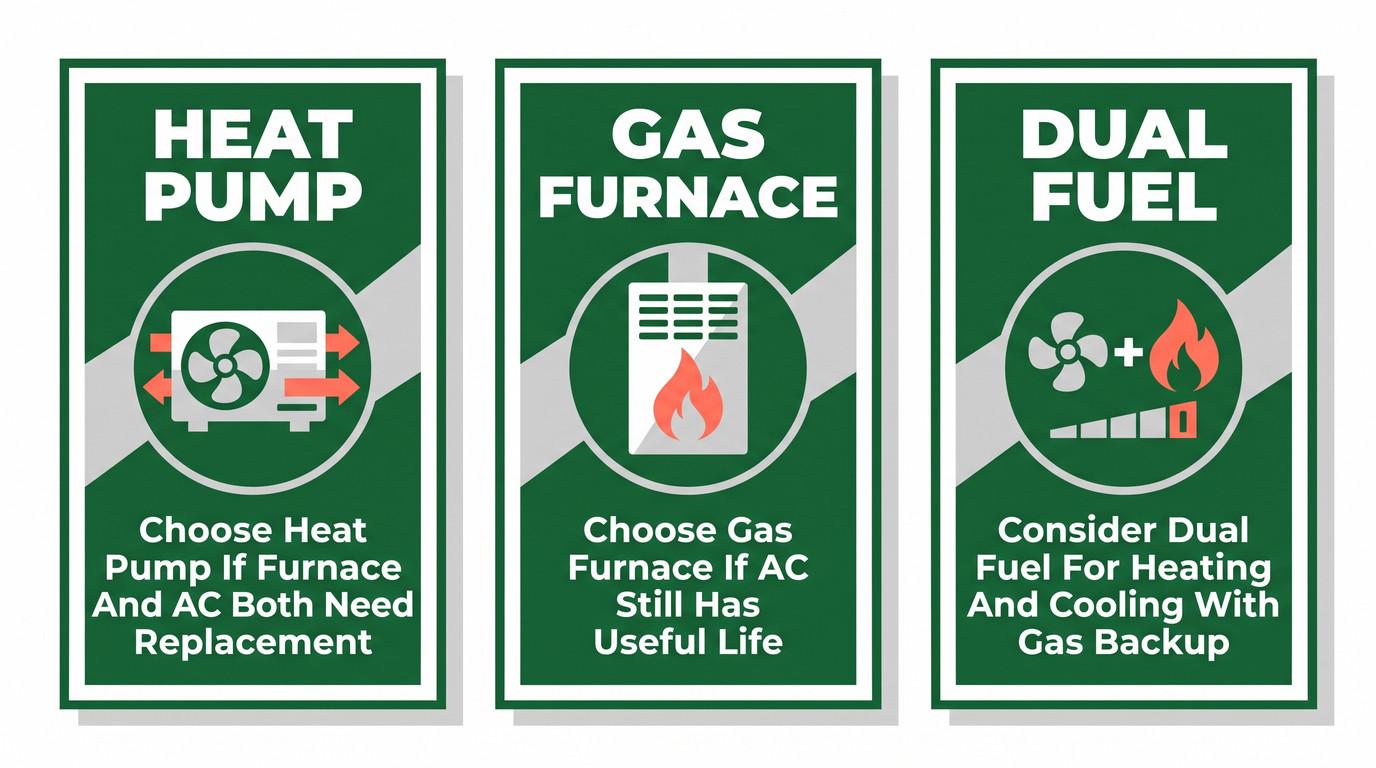
Here’s how we’d narrow the options based on what you already own:
- Choose a heat pump if your furnace and AC both need replacement and your home supports the electrical and cold-weather requirements.
- Choose a gas furnace if your AC still has useful life and you want a straightforward heating replacement.
- Consider dual fuel if you want heat-pump heating and cooling with gas heat available for colder periods.
Before deciding, request a Manual J heating-load calculation, ductwork and electrical checks, and written installation and operating estimates. If your furnace is failing but your AC still has years left, our SameDay team can assess whether a furnace-only upgrade offers better value, explain efficiency options, and outline the installation your home needs.
Explore My Furnace Replacement Options
Maintenance, Lifespan, and Safety
Whichever system you choose, plan for ongoing care:
- Both: Annual maintenance is required for both systems, and regular filter changes help optimal performance.
- Heat pump: Keep the outdoor unit clear and have the outdoor coil inspected seasonally.
- Lifespan: Both heat pumps and gas furnaces typically last 15–20 years, depending on installation, use, and maintenance.
Gas furnaces also need attention to combustion safety and overall system operation. CPSC carbon monoxide guidance recommends CO alarms because traditional fuel-burning systems, including gas and heating oil equipment, can create combustion-related hazards and produce this odorless gas. Electric heat pumps don’t create combustion gases at the unit, but homes with other fuel-burning appliances still need appropriate protection.
Make the Right Heat Pump vs Furnace Choice for Your Home
The heat pump vs furnace decision comes down to what keeps your Utah home comfortable through winter, handles summer cooling, and fits your budget; a heat pump may also lower your home’s carbon footprint, with some studies estimating about 38% to 53% lower emissions than replacing a gas furnace. A heat pump can make sense when you’re replacing heating and AC together; a furnace may be the simpler investment when your existing cooling system is sound. Dual fuel is worth considering when you want a combination of both.
At SameDay, our Green Team can evaluate your current equipment, heating needs, and installation options so you can choose the right heating solution with confidence. Once your new system is in place, our Green Shield Membership helps you stay on top of routine maintenance.
Get My Green Shield Membership
Frequently Asked Questions About Heat Pumps and Furnaces
Still deciding? These practical answers cover common questions Utah homeowners ask before replacing their equipment.
Can I keep my existing ductwork with a new heat pump?
Often, yes. An installer should check airflow, leaks, and whether your existing ducts can handle the new equipment. Some homes need sealing or duct modifications.
Can a heat pump work during a power outage?
A heat pump needs electricity for its compressor and fans. Most gas furnaces also need power for their blower and controls, so neither is a reliable outage solution without compatible backup power.
Are heat pump tax credits still available in 2026?
The federal Energy Efficient Home Improvement Credit previously covered 30% of qualifying heat pump costs, up to $2,000, for eligible installations through December 31, 2025. ENERGY STAR’s tax-credit guidance confirms that the credit does not apply to new 2026 installations. Ask your utility about current Utah rebates before calculating potential savings.
Do heat pumps need different thermostat settings than furnaces?
Heat pumps often work best with steadier settings. Many systems maintain comfort by cycling continuously at lower output, rather than in shorter bursts like furnaces built for consistent heat. Large temperature setbacks can trigger electric backup heat on some systems. Ask your installer how to set the thermostat for your model.
Can I install a heat pump without replacing a working furnace?
Sometimes, whether a heat pump replace a furnace depends on your climate and whether it can handle all the heating your home needs. A compatible heat pump can also be added alongside an existing gas furnace in a dual-fuel system, which combines a heat pump with a gas furnace. Your installer must verify the indoor coil, blower, controls, and equipment compatibility first.