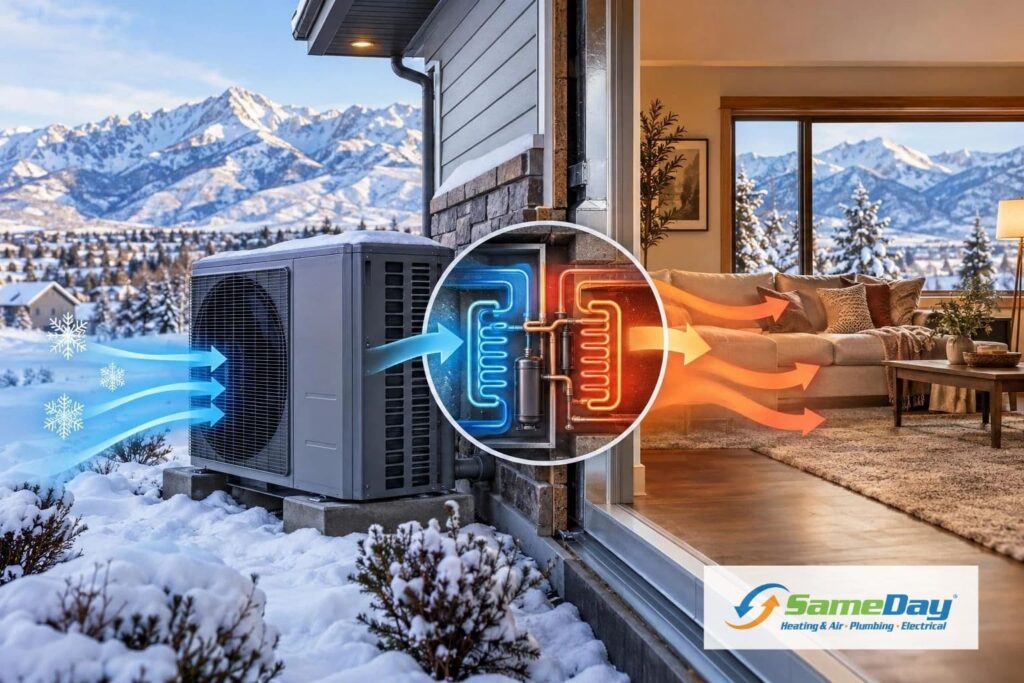
It’s 20°F outside in Salt Lake City, yet your heat pump is still running. Where does it find warmth when the air feels freezing, and can it keep your home comfortable through a Utah cold snap? A heat pump draws heat from outdoor air, concentrates it, and moves it inside, even when temperatures fall below freezing.
That’s how a heat pump works in winter: it transfers heat instead of burning fuel to create it. At SameDay, we help Wasatch Front homeowners understand what their systems do on cold days, when backup heat is normal, and what it takes to keep winter heating reliable.
Key Takeaways
- Heat from cold air: A heat pump extracts usable energy from outdoor air and moves it indoors through a refrigerant cycle.
- Cold-weather capability: Modern cold-climate models can heat below freezing, but capacity depends on the equipment and home.
- Defrost and backup: Brief defrost cycles and supplemental heat can be normal during cold snaps.
- Winter efficiency: Lower temperatures can reduce efficiency, especially when electric backup runs often.
- Homeowner priorities: Clear airflow, suitable thermostat settings, and professional maintenance support reliable heating.
How a Heat Pump Turns Freezing Outdoor Air Into Indoor Warmth
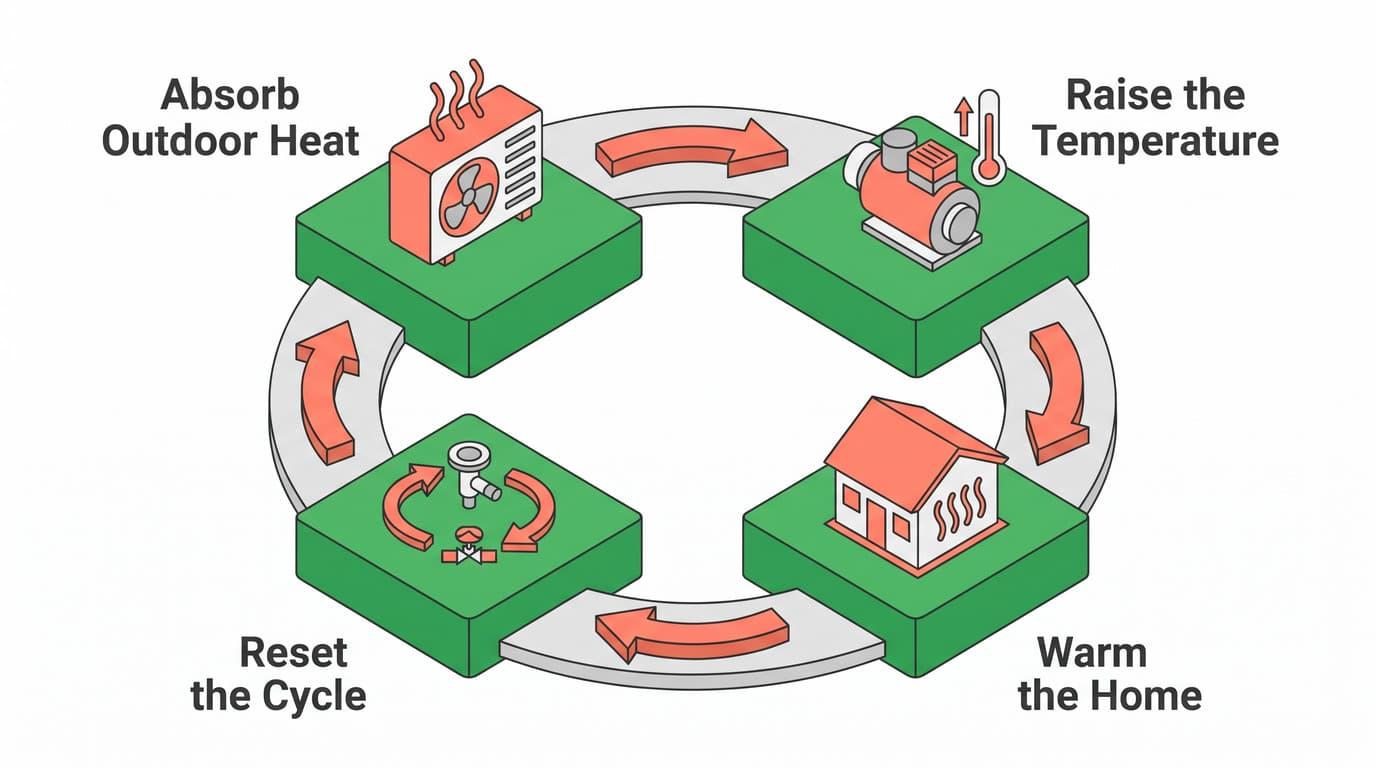
Unlike a gas furnace, a heat pump doesn’t create heat or generate heat by burning fuel. It works like an air conditioner in reverse, transferring existing heat from the air into your home through four steps:
- Absorb outdoor heat. Refrigerant passes through the outdoor evaporator coil at a temperature below the surrounding ambient air; because it can boil at temperatures as low as -50°C (-58°F), it can still absorb heat in winter and extract heat from the outdoor air, turning into a low-pressure gas.
- Raise the temperature. A compressor squeezes the refrigerant gas, increasing its pressure and bringing it to a higher temperature.
- Warm the home. The hot refrigerant reaches the indoor coil and releases heat. The indoor unit or air handler moves warm air through the home as a fan circulates the air inside across the warm coil.
- Reset the cycle. An expansion device lowers the refrigerant’s pressure and temperature so it can absorb heat outdoors again.
A reversing valve switches the system between heating and cooling. Ductless mini-split heat pumps deliver conditioned air directly into individual rooms, while a ground source heat pump can extract heat from the ground at much colder temperatures than outdoor air can provide.
Can a Heat Pump Really Keep Up With a Utah Winter?
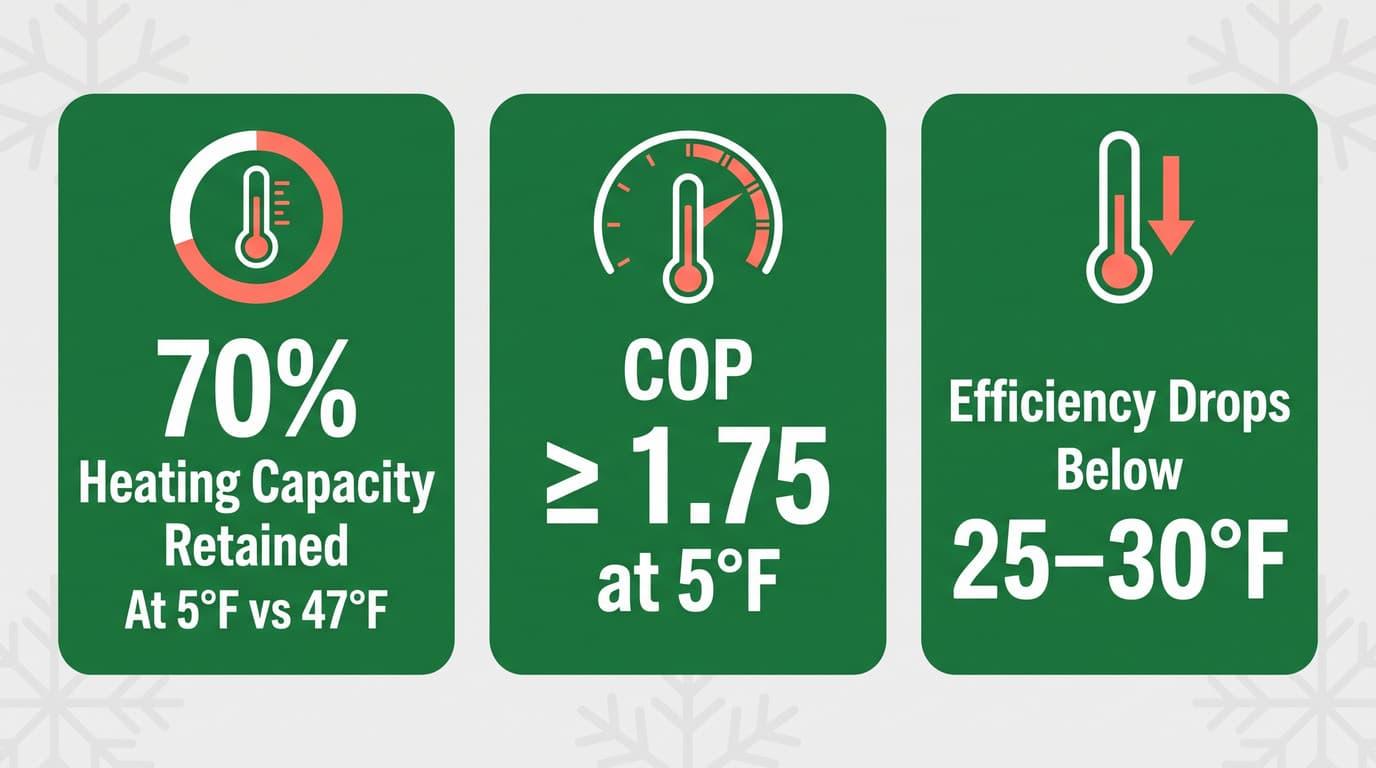
Yes. Heat pumps work below freezing, and heat pumps are designed to provide heating in winter, though output varies by model and conditions. As the outside air gets colder, an air-source heat pump has less readily available heat to extract at colder temperatures and must work harder to raise its temperature. Its heating capacity and efficiency may decline, even while it continues to operate. Many air-source systems begin losing efficiency more noticeably below about 25–30°F (-3.9 to -1.1°C).
Why Cold-Climate Models Handle Lower Temperatures Better
According to ENERGY STAR cold-climate criteria, qualifying air-source heat pumps must retain at least 70% of their rated heating capacity at 5°F compared with 47°F, with a coefficient of performance (COP) of at least 1.75 at 5°F. Those test points tell you more than a manufacturer’s advertised minimum operating temperature. In practice, cold weather heat pumps are built to hold onto more capacity at low temperatures, though they often cost more than standard models.
Many modern heat pumps use variable-speed compressors and improved controls to work effectively at lower outdoor temperatures. However, minimum operating temperatures and heating capacity still vary by equipment and home. A system that can still run in extreme cold isn’t necessarily able to heat every home on its own.
Why Your Home Matters as Much as the Heat Pump
The important comparison is between the heat your home loses on a cold night and the heat the equipment can deliver. Insulation, air leaks, ductwork, equipment sizing, and your home’s winter design temperature all matter, and a drafty or poorly insulated home needs more energy to stay warm. For a Utah installation, ask for a heating-load calculation and the propoenergy-efficientsed unit’s capacity at local winter temperatures, not just its headline efficiency rating, because that shows real-world heat pump efficiency and whether a properly matched system remains an energy efficient choice during the colder months.
What Your Heat Pump Does When a Cold Snap Hits
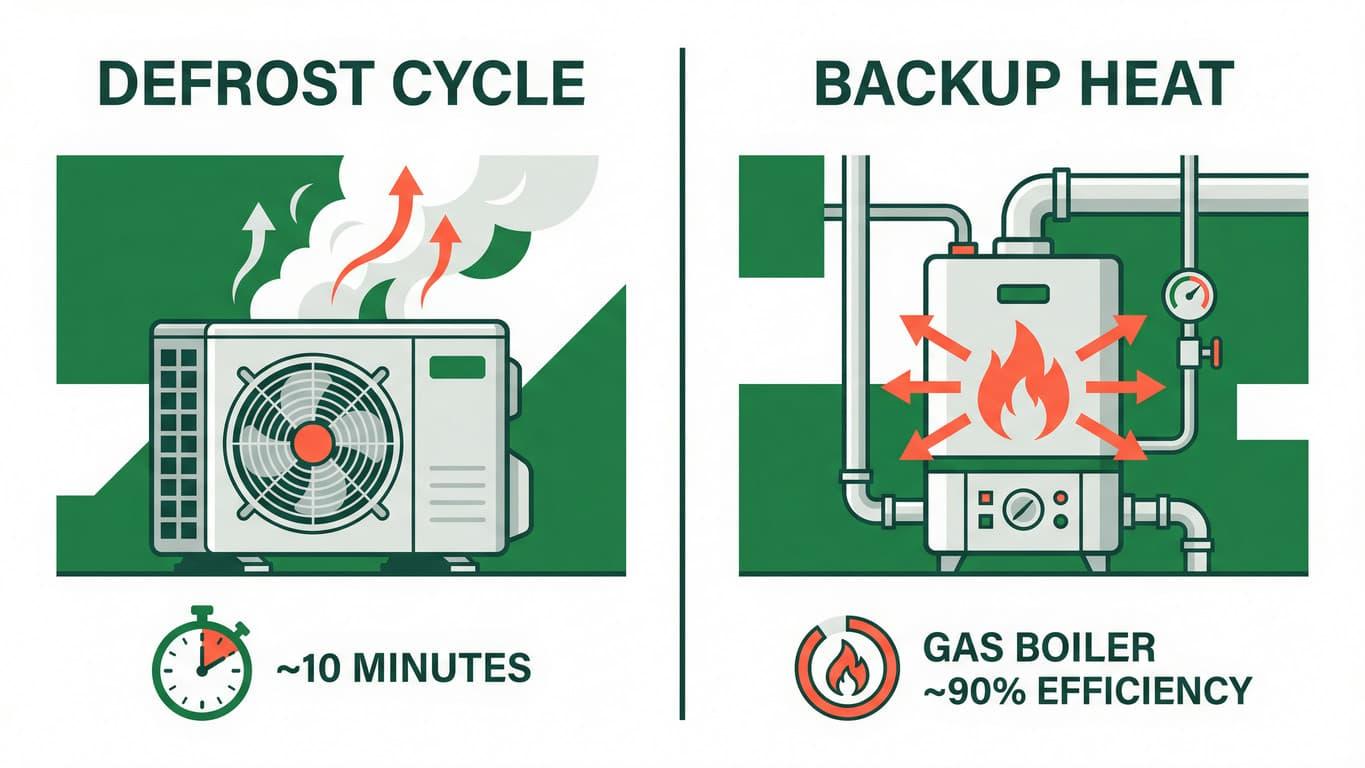
A heat pump may run longer as temperatures drop. That’s often normal, particularly with variable-speed equipment that delivers steady heat rather than short, high-temperature bursts. Two other winter behaviors are worth understanding: defrosting and backup heat.
Why Your Outdoor Unit Sometimes Steams or Defrosts
When humid air meets a cold outdoor coil, frost buildup can form and restrict airflow, and in freezing temperatures the coil can freeze when moisture in the ambient air condenses on it. The heat pump automatically enters a defrost cycle, briefly redirecting heat toward the outdoor coil to melt the buildup. You might see steam, hear a click or whoosh, or notice a temporary pause in warm airflow. Defrost cycles typically last about 10 minutes, though timing varies by equipment and conditions.
The U.S. Department of Energy describes air-source heat pumps as an energy-efficient heating and cooling option. For winter defrost specifically, National Renewable Energy Laboratory research explains that frost forms on outdoor coils and is typically removed by briefly reversing the refrigeration cycle. Defrosting is normal; ice that never clears is not.
When Backup Heat Steps In on Frigid Nights
If the home needs more heat than the pump can supply, auxiliary electric resistance heat may switch on more often in extremely cold climates. In a dual-fuel system, a gas furnace can take over or assist at a programmed outdoor temperature. Some homes use a gas boiler instead, which typically operates at around 90% efficiency. This doesn’t automatically mean the heat pump has failed. It means the heating system is responding to demand.
Backup electric heat generally uses more electricity per unit of warmth than the heat pump’s normal refrigeration cycle, so that prolonged use can increase bills. The right controls and changeover settings matter, especially during Wasatch Front cold snaps, and a dual-fuel setup can reduce how often the backup system has to carry the home winter long.
If your home already relies on a gas furnace for backup heat, its condition matters, too. Our SameDay heating team can check whether the furnace and heat pump are working together properly and explain when repairing or replacing the furnace makes more sense than changing the whole setup.
How Much Heat Pump Efficiency Does a Heat Pump Keep in Winter?
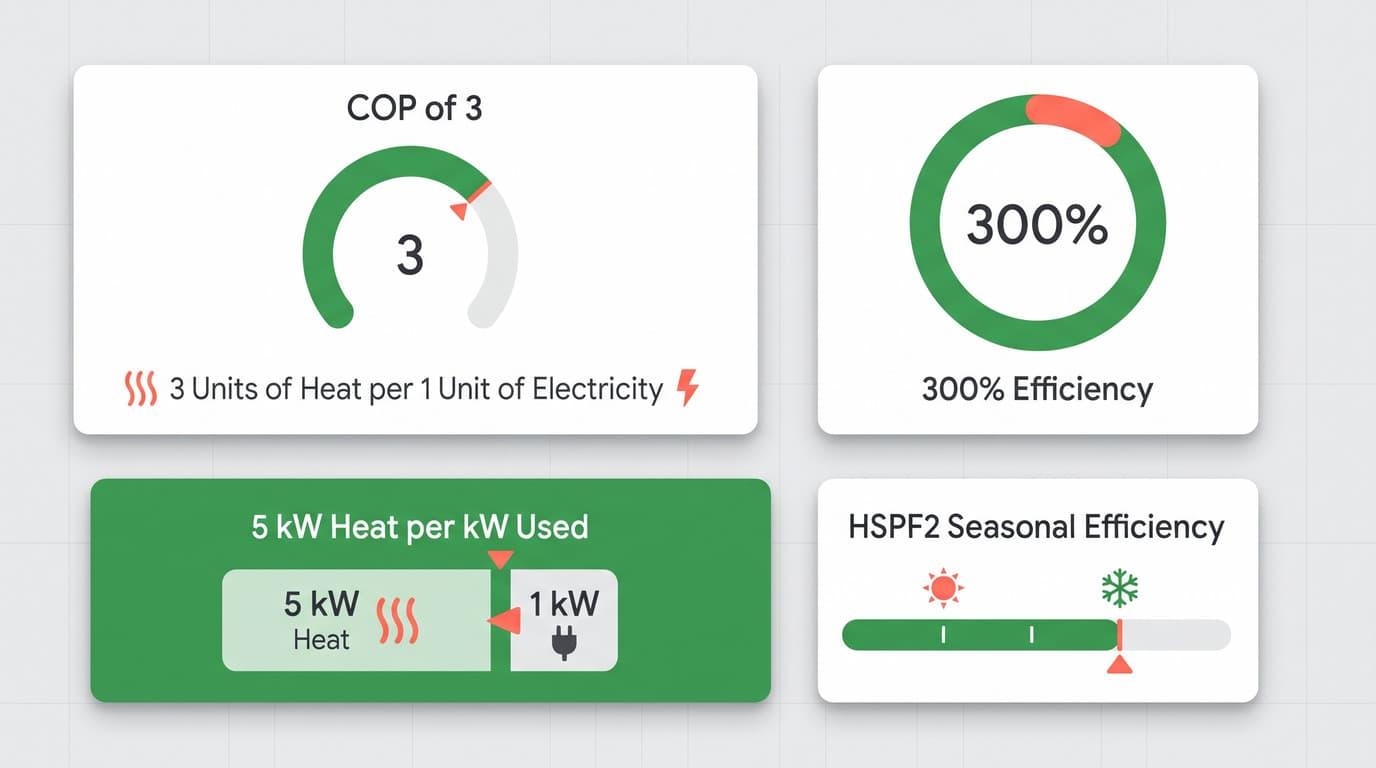
A heat pump can keep running below freezing, but its efficiency changes with the weather. One way to measure performance is the coefficient of performance (COP), which compares heat delivered with electricity used—a COP of 3 means three units of heat for each unit of electrical energy.
Under favorable winter conditions, some air-source heat pumps can deliver more heat energy than the electricity they use, sometimes several times over. Claims such as 300% efficiency or more than 5 kW of heat per kW used describe particular operating conditions, not guaranteed performance throughout a Utah winter.
That makes them a more environmentally friendly option than systems that burn fuel directly.
For a realistic comparison, look at seasonal heating efficiency (HSPF2), heating capacity at low outdoor temperatures, and the expected use of backup heat. A well-maintained heat pump may be an energy efficient choice compared with a gas furnace or gas boiler, especially before outdoor temperatures get very low, but operating costs also depend on electricity rates and your home’s heating demand.
Normal Winter Quirks vs. Signs Your Heat Pump Needs Help
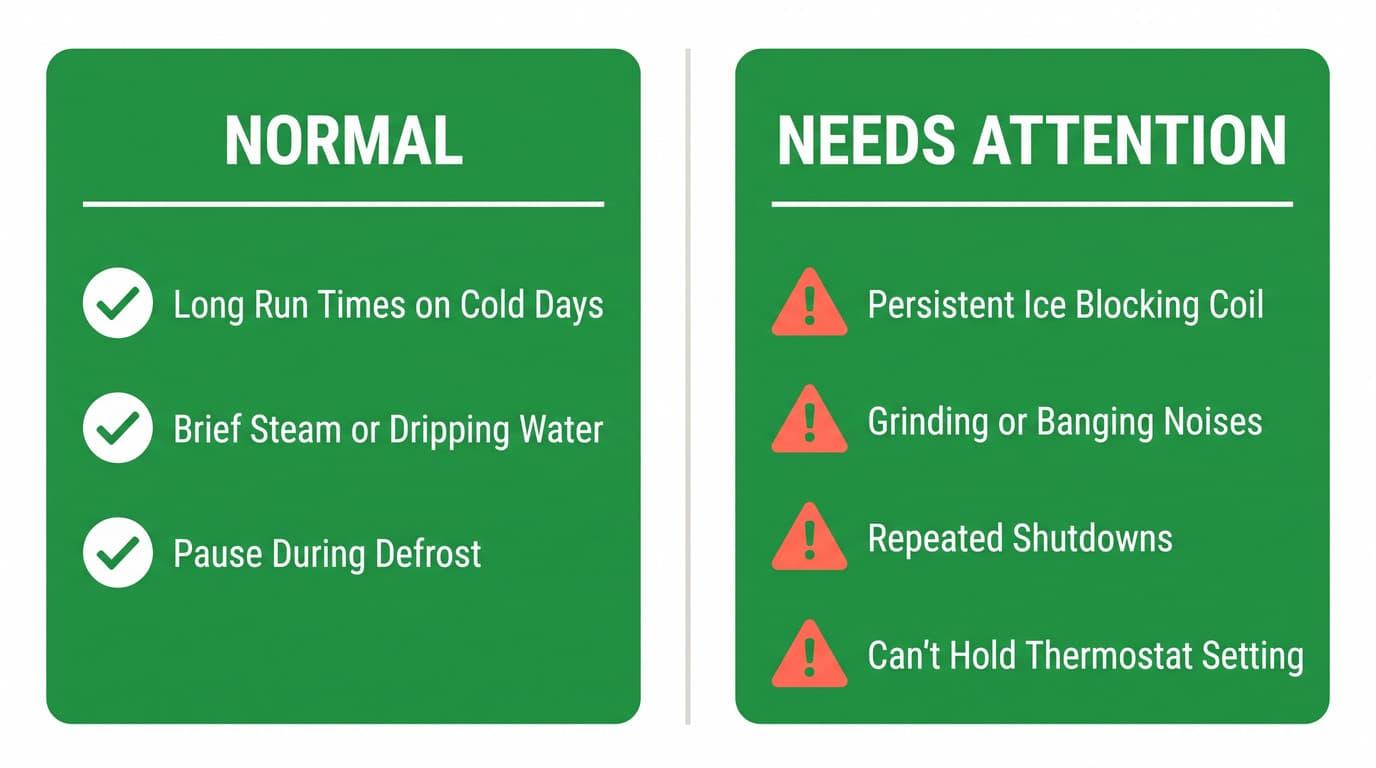
A heat pump may run for long stretches on cold days, and brief steam, dripping water, or a pause during defrost is usually normal. Persistent ice that blocks the outdoor coil, grinding or banging noises, repeated shutdowns, or rooms that cannot hold the thermostat setting deserve attention. So does backup heat that runs frequently in relatively mild weather. Don’t chip ice off the coil or open refrigerant components yourself. A technician can check airflow, controls, refrigerant operation, and sizing to find the cause.
At SameDay, our Green Team can inspect the entire heat pump system, pinpoint whether winter performance is being limited by airflow, defrost controls, or a mechanical issue, and recommend the right repair or maintenance. We’ll explain what’s happening and what it takes to restore dependable heat, rather than asking you to guess whether the behavior is normal.
Simple Ways to Help Your Heat Pump Through Winter
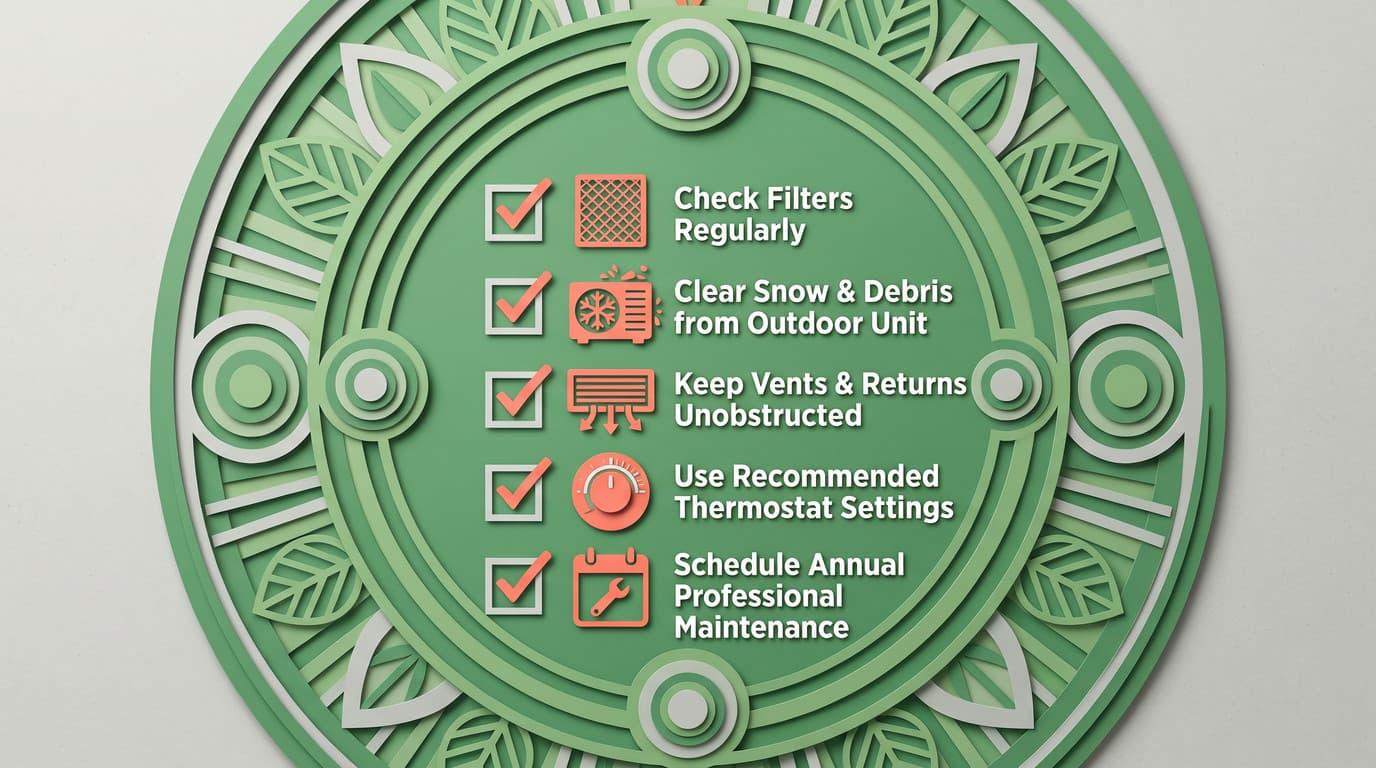
You can’t control Utah’s winter temperatures, but you can support efficient heating by keeping airflow clear and following a few practical winter HVAC maintenance habits:
- Check filters regularly and clean or replace them according to the manufacturer’s guidance.
- Clear snow, leaves, and debris around the outdoor unit without scraping its coil or damaging its fins.
- Keep indoor vents and returns unobstructed so warm air can circulate.
- Use thermostat settings recommended for your model; large setbacks can trigger supplemental heat in some systems.
- Schedule professional heating maintenance at least once a year to check the coils, airflow, electrical components, and defrost controls.
These simple habits can help your heat pump maintain steady performance, reduce unnecessary strain, and keep your home comfortable throughout Utah’s winter.
Does a Heat Pump Make Sense for Your Utah Home?

For a home replacing both heating and cooling equipment, a properly sized cold-climate heat pump may be a strong year-round option. In much colder temperatures, a ground source heat pump can be a stronger option, though the upfront cost and installation needs are usually higher. If you already have a working gas furnace, a compatible dual-fuel setup could offer another route. And if your air conditioner is still in good condition, replacing only an aging furnace may be more straightforward. The best choice depends on your existing equipment, insulation, electrical capacity, and comfort needs.
At SameDay, we can review your heating load, explain installation requirements, and help you compare equipment without assuming one system fits every Utah home. That includes looking at whether a ground-source system makes sense, since it can extract heat from the relatively stable ground rather than fluctuating outdoor air. Our team handles both heat pump installation and traditional heating systems, so you can make a decision based on the house you actually have.
Keep Your Utah Home Warm All Winter
So, how does a heat pump work in winter? It gathers heat from cold outdoor air, raises its temperature through a refrigerant cycle, and delivers that warmth indoors. Cold-weather performance depends on the model and your home; defrost cycles and occasional backup heat can be normal, while persistent ice or poor heating deserve attention.
At SameDay, our Green Team helps Utah homeowners keep their systems ready for winter with practical guidance and professional care. After installation or service, our Green Shield Membership can help you stay ahead of seasonal maintenance instead of waiting for a breakdown.
Get My Green Shield Membership
Frequently Asked Questions About Winter Heat Pumps
Still have questions about your heat pump? Here are a few practical things Utah homeowners should know.
How can I tell whether I have a heat pump or an air conditioner?
Check the outdoor unit’s model number and the thermostat settings. A heat pump typically operates the outdoor unit in heating mode as well as cooling mode. A technician can confirm the system type if the labels are unclear.
Can a heat pump heat a house during a power outage?
No. A heat pump needs electricity for its compressor, fans, and controls. Most gas furnaces also require electricity for the blower and ignition, so ask about compatible backup power if outages are a concern.
Are mini split heat pumps suitable for individual rooms?
Yes. Ductless mini-splits can heat and cool a room or zone without central ductwork. Their winter capability still depends on the model, installation, and room heating load.
Can I use a smart thermostat with a heat pump?
Yes, if it supports your heat pump and any auxiliary or dual-fuel heating. A compatible thermostat can manage changeover settings and help avoid unnecessary backup-heat use. Ask your installer to confirm compatibility before changing controls.
Are federal heat pump tax credits available in 2026?
No new 2026 installation qualifies for the federal Energy Efficient Home Improvement Credit. The IRS home energy tax credit guidance lists qualifying heat pumps under the 2023–2025 credit rules, including a separate annual limit of $2,000. Check current utility or state incentives before budgeting for a new system.