
The first hard freeze is a bad time to discover your furnace can’t keep up. After months of lighter use, dust may have collected around the filter and blower, and a small airflow problem can become much more noticeable when your Salt Lake City home needs steady heat.
Furnace cleaning helps remove buildup that interferes with airflow, while a professional maintenance visit also checks the components responsible for safe, reliable heating. For Wasatch Front homeowners, the best time to take care of both is before the heating season begins. Here’s how to recognize the signs, handle basic cleaning safely and choose the right service without paying for work you don’t need.
Key Takeaways
- Schedule furnace cleaning before Utah’s first hard freeze to address dust buildup and airflow concerns ahead of peak heating demand.
- Watch for weak airflow, uneven heating, unusual noises and persistent odors, which may indicate cleaning or repair needs.
- Homeowners can replace filters and check accessible vents, but gas, electrical and combustion components need a qualified technician.
- Professional cleaning and furnace tune-ups have different scopes, so confirm which inspections, cleaning tasks and tests are included.
- Furnace cleaning cost varies by service and access; national estimates average about $150, with a typical range of $70-$400.
Why Cleaning Before the First Freeze Makes a Difference
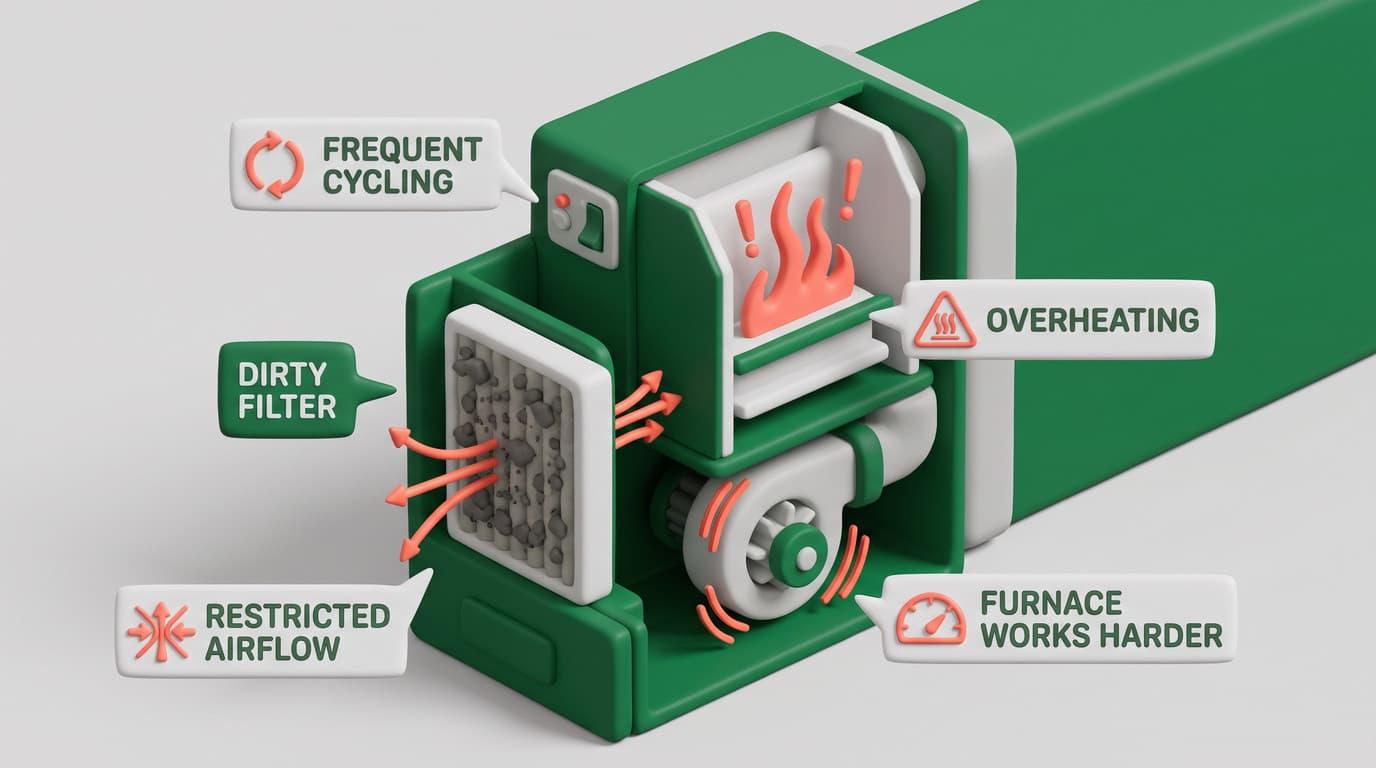
A dirty furnace filter restricts airflow through the heating system. Over time, dust and debris can also restrict airflow more broadly, forcing the furnace to work harder and raising energy consumption. That can reduce comfort, strain system components and, in some gas furnaces, contribute to overheating and frequent cycling as safety controls interrupt operation. Cleaning accessible components and replacing filters helps the system move air as designed, supporting energy efficiency, but it can’t fix a failing motor or combustion problem.
The seasonal timing is practical, too. ENERGY STAR recommends checking filters monthly and scheduling annual professional heating maintenance. Most HVAC manufacturers recommend annual furnace maintenance, and furnaces should be cleaned at least once a year. Getting that visit done before sustained Utah cold makes annual cleaning a smart way to support efficient operation, since annual furnace cleaning is recommended before the heating season to help maintain system efficiency and safety while giving a technician a chance to find worn parts, blocked venting or unsafe operation before the furnace faces its heaviest workload.
A clean filter can also help limit the dust that circulates through your home. Still, furnace cleaning alone isn’t a cure for allergies or every indoor air quality concern, and poor airflow or dirt-related strain can also show up as higher energy bills. The right solution depends on where the dust or moisture originates.
Five Signs Your Furnace Needs Attention Before Winter
You don’t have to wait for a complete breakdown. These changes can signal dust buildup, restricted airflow or a separate repair issue that deserves a closer look, and reduced airflow, unusual odors, visible dust buildup in vents, or short cycling can all point to cleaning needs.
| What you notice | What it may mean | Best next step |
|---|---|---|
| Weak airflow or uneven heating | Dirty filter, blocked vents or blower/duct issue | Check filter and accessible registers; request service if it continues |
| Higher heating bills | Longer run times from dirt buildup, reduced efficiency, or other component issues in a dirty furnace | Compare similar weather and usage, then schedule an assessment |
| Brief dusty odor on first startup | Settled dust warming after a long idle period | Monitor; persistent burning odor or smoke needs prompt attention |
| Frequent cycling | Airflow restriction, thermostat fault or safety shutdown | Replace a dirty filter; have repeated cycling diagnosed |
| Visible dust around registers | Visible dust buildup in vents may be a sign of a dirty furnace, or it may reflect a filtration/duct concern | Clean grilles; do not assume full duct cleaning is necessary |
These are clues, not diagnoses. If your furnace won’t ignite, makes grinding noises or continues to shut down after a filter change, cleaning may not be enough. If you smell natural gas or a carbon monoxide alarm sounds, leave the building and contact emergency responders or your gas utility from outside.
What Can You Clean Yourself, and What Needs a Technician?
If you’re searching for how to clean my furnace, start with the parts designed for routine homeowner access as part of basic furnace maintenance. You can clean furnace surfaces you can safely reach, but deep internal cleaning should be left to licensed technicians for safety.
| Component | Homeowner task | Professional task |
|---|---|---|
| Furnace filter | Inspect monthly; replacing the air filter is a crucial step in furnace cleaning, because dirty filters can restrict airflow and cause overheating | Check airflow and filter fit to help prevent expensive repairs |
| Supply and return registers | Vacuum visible dust; keep furniture and rugs clear | Investigate persistent airflow imbalance |
| Accessible exterior vent openings | Visually check for snow, leaves or other obstructions | Address blocked or damaged venting safely |
| Blower assembly and motor | Leave internal housing closed | Inspect and clean when buildup or system condition warrants it |
| Burner assembly and flame sensor | Do not remove or clean | Inspect combustion components and clean or service as needed |
| Heat exchanger, gas and electrical connections | No DIY work | Inspect condition and perform applicable safety testing |
For furnace filter replacement, turn the system off and follow the manufacturer’s directions. The key routine is to check furnace filters monthly and replace them every one to three months, or sooner if dirty, using the specified size and rating. Our air filter replacement schedule explains how intervals vary by filter type.
What Professional Furnace Cleaning Actually Includes (Heat Exchanger, More)
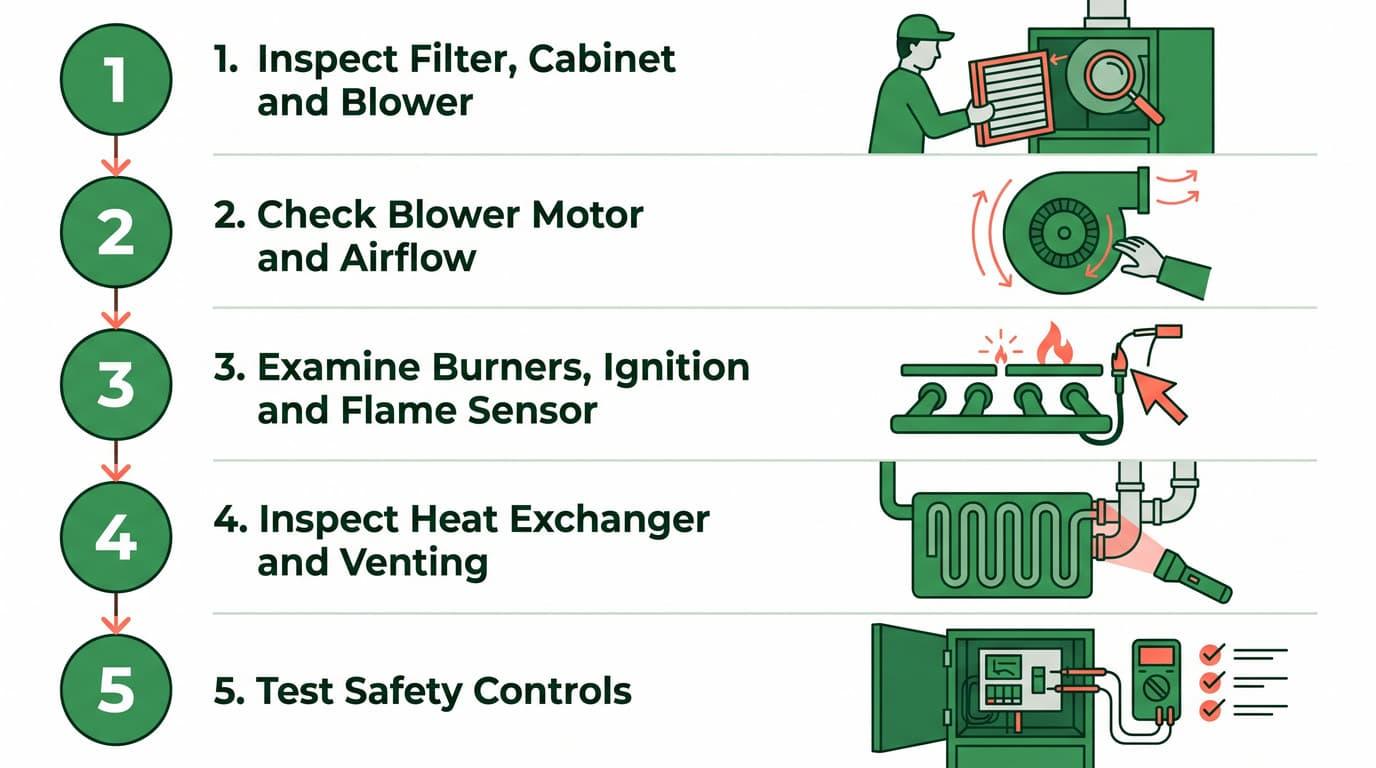
A professional furnace cleaning goes beyond replacing filters and removing visible dust. Our Green Team also performs a thorough inspection, looking at key components, addressing buildup where needed and checking system performance. Depending on your equipment and the service booked, this may include:
- Inspecting the furnace filter, cabinet and blower assembly for dust buildup
- Checking the blower motor and airflow, including blower components, since cleaning the blower assembly improves airflow and motor efficiency
- Examining the furnace burners, ignition system and flame sensor to support safe operation
- Inspecting the heat exchanger, venting, gas connections and electrical connections
- Testing safety controls and confirming proper furnace operation
Regular maintenance helps support system efficiency and reliable operation, and furnace cleaning can also improve indoor air quality by removing accumulated dust and allergens from the equipment.
A basic cleaning and a complete furnace tune-up may cover different tasks. Our technicians can explain what’s included, clean components based on the furnace design and service needs, identify concerns that need repair rather than cleaning and recommend the appropriate service before Utah’s heating season gets underway.
How Much Does Furnace Cleaning Cost?
Furnace cleaning cost depends on the scope of work, equipment condition and access. According to Angi’s 2026 furnace cleaning cost guide, the average furnace cleaning costs about $150, while professional furnace cleaning typically falls between $100 and $300, with broader service ranges running $70-$400. Costs vary based on system type and the cleaning depth required. The table breaks down common service categories to help you budget.
| Service type | Illustrative national range | What to clarify |
|---|---|---|
| Inspection only | $80–$100 | Whether cleaning or safety testing is included |
| Basic furnace cleaning | $60–$150 | Which accessible components are cleaned |
| More extensive cleaning or tune-up | $150–$400 | Inspection, combustion and safety checks included |
Annual maintenance plans generally range from $150 to $500. A furnace in a crawlspace, a heavily neglected unit or repairs discovered during the visit can increase the total. When comparing furnace cleaning near me results, ask whether the quote covers furnace filter replacement, blower cleaning, diagnostic testing and any separate repair charges. Some companies bundle annual maintenance with annual furnace cleanings to keep the system efficient, reduce utility bills and catch issues early before they lead to costly repairs. A written scope makes estimates easier to compare than an advertised price alone.
Furnace Cleaning, Tune-Ups and Air Duct Cleaning Aren’t the Same
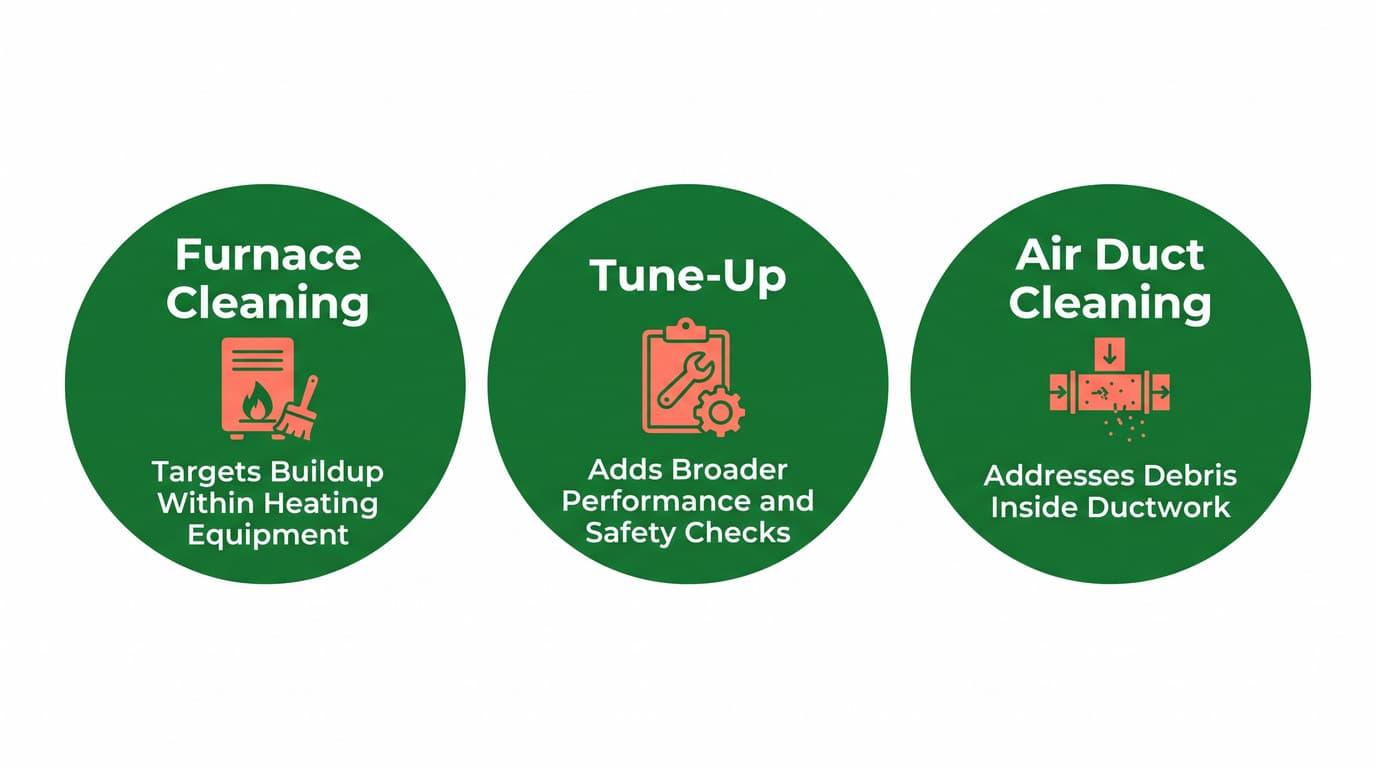
Furnace cleaning targets buildup within the heating equipment. A tune-up adds broader performance and safety checks. Air duct cleaning addresses debris inside the ductwork, so it is a separate service and usually a separate estimate.
The distinction matters because EPA guidance on duct cleaning recommends cleaning ducts as needed rather than on a fixed routine schedule. Visible mold, pest infestation or substantial debris entering living spaces can justify investigating the duct system, but dusty registers alone do not establish that a whole-home cleaning is necessary.
If your home still feels dusty after furnace filter replacement and regular maintenance, we can help assess whether filtration, humidity, ventilation or another indoor air quality issue deserves attention. That way, you can focus on the underlying concern rather than buying duct cleaning automatically.
Explore Indoor Air Quality Options
When to Schedule Cleaning and How to Keep Up With It

Late summer or early fall is a practical time for annual furnace maintenance, before Utah’s first sustained hard freeze. If that window has passed, scheduling now is still better than waiting for a no-heat emergency. Annual cleaning can lower energy costs by improving airflow and help keep the system running smoothly through winter, which also helps prevent unexpected breakdowns during the heating season. An older furnace or one with a history of breakdowns may warrant closer inspection, but older units still benefit from annual professional cleaning even if they look fine externally. This kind of regular furnace maintenance can also extend the lifespan of your furnace, often into the 15–20-year range when the system is otherwise in good condition.
Between professional visits, keep the routine simple: check the furnace filter monthly, replace it when dirty, clear accessible vents, and pay attention to new odors, unusual noises or uneven heating. These habits support dependable operation, while professional safety testing addresses risks you cannot evaluate from outside the furnace cabinet and helps a well-maintained furnace deliver reliable warmth over time.
Get Ahead of Utah’s First Hard Freeze
A little preparation before Utah’s heating season can make a big difference when temperatures drop. Furnace cleaning helps maintain proper airflow, while a professional inspection can identify developing issues before they interrupt your home’s comfort.
With SameDay, staying ahead of seasonal maintenance doesn’t have to mean remembering another appointment. Our Green Shield Membership Plan helps you keep essential system tune-ups on schedule, so your home is prepared for changing seasons, and you can enjoy dependable comfort with fewer surprises.
Explore My Green Shield Membership
Furnace Cleaning FAQs
These quick answers cover the practical details homeowners often ask about when arranging a cleaning or maintenance visit.
How long does a furnace cleaning appointment take?
A visit may take around one to three hours, depending on the furnace, access and whether the appointment includes inspection and safety testing. Ask the provider for an estimated time window when booking.
Should I turn off my furnace before a cleaning appointment?
You can leave the system accessible and follow any preparation instructions the service team provides. Do not open gas or electrical compartments yourself or try to handle electrical components. The technician will shut down and isolate the equipment as needed before working on internal components.
Can I use my furnace immediately after professional cleaning?
Generally, yes. Once the technician has completed the service, reassembled the equipment, verified the entire system is put back together correctly, and confirmed proper operation, you can typically use your furnace normally. If additional repairs are needed, follow the technician’s instructions before restarting it.
Will furnace cleaning remove allergens from my whole home?
Cleaning the furnace and replacing a dirty filter can reduce some accumulated dust in the equipment, but they will not eliminate every source of allergens. Indoor air quality also depends on filtration, moisture, ventilation and household conditions.
Does my furnace warranty require annual service?
Warranty terms vary by manufacturer and model. Some require documented maintenance or exclude damage caused by neglect. Check your warranty paperwork and retain invoices for completed visits rather than assuming one schedule applies to every system.