On a cold Salt Lake City morning, a failed furnace raises an urgent question: how long does it take to install a furnace? A straightforward replacement typically takes 4 to 8 hours on-site, often within one working day. Ductwork, fuel conversions, or venting changes can extend the job.
At SameDay Heating & Air, Plumbing, and Electrical, we help homeowners from Salt Lake City to Draper plan furnace replacement around their home’s actual layout, equipment, and winter needs. We’ll explain the likely installation time, what can delay it, and how we verify the new heating system before you rely on it through a Wasatch Front cold spell.
Key Takeaways
- Most straightforward furnace replacements take about 4 to 8 hours onsite, but that is an estimate, not a guaranteed completion time.
- Upgrades involving new venting, gas lines, electrical work, or ductwork can require a full day or multiple visits.
- Installation day and the overall project timeline are different: assessment, equipment availability, permits, and inspections can add calendar time.
- You can help the process run smoothly by clearing access, securing pets, and confirming the plan for heat interruption.
- Proper sizing, duct connections, startup testing, and safety checks matter more than finishing as quickly as possible.
How Long Does Furnace Installation Take for Different Projects?
The average time for furnace installation depends less on the size of your house than on what the installers can safely reuse, and most jobs fall in the 4 to 10 hour range depending on complexity. Replacing an old furnace with a compatible new unit is different from installing a heating system where none existed before, but most installations are completed in a single day. Use these ranges as planning estimates rather than a promise for your particular home.
| Installation scenario | Typical planning time | Why it varies |
|---|---|---|
| Like-for-like furnace replacement | About 4–8 hours, usually within a day | Existing ductwork, fuel supply, and location remain suitable |
| Gas furnace replacement with minor changes | About 6–8 hours | Venting, gas connections, and cabinet transitions need adjustment |
| High-efficiency furnace upgrade | Often a full day; sometimes longer | These systems can take longer than standard models because new intake/exhaust venting and condensate drainage may be needed |
| Major ductwork, relocation, or fuel conversion | One to three days | New runs, connections, and inspections expand the scope |
| First-time installation | Quoted after assessment | Ductwork, utilities, and equipment placement may need to be built |
According to Lennox’s furnace installation guidance, gas furnace installations may take roughly 6 to 10 hours, while electric furnace installations may take 4 to 6 hours. Electric units are usually faster to install because they do not require the same gas piping and venting work. These are general ranges, not SameDay completion guarantees. Our team assesses the existing equipment, connections, and access before explaining the likely timeline for your home.
A Straightforward Replacement Can Often Be Finished in One Day
When the new furnace fits the space, and existing connections are compatible, the crew can remove the old unit, connect the replacement, and test it, often in one working day. The job is not complete until safety and performance checks are finished.
A Major Upgrade Needs More Time
A high-efficiency condensing gas furnace may require different exhaust venting and a condensate drain, adding work beyond a straightforward swap. Relocating the furnace, changing fuel types, or repairing damaged ducts can also extend installation, and complex jobs may need extra time for modifications. Replacing the furnace with the air conditioning side as a full system project requires additional equipment connections and testing and may take a full day or longer.
Same-Day Installation Versus the Full Project Timeline
There are two clocks to consider: how long the installers work inside your home and how long the project takes from your first call to final sign-off. A furnace might be installed in one day even when planning, ordering, permitting, and scheduling happen beforehand. That distinction matters when you are trying to plan ahead for a Utah winter.
The overall installation timeline can include an initial HVAC assessment, heating-load calculation, equipment selection, any required permit, installation day, and a municipal inspection where applicable. Requirements vary across Salt Lake City, Draper, and other Wasatch Front communities. Some inspections occur after the equipment is installed; ask your contractor whether a particular approval is required before operation rather than assuming every home follows the same sequence.
A straightforward replacement may be completed during a single installation day once the equipment and crew are scheduled. That is different from promising a same-day appointment or guaranteed same-day completion. Our Green Team first checks equipment availability, the existing ductwork and venting, and local permit requirements, then gives you a realistic plan.
Explore My Furnace Replacement Options
What Happens During the Furnace Installation Process?
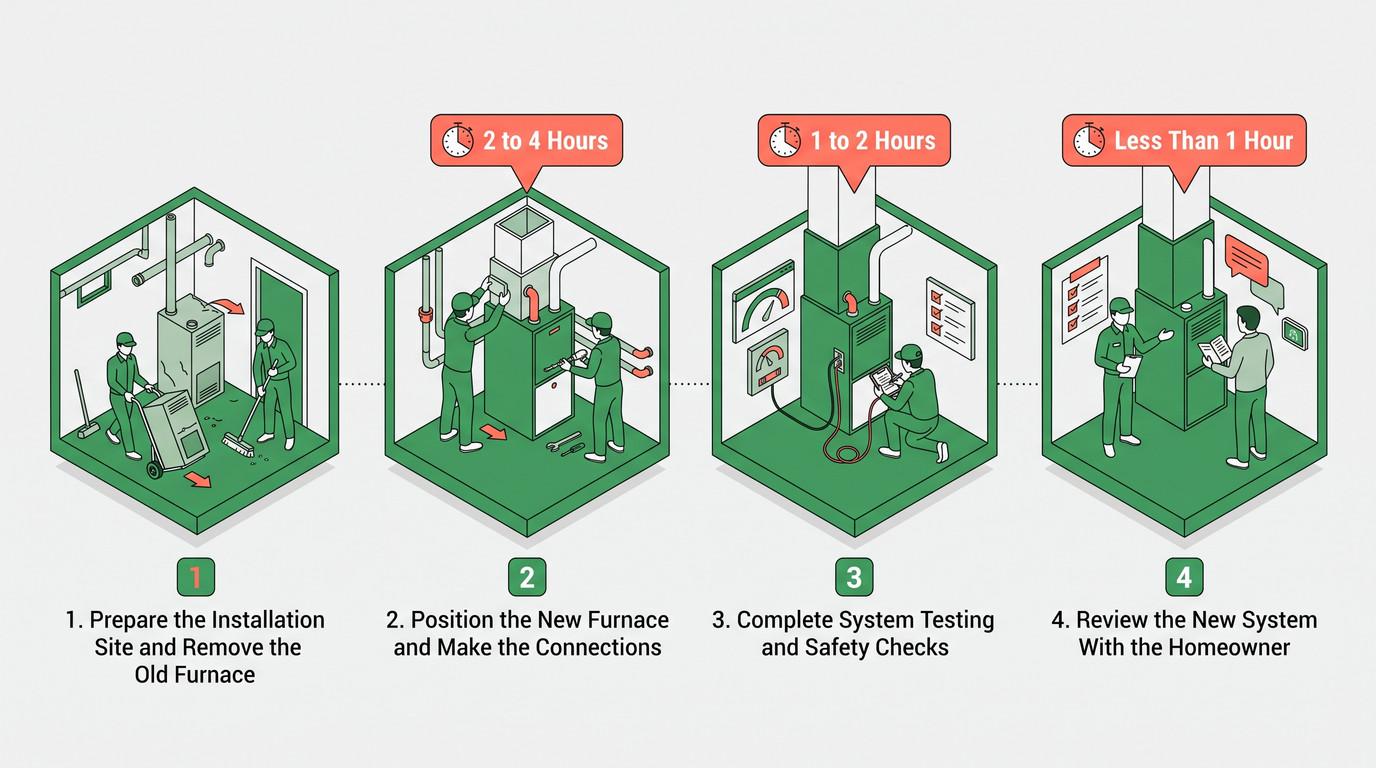
Knowing what to expect from furnace installation makes the day less disruptive. Although the sequence can vary, a professional installation generally moves through the following stages. Each one contributes to a properly installed system, not just a quicker setup process.
Prepare the Installation Site and Remove the Old Furnace
The crew first protects the work area and confirms access to the existing unit. After safely shutting off the necessary fuel and power connections, installers disconnect the old furnace from its ductwork, venting, controls, and utilities. They remove and dispose of the old equipment according to the agreed scope. Difficult access or corroded connections can make this stage more time-consuming than expected.
Position the New Furnace and Make the Connections
Installers position the new unit and connect it to the ducts, adjusting transitions as needed; ductwork installation or modification can add about 2 to 4 hours. Gas furnaces need fuel and vent connections; electric models need suitable wiring. Depending on the system, the crew may also connect a condensate drain, cooling components, or a thermostat, and installing additional components can prolong the installation process.
This is where existing ductwork condition can significantly impact installation duration, along with electrical wiring and the available space. If existing components are not suitable, they must be corrected rather than simply connected to the new equipment. Access to the unit location also affects installation speed, especially if the air handler is in a harder-to-reach space.
Complete System Testing and Safety Checks
Once the equipment is connected, the crew checks that it starts, heats, cycles, and shuts down as intended. System testing after installation often takes 1 to 2 hours. For a gas furnace, that can include checking gas pressure, connections for leaks, combustion, and venting according to the manufacturer’s requirements. Airflow, thermostat operation, and relevant safety controls also need attention. These final steps are part of the installation, not an optional add-on.
The checks are not optional finishing touches. ENERGY STAR’s HVAC guidance explains why sizing, airflow, and maintenance affect heating performance. Improper installation can lead to efficiency losses and safety hazards, so these checks help ensure the new system operates as intended, rather than simply turning on.
For gas furnaces, safe combustion and venting are especially important. CPSC’s carbon monoxide guidance emphasizes safe fuel-burning equipment and working carbon monoxide alarms. Before returning the furnace to service, the installer should verify venting and combustion operation to support efficient performance and help ensure safety and compliance with local codes.
Review the New System With the Homeowner
Before leaving, the installer should explain how to operate the new thermostat, what filter the system uses, which maintenance tasks are appropriate for homeowners, and what documentation to keep. This is also the time to ask about warranties, inspection follow-up, and any work that remains outstanding; thermostat installation typically takes less than 1 hour when no major control rewiring is needed. At SameDay, our customer-care approach emphasizes explaining the work and obtaining approval before additional charges or repairs, which leaves you in good shape to operate the system and understand any remaining follow-up.
What Factors Can Extend Furnace Installation Time?

Several key factors determine whether an estimated six-hour replacement stays on schedule or becomes a more involved job. Some are visible during the initial assessment; others only become clear after the old furnace is removed.
- Existing ductwork: Leaks, undersized runs, damaged transitions, or incompatible connections may need repair before the new furnace can operate correctly, and ductwork condition affects installation time significantly.
- Fuel lines and venting: Gas-line changes, exhaust routing, or a conversion to a high-efficiency model can add labor and materials.
- Electrical wiring and controls: New equipment may require changes to the circuit, electrical connections, or thermostat wiring.
- Installation site access: A cramped attic, crawlspace, or cluttered utility room slows removal and setup.
- Additional equipment: Replacing the furnace and air conditioner together, or installing new accessories or new controls, can extend the total installation time.
- Permits and inspection scheduling: Local requirements can affect the overall timeline even if the onsite work is finished in a day.
A complication does not automatically mean a multi-day job. Before approving extra work, ask what changed and why it is needed. Confirm who handles permits and inspections, and whether they affect when the furnace can be used. Older Salt Lake City homes may need duct or venting adjustments, while finished basements in Draper can limit access. Each home needs its own assessment.
What If Your Furnace Has Already Failed During a Utah Cold Snap?
During a Wasatch Front cold snap, restoring safe heat is the priority. Tell us whether any heat is working and whether someone in the home is especially vulnerable to cold. We can explain service options and replacement requirements, but same-day completion depends on equipment availability, access, and the work involved.
Ask what can be done today and how long the home may be without heat. If replacement is delayed, discuss safe alternatives. Never use an oven, outdoor grill, or fuel-burning generator to heat indoor living space. For extended outages, ask how to protect plumbing from freezing.
How to Prepare for Installation Day and Limit Time Without Heat
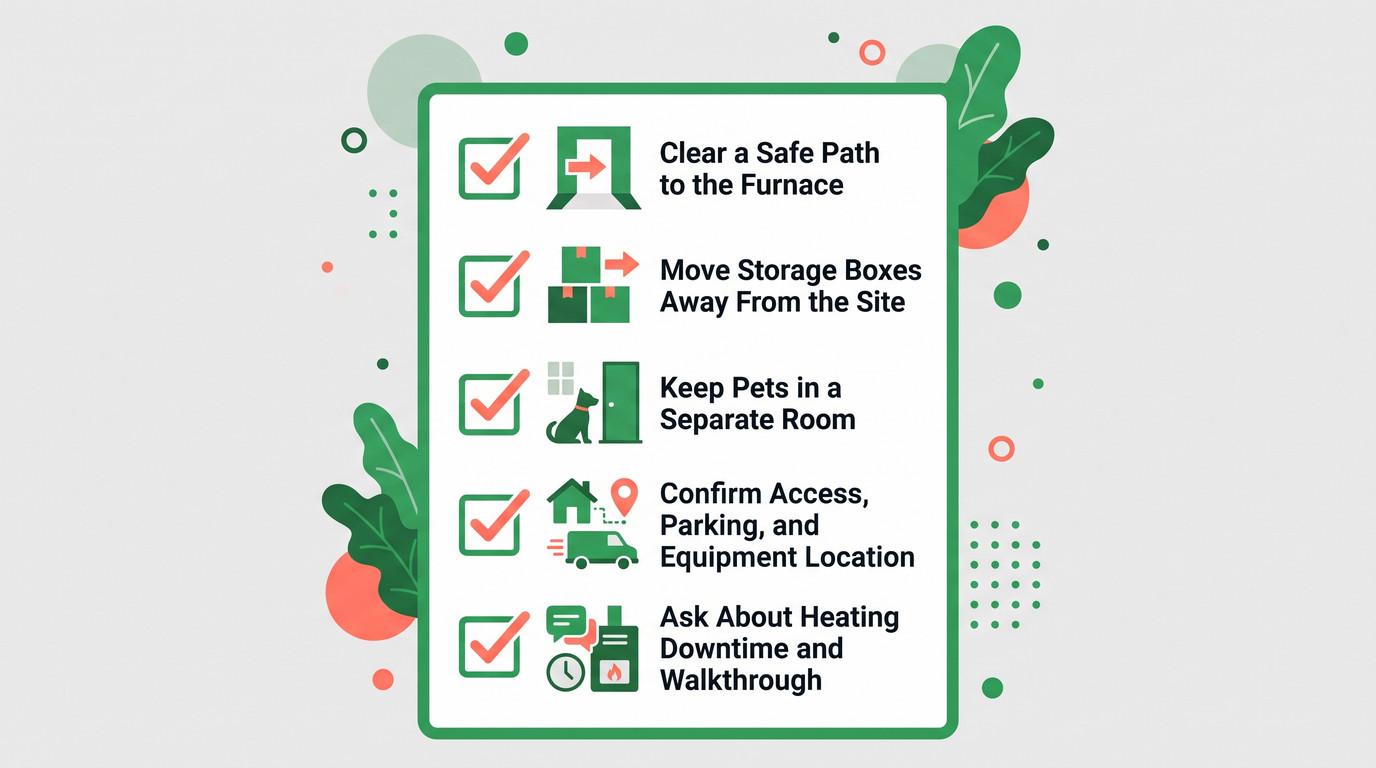
You do not need specialized tools or technical knowledge to help the crew work efficiently. A few simple steps before the appointment can make the process smoother and reduce avoidable delays.
- Clear a safe path to the furnace, including stairs, hallways, and the space around the equipment.
- Move storage boxes and other items away from the installation site without disturbing gas or electrical connections.
- Keep pets in a separate room while doors are open and equipment is being moved.
- Confirm access, parking, the planned equipment location, and any proposed ductwork modifications.
- Ask when heating will be unavailable and whether an adult needs to be present for approvals and the final walkthrough.
Your heating system will be off while the old furnace is disconnected and the new one undergoes startup checks. Ask how long that interruption may last, particularly if anyone in your household is sensitive to cold. If indoor temperatures could become unsafe, arrange another place to stay and follow the cold-weather safety precautions above.
Plan My Draper Furnace Replacement
Why Professional Furnace Sizing Matters
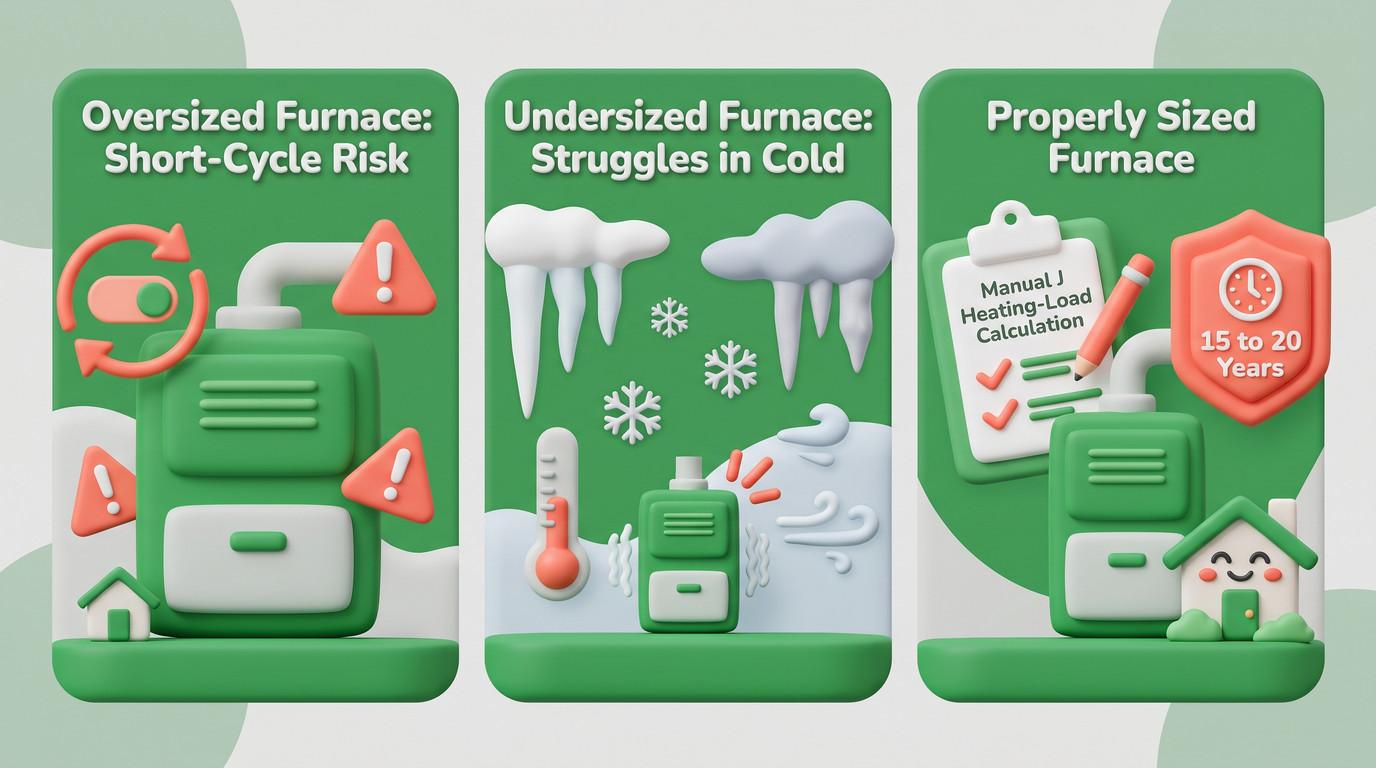
Finishing quickly matters, but proper sizing is just as important. A contractor should evaluate the home’s heating load rather than copy the old furnace’s capacity, then confirm the selected unit is compatible with the ducts and controls in a residential home. Professional installers use tools like A Manual J heating-load calculation for accurate sizing, accounting for insulation, windows, and the home’s design conditions; equipment selection and commissioning complete that assessment.
An oversized furnace may short-cycle, while an undersized one can struggle during extended cold. Proper furnace sizing prevents energy loss and inefficiency. Restricted ductwork can undermine either choice. We also want homeowners to know what was actually measured at startup, such as temperature rise, airflow-related readings, and gas or venting checks appropriate to the installed model, rather than receiving only a demonstration that warm air comes out.
Gas leaks, electrical faults, and poor venting can pose serious hazards. For that reason, gas piping, electrical wiring, combustion adjustments, and internal safety testing belong to qualified professionals. Licensed professional installation may help protect the warranty, subject to the actual written terms, and can also help meet code and manufacturer requirements. Do not assume that a license or a tune-up automatically guarantees coverage.
If you are comparing how long to replace a furnace as well as the cost, ask whether the price covers removal of the old furnace, any required duct or fuel-line changes, thermostat setup, permits, system testing, and homeowner orientation. A clear scope is more valuable than a low price that omits essential steps. With proper installation and maintenance, furnaces typically last 15 to 20 years.
Questions to Ask Before You Book a Furnace Installation
- Is this a like-for-like replacement, or will my ductwork, venting, or fuel supply need changes?
- What is the estimated onsite installation time, and what could change it?
- What is the expected timeline from assessment to final inspection?
- How will you confirm the new furnace is correctly sized for my home?
- Which permits, startup tests, and safety checks are included?
- How long should I expect to be without heat, and what happens if the work takes longer?
- Is the contractor properly licensed for the work? Verify their credentials through the Utah DOPL license verification tool.
We want Wasatch Front homeowners to understand the work before agreeing to it. Our Green Team can walk through your existing HVAC system, explain any necessary modifications, and outline the installation process in language that makes sense. That way, a same-day job is a practical outcome when conditions allow, not a shortcut around proper setup and testing.
Plan a Furnace Installation That Fits Your Utah Home
How long does it take to install a furnace? For a straightforward replacement in a residential home, the average furnace installation takes about 4 to 8 hours of on-site work, though installation can take 4 to 10 hours depending on complexity. The more useful question is what your home needs before the new furnace can be sized, connected, tested, and safely operated.
At SameDay, our Green Team can assess your system, explain any required changes, and plan around Utah winter conditions. We’ll review the scope and timing before work starts and explain how the new system operates. Our Green Shield Membership offers annual system tune-ups and other benefits, subject to plan terms.
Explore My Green Shield Benefits
Furnace Installation FAQs
Once you have a realistic installation estimate, these additional questions can help you prepare for life with the new system rather than repeat the timing information above.
Will I Need to Replace My Furnace Filter Right Away?
A newly installed furnace should have the correct filter fitted at startup. Ask the installer where it sits, what size and rating the equipment supports, and how often to inspect it. Do not assume the filter from your old system is compatible.
What Documents Should I Receive After Installation?
Ask for the itemized final invoice, equipment model and serial numbers, warranty paperwork, any applicable permit or inspection records, and instructions for the thermostat and filter. Keep these with your maintenance records so future service visits are easier.
Can I Keep My Existing Air Conditioner With a New Furnace?
Often, but the indoor coil, blower, controls, and available space must be compatible. If your air conditioner is relatively new, ask the contractor to check the matched system before deciding whether to replace both units.
Can I Stay Home During Furnace Installation?
Yes, homeowners can generally stay home, although the work area may be noisy and parts of the house will be without heat. Keep children and pets away from the equipment, and ask the crew whether an adult must be present for decisions or the final walkthrough.
Can I Use My New Furnace Before the Final Inspection?
Inspection and permit requirements vary by jurisdiction. Ask the installer whether the furnace can be operated while a final inspection is pending, who schedules that inspection, and whether any restrictions apply.