When winter hits the Wasatch Front, the last thing you want is a furnace that quits on the coldest night of the year. Changing your air filter is a good start, but it won’t catch every problem hiding inside your heating system.
So, what is a furnace tune-up, and what are you actually paying for?
A professional furnace tune-up goes beyond a quick visual check. A qualified technician cleans key components, tests system performance, checks electrical connections, and inspects safety features to help your furnace run reliably through Utah’s long, cold winter. You’ll also get a clearer picture of your system’s condition and any repairs worth addressing before temperatures drop.
In this article, we’ll break down what a furnace tune-up includes, how long it takes, and how regular maintenance can help keep your Utah home warm and comfortable all winter.
Key Takeaways
- A furnace tune-up includes inspection, cleaning, performance testing, and safety checks; the exact work depends on the equipment and scope of service.
- Schedule professional maintenance annually, ideally before the Wasatch Front heating season. A typical visit takes one to two hours.
- Changing your filter supports airflow, but combustion, gas pressure, heat exchanger, and electrical checks require a qualified technician.
- Published national furnace tune-up estimates range from $70 to $200; request a local quote and confirm what is included.
- A tune-up can identify developing problems, but it cannot prevent every breakdown. A furnace that has stopped heating may need diagnosis and repair.
What HVAC Technicians Check During a Furnace Tune-Up
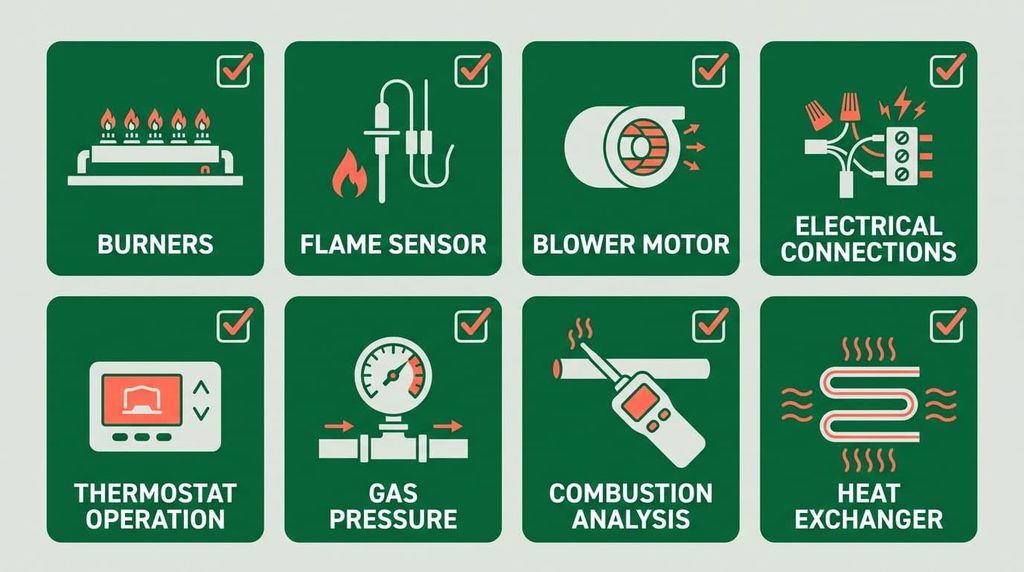
A complete furnace tune up combines inspection, cleaning, safety checks, and performance testing rather than just a visual look. The exact work depends on the furnace design, its condition, and the service package.
Some problems require calibrated instruments to identify, while others call for a close look at the furnace and its connections.
A typical gas furnace tune-up checklist includes:
- Burners: The technician checks ignition, flame condition, alignment, and buildup that could interfere with proper combustion, and inspects and cleans the burner assembly.
- Flame Sensor: The technician inspects and cleans the sensor so the furnace can reliably detect a flame.
- Blower Motor: The technician checks motor operation, cleanliness, electrical demand, and airflow performance.
- Electrical Connections: The technician looks for loose terminals, damaged wiring, and signs of overheating.
- Thermostat Operation: The technician checks temperature settings, confirms the furnace responds correctly to a call for heat, and performs thermostat calibration if readings are off.
- Gas Pressure: The technician uses appropriate instruments to measure gas pressure against the equipment specifications.
- Combustion Analysis: The technician uses a digital flue gas analyzer to check exhaust gases, evaluate combustion testing results, and identify potentially unsafe operating conditions.
- Venting System: The technician inspects the exhaust path for blockages, damaged connections, and improper venting; in gas furnaces, venting and combustion checks help identify safety risks.
- Heat Exchanger: The technician inspects accessible areas for visible damage or deterioration as a standard tune-up step and identifies when further evaluation is needed.
- Condensate Drain: On condensing furnaces, the technician checks the drain system for blockages or leaks that could interrupt operation.
- Airflow and Accessible Ductwork: The technician checks accessible connections for visible restrictions, leaks, or damage; a full duct inspection may be a separate service.
The technician also checks the filter and handles filter replacement if needed within the service scope.
A U.S. Department of EnergyBuilding America study of older furnaces identified gas input, airflow, and static pressure as important factors in field performance. Although results vary by home and equipment, incorrect gas input or restricted airflow can reduce heating output even when a furnace still runs.
These measurements provide information a visual inspection alone cannot. A professional furnace tune-up combines testing and inspection to help identify operating concerns before Utah’s winter increases heating demand. Cleaning dust and debris from components supports performance and safety, and tune-ups can reveal gas leaks or faulty safety controls.
Why Changing Your Furnace Filter Isn’t Enough
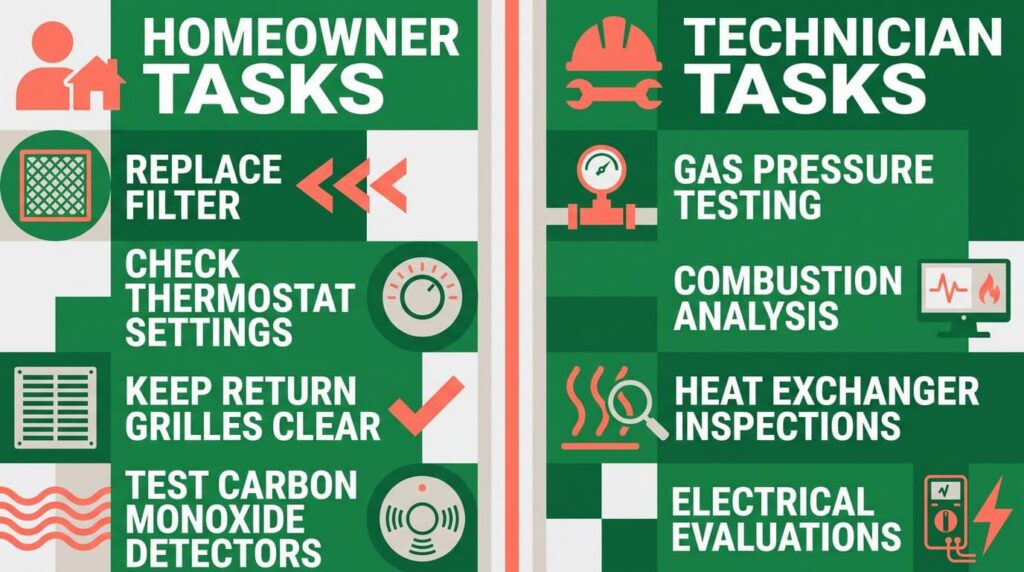
Changing your furnace filter helps keep air moving through your home. But even if you replace it regularly, problems can still hide inside your furnace. A clean filter won’t reveal incorrect gas pressure, unsafe combustion, damaged electrical connections, or a deteriorating heat exchanger.
Many homeowners wonder whether they can handle a tune-up themselves or if it’s better to call a pro, so where does your responsibility end and a technician’s begin?
- Homeowner Tasks: Replace your filter as recommended, check thermostat settings, keep return grilles clear, maintain space around your furnace, and test carbon monoxide detectors according to the manufacturer’s instructions; these are basic maintenance tasks most homeowners can handle.
- Technician Tasks: Leave gas pressure testing, combustion analysis, heat exchanger inspections, venting checks, and electrical evaluations to a qualified HVAC technician. These tasks require specialized tools and training.
How Technicians Assess Combustion Safety
Your furnace’s heat exchanger separates combustion gases from the air circulating through your home. Cracks, corrosion, or damaged seams can compromise that separation, and a cracked heat exchanger can lead to carbon monoxide leaks and a potential carbon monoxide hazard. A technician can look for visible damage, but appearance alone cannot confirm safe operation.
Combustion analysis adds information about how the furnace burns fuel. Using a combustion analyzer, a technician can measure exhaust gases, check carbon monoxide levels, and assess operating conditions. These readings complement heat exchanger and venting inspections; they do not replace them or rule out every possible defect.
Carbon monoxide detectors provide another form of protection, but they don’t replace professional testing. They alert you when carbon monoxide reaches the device; they don’t prevent furnace problems from developing.
Filter care and professional combustion checks serve different purposes. Both belong in a maintenance routine, alongside working carbon monoxide alarms, because furnace tune-ups help prevent carbon monoxide leaks.
How Professional Furnace Cleaning Supports Better Performance
During a furnace tune-up, your technician inspects key components and cleans them as needed within the agreed service scope. This may include burners, accessible blower components, and the filter housing. Removing dust and debris from furnace components helps support both performance and safety. More extensive disassembly or deep cleaning may require separate work.
Dust on the blower wheel can reduce airflow, while dirty burners may interfere with ignition and flame consistency. Debris around the filter housing can also affect airflow or filter fit. Cleaning addresses buildup so the system can operate efficiently, but it cannot correct improper furnace sizing or replace worn mechanical parts.
The ENERGY STAR maintenance checklist recommends checking furnace components that affect airflow, combustion, safety, and overall performance.
Cleaning and operational measurements work together to support airflow and system efficiency. Regular maintenance can improve energy efficiency and may help lower energy costs, with annual service sometimes reducing bills by up to 15% as a general estimate rather than a guaranteed result.
What a Tune-Up Actually Changes About Your Winter
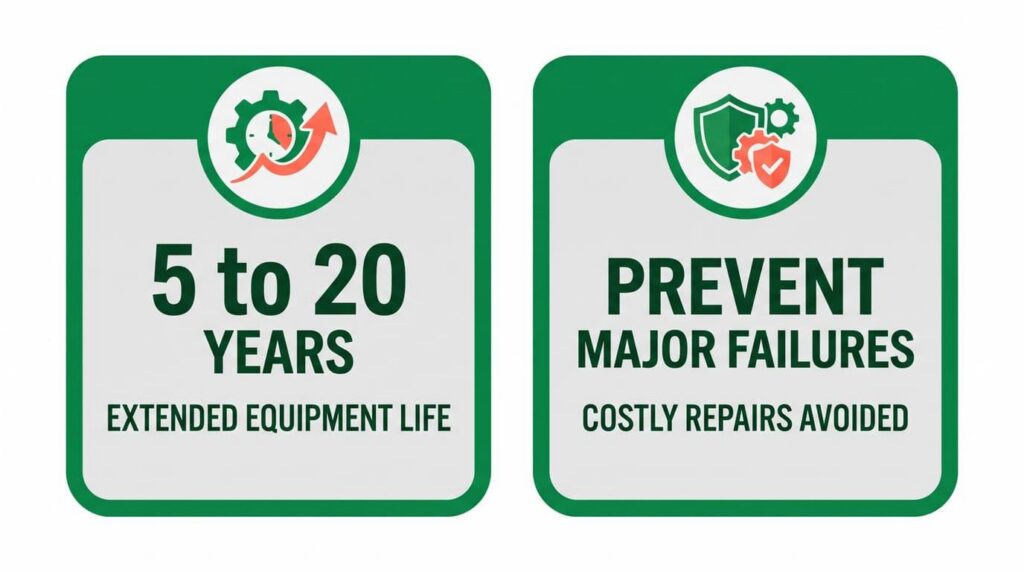
Regular furnace tune ups can help prevent major failures and costly repairs by finding worn or malfunctioning components before they fail during cold weather. The practical benefit is time to arrange necessary work before you depend on the furnace, and service also helps keep the furnace running as designed when demand rises during a Wasatch Front cold spell.
For Salt Lake City households, that can mean reviewing a repair recommendation while the system still provides heat, rather than deciding during a no-heat emergency.
Know What Your Furnace Needs
A tune-up also gives you a clearer picture of your furnace’s condition. Your technician can explain what’s working properly, what needs attention now, and which parts may need replacing down the road, and records of regular furnace maintenance can support warranty questions while helping you track the system’s condition over time. Keeping a record of this work can also help if you need warranty support or repairs later. Regular furnace maintenance may also extend equipment life by 5 to 20 years, though gains vary widely by system condition and upkeep.
Keep Your Expectations Realistic
A tune-up can’t guarantee lower energy bills, prevent every breakdown, or make an older furnace last forever. Your system’s age, installation, daily use, and existing wear all affect performance. Even a well-maintained furnace can develop problems unexpectedly.
Could Skipping a Furnace Tune-Up Affect Your Warranty?
Your furnace warranty may require documented annual maintenance or annual inspections for certain coverage. The rules vary by manufacturer and model, so check the written terms rather than assuming registration alone is sufficient, and verify your own manufacturer terms. A recommendation for annual service is not automatically the same as a condition of warranty coverage.
After each tune-up, keep the dated invoice showing when the service took place and who performed it. Store it with your furnace’s installation paperwork, model information, and previous service records so you can find everything easily if you need repairs later.
Carrier’s furnace maintenance guidance recommends routine professional service and annual professional furnace maintenance. Follow your own equipment’s maintenance requirements and keep records available if a warranty question arises.
Is a Furnace Tune-Up Worth the Cost?
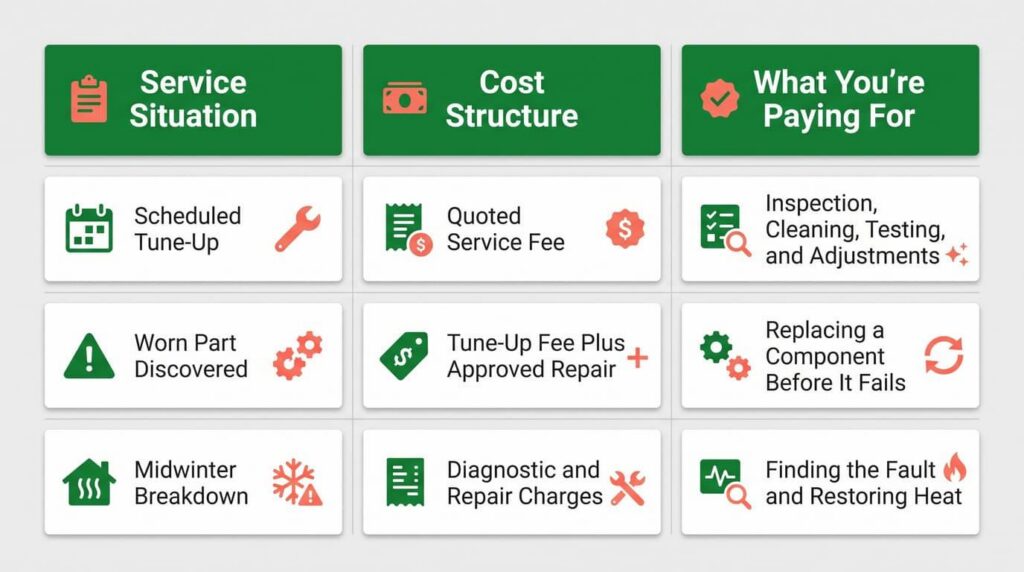
A furnace tune-up has an agreed service price, while an unexpected breakdown can involve diagnostic fees, parts, and repair labor. Published national HVAC maintenance estimates provide broad budgeting context for typical tune up costs, and more extensive service can cost more because furnaces are complex systems. Price depends on your location, furnace type, equipment condition, and included work.
HomeGuide lists a general furnace tune-up range of $70 to $200, and most homeowners pay between $100 and $150. Its fuel-specific estimates put gas furnaces at $80 to $170, oil furnace service at $100 to $200, and electric furnaces at $70 to $130. They usually cost less to service because they have fewer combustion-related components than gas or oil systems. Use these as national planning estimates and request a local quote for your equipment.
The timing of a repair can matter as much as the maintenance price:
| Service situation | Cost structure | What you’re paying for |
|---|---|---|
| Scheduled tune-up | Quoted service fee | Inspection, cleaning, testing, and adjustments |
| Worn part discovered | Tune-up fee plus approved repair | Replacing a component before it fails |
| Midwinter breakdown | Diagnostic and repair charges | Finding the fault and restoring heat |
Imagine your technician finds a worn component in October. You have time to review the repair estimate, plan the expense, and arrange the work before colder weather arrives. If that same component fails during a January cold snap, you could be facing an urgent repair while your home loses heat.
Of course, not every worn part will fail, and a tune-up can’t predict every breakdown. The point is to understand your options before you’re dealing with a cold house and an unexpected bill.
When you ask, “How much does a furnace tune-up cost?”, compare quotes for a one-time tune-up versus other options. Ask what’s included, whether you’ll receive a written assessment, and how any additional repairs will be priced. That way, you can judge whether the service offers useful value for your particular furnace and budget.
How Furnace Age Changes the Maintenance Calculation
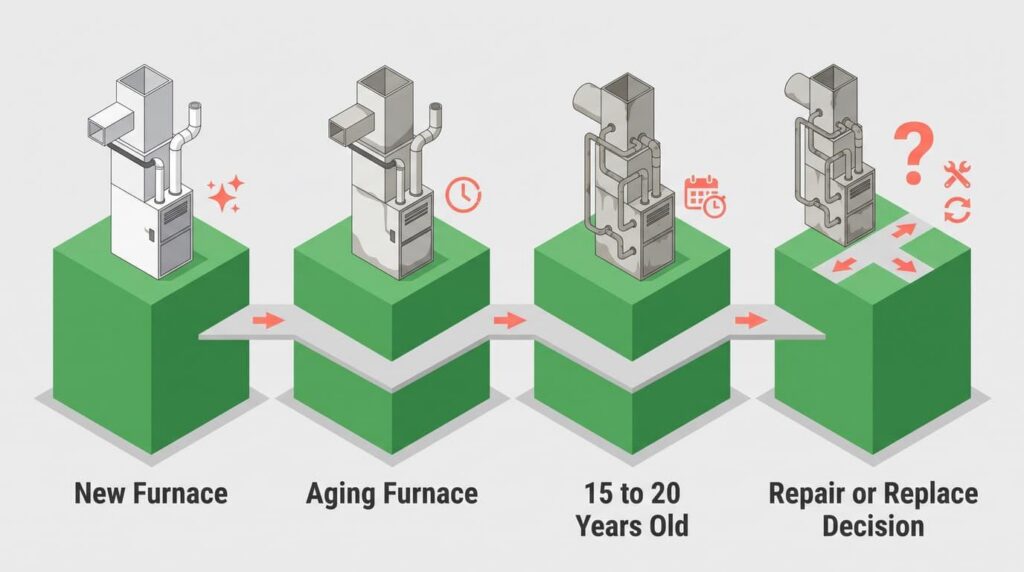
A furnace’s age can help you plan for future work, but it does not tell the whole story. Carrier gives a general lifespan of 15 to 20 years, depending on equipment, installation, use, and maintenance. Treat that as a planning range, not a countdown to replacement.
Here’s what to keep in mind as your furnace ages and you plan for its ongoing care.
- Start regular maintenance when your furnace is new, following the manufacturer’s schedule. Early records and annual furnace maintenance help homeowners track condition over time.
- As your furnace gets older, pay closer attention to wear on motors, controls, ignition components, and other parts. Regular inspections can uncover issues before they turn into major repairs.
- If your furnace is approaching 15 to 20 years old, ask your technician about its overall condition, recurring repairs, and any safety concerns. Regular tune-ups can help some systems reach that common lifespan range, depending on installation, use, and overall care.
- Don’t base your repair-or-replace decision on age alone. Consider the furnace’s condition, repair history, safety findings, and the cost of the proposed work before deciding how to move forward.
An older furnace may still have useful years ahead, but knowing its condition helps you plan your next steps with fewer surprises and decide when to schedule an annual furnace check.
What to Check Before Hiring a Furnace Technician
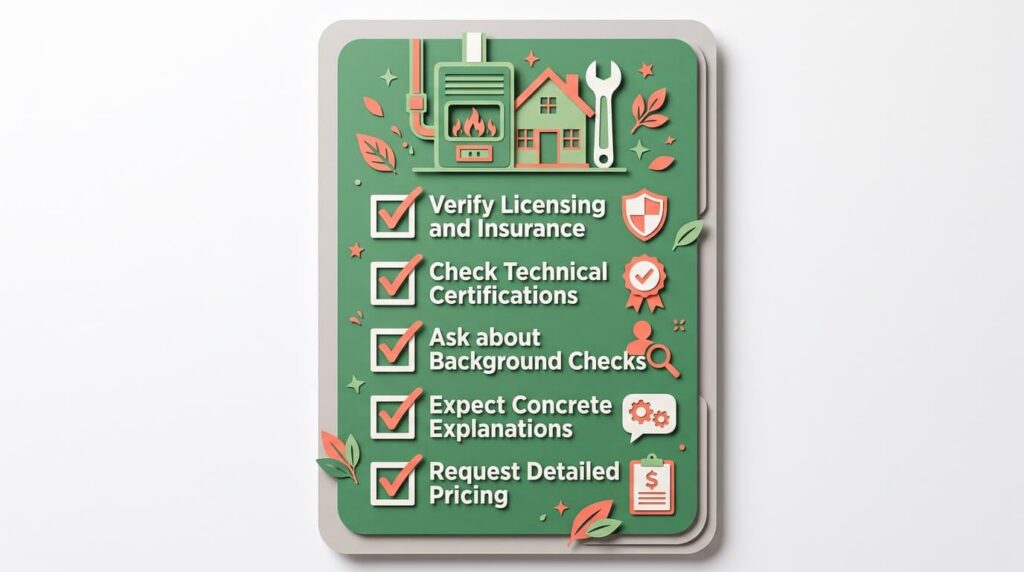
Before letting a professional HVAC technician work on your furnace, take a few minutes to check their credentials and find out what to expect from the service. Here’s what to look for:
- Verify Licensing and Insurance: Confirm the company meets Utah’s applicable licensing requirements and carries appropriate insurance for the work.
- Check Technical Certifications: NATE certification is a recognized industry credential. Ask whether your technician holds current certification relevant to the work being performed.
- Ask about Background Checks: Find out whether technicians are screened before entering customers’ homes.
- Expect Concrete Explanations: A qualified technician should explain their findings, show you which components need attention, separate necessary repairs from optional recommendations, and identify safety issues such as gas leaks when relevant to the inspection.
- Request Detailed Pricing: Before approving additional work, ask what it involves and how much it will cost.
At SameDay Heating & Air, our Green Team provides furnace tune-ups for homes in Salt Lake City and the surrounding Wasatch Front. We inspect the equipment, check operation, and explain what needs attention with exceptional customer service. Our team distinguishes routine upkeep from issues requiring further diagnosis or repair. You receive an explanation of recommended additional work and its pricing before approving it.
Make Furnace Maintenance Easier With a Service Plan
When life gets busy, scheduling HVAC maintenance can slip down your to-do list, and scheduling service for regular tune-ups is often easier with a recurring plan. A recurring service plan helps you coordinate seasonal appointments instead of booking each visit separately.
Before signing up, check which systems are covered, how visits are scheduled, and whether repairs or additional cleaning are billed separately. Many hvac companies offer plans billed monthly or annually to spread out maintenance costs.
SameDay Heating & Air’s Green Shield Membership Plan includes scheduled heating and cooling maintenance, plus member service benefits.
Under its current terms, the plan also offers priority service and member discounts. Maintenance plan members may receive tune-ups at a reduced cost or as part of included plan benefits, depending on current terms. Ask our team how tune-ups and coverage apply to your home’s equipment.
A maintenance plan does not guarantee against breakdowns or unexpected repair bills. Compare the included services and current terms with your household’s needs before enrolling.
Book Your Tune-Up Before the Wasatch Front Freeze
Late summer to early fall is a practical time to schedule your annual furnace tune up in Salt Lake City, once a year before winter and before the heating season begins. This annual tune up helps identify potential hazards before heating demand rises, and booking before the first frost gives you time to address recommended repairs so the system is ready before colder Wasatch Front weather arrives. If you miss that window, you can still book maintenance during the heating season.
A typical annual furnace tune usually takes about 60 to 90 minutes, and a thorough tune up should still cover the key safety and performance checks. However, the time can vary depending on your equipment’s condition, accessibility, and any issues the technician discovers.
SameDay Heating & Air brings decades of furnace service experience to Utah homes. Our Green Team completes the agreed tune-up and checks system operation before wrapping up. We explain the findings, filter care, and any follow-up service your equipment needs. Contact our team to arrange a visit that fits your household’s heating schedule, ideally with early scheduling for more flexible technician availability during the busy season.
When possible, arrange your visit before the first freeze so you have time to address any findings.
Frequently Asked Questions About Furnace Tune-ups
How can I tell if my furnace needs a tune-up before winter?
Watch for unusual noises, frequent cycling, uneven heating, delayed ignition, weak airflow, or rising energy bills. These symptoms don’t identify a specific fault, but they indicate your furnace may need professional attention.
Should I turn off my furnace if I notice a gas smell?
Leave your home immediately, and don’t operate switches or use flames. From a safe location, contact your gas utility or emergency services. Don’t re-enter until authorities confirm it’s safe.
Does a furnace tune-up improve indoor air quality?
An annual furnace tune up and filter checks can support better indoor air quality by improving airflow and addressing dirty components. However, as one part of broader annual maintenance, it doesn’t replace proper filtration, duct cleaning when needed, humidity control, or ventilation improvements for comprehensive indoor air quality.
What information should I provide when scheduling a furnace tune-up?
Share your furnace’s make, model, approximate age, service history, and any recent major repairs or recurring issues when scheduling service. Describe unusual sounds, heating inconsistencies, or error codes you’ve noticed so the technician can prepare for your equipment’s specific needs.
Can I schedule a furnace tune-up if my heating system is already malfunctioning?
Yes, but explain the symptoms when booking. If your furnace has stopped heating, repeatedly shuts down, or displays a fault, you may need diagnostic service or repairs rather than routine maintenance alone. Your technician can explain the appropriate work and any follow-up checks; if the system is malfunctioning, they may need diagnostic work first and then recommend a complete furnace tune up after repairs if appropriate.