
Utah’s climate puts heavy strain on AC systems during summer. Salt Lake City sits above 4,200 feet, where thinner air forces equipment to work harder to move the same volume of cooling. Add triple-digit heat, cottonwood season, clogged filters and coils, and hard water, and the HVAC maintenance Utah homeowners need looks nothing like the generic advice you’ll find online. Skipping a season doesn’t just reduce efficiency — it shortens system life and turns a $150 tune-up into a $3,000 repair. This guide gives you a clear, Utah-specific path to keeping your system running all summer long.
Your Utah AC Maintenance Checklist (The Short Version)
Most AC problems don’t happen overnight. They build gradually through months of overlooked maintenance, whether it’s a clogged air filter, dirty coils, or a condensate drain line that’s gone unchecked.
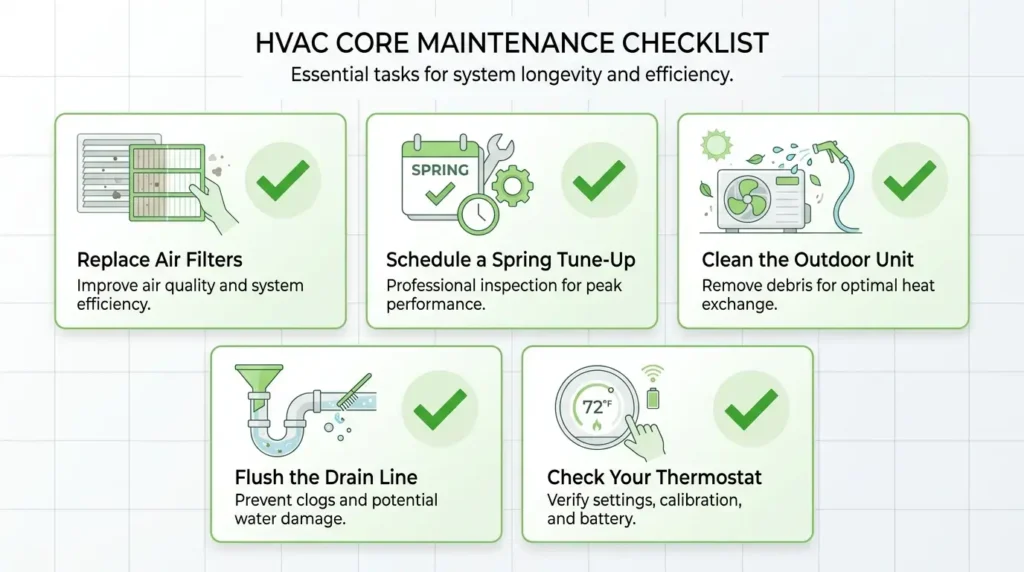
Here’s what a complete Utah AC maintenance routine should include:
- Replace Air Filters: Replace your filter every 1–3 months, and monthly during Utah’s cottonwood season when airflow restrictions build up much faster.
- Schedule a Spring Tune-Up: Schedule service before peak summer demand arrives so a professional can catch problems early and help you avoid seasonal booking delays.
- Clean the Outdoor Unit: Remove leaves, dirt, cottonwood fluff, and nearby vegetation from the outdoor AC unit to keep the condenser operating at full efficiency.
- Flush the Drain Line: Inspect and flush the condensate drain each season to prevent clogs caused by Utah’s dust and hard water.
- Check Your Thermostat: Verify your thermostat is calibrated correctly and programmed efficiently before cooling season begins.
When you do these consistently, you’ll improve energy efficiency and reduce the risk of unexpected breakdowns. The ENERGY STAR maintenance checklist covers the national baseline. The sections below cover what Utah’s climate adds on top of that.
You can also reference our full HVAC maintenance checklist for a broader seasonal breakdown.
Why Utah’s Climate Makes AC Maintenance Non-Optional
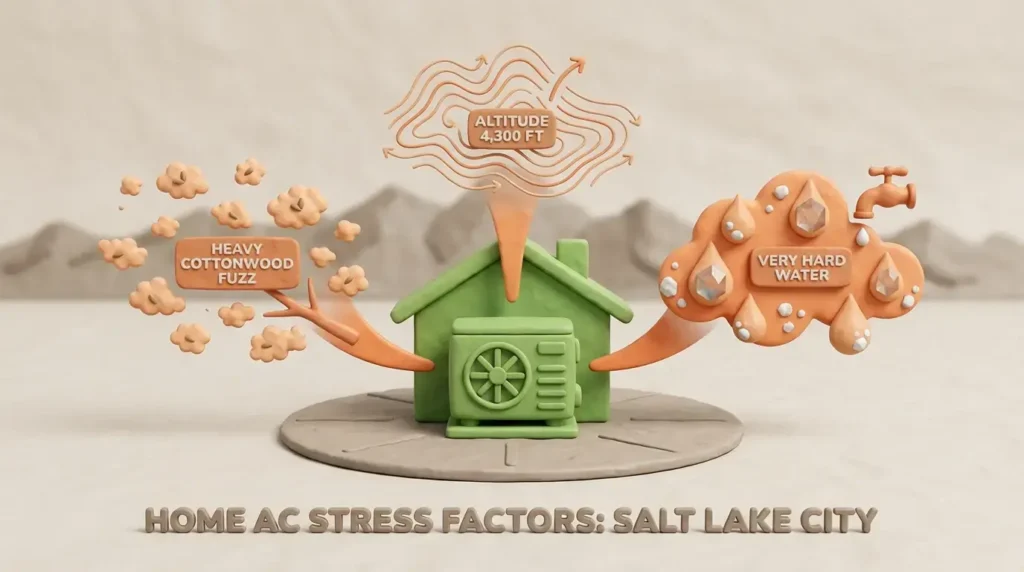
Utah’s climate creates unique AC maintenance challenges.. Data from the Utah Climate Center confirms what many Wasatch Front homeowners already feel every summer: extreme heat, low humidity, and conditions that push AC systems harder than most parts of the country ever would.
[Image: cottonwood fuzz clogging outdoor AC condenser fins on a Wasatch Front home]
Dry Heat, High Altitude, and How They Affect Your AC System
Salt Lake City sits at roughly 4,300 feet above sea level. At that altitude, air density drops, which means your AC system moves less mass per cycle than it would at sea level. To compensate for thinner air, the air conditioning system runs longer and works harder to maintain the same indoor temperature.
Dry heat also adds to this strain. The low humidity pulls moisture out of rubber seals, gaskets, and flexible components faster than humid climates do. It also carries more dust, pollen, and fine debris through your system. These particles clog the air filter and gradually coat the evaporator coil, reducing efficiency over time.
If your HVAC system seems to be working harder than usual during the summer, it isn’t necessarily because something is wrong. More often, it’s responding to the demanding conditions created by Utah’s high elevation and dry climate.
Cottonwood Season
From late May through June, cottonwood trees along the Wasatch Front release heavy amounts of fuzz that can quickly clog condenser coil fins. A condenser unit that looked clean on Memorial Day can be significantly restricted by mid-June without a single maintenance visit in between.
Hard Water
Utah’s water hardness creates another maintenance challenge. Much of the Salt Lake Valley runs at 13 to 15 grains per gallon (GPG), a common measure of dissolved calcium and magnesium in water. That places much of the region in the “very hard” water category, according to the U.S. Geological Survey. That mineral buildup leaves deposits on the evaporator coil and clogs condensate drain lines much faster than homeowners in regions with softer water would typically experience.
AC Maintenance Tasks Utah Homeowners Can Do Themselves
Most of what keeps an AC system in Utah healthy between professional visits comes down to a few simple maintenance tasks that homeowners can handle themselves, while leaving more complex professional AC work in Utah to a qualified technician. None of these require special training, yet each one can improve performance, extend equipment life, and reduce the risk of costly repairs and costly breakdowns.
Air Filter Replacement
This is the single highest-impact thing you can do for your system. A clogged filter forces your AC to work harder; dirty filters restrict airflow, increase strain on the system, drive up energy bills, and accelerate wear on components that may already be stressed by Utah’s heat and altitude.
How often should you replace your filter?
- Every 1–3 months as a baseline.
- Monthly during cottonwood season (late May through June).
- Monthly during high-dust months, when Wasatch Front winds push particulate through your return vents
Standard 1-inch filters load up faster than thick media filters. Check your manufacturer’s guidance for recommended filter type and replacement schedule, but as a general rule, check the filter monthly and replace it when it looks gray or visibly dirty. Replacing filters also helps protect internal components from dust buildup. The EPA’s guidance on air filter selection and indoor air quality is a useful reference for choosing the right filter type for your home. High-efficiency HEPA filters are ideal for homes with allergens, as long as your manufacturer’s guidance supports using them.
Outdoor Condenser Unit Cleaning
Your outdoor condenser is exposed to Utah’s weather year-round, so it naturally collects dust, cottonwood fluff, leaves, dirt, and other airborne debris. With continuous usage, that buildup restricts airflow through the condenser coil, affects system performance, and forces the system to work harder to release heat.
A restricted condenser can’t dissipate heat efficiently, and that loss of efficiency becomes much more noticeable during Utah’s triple-digit summer temperatures.
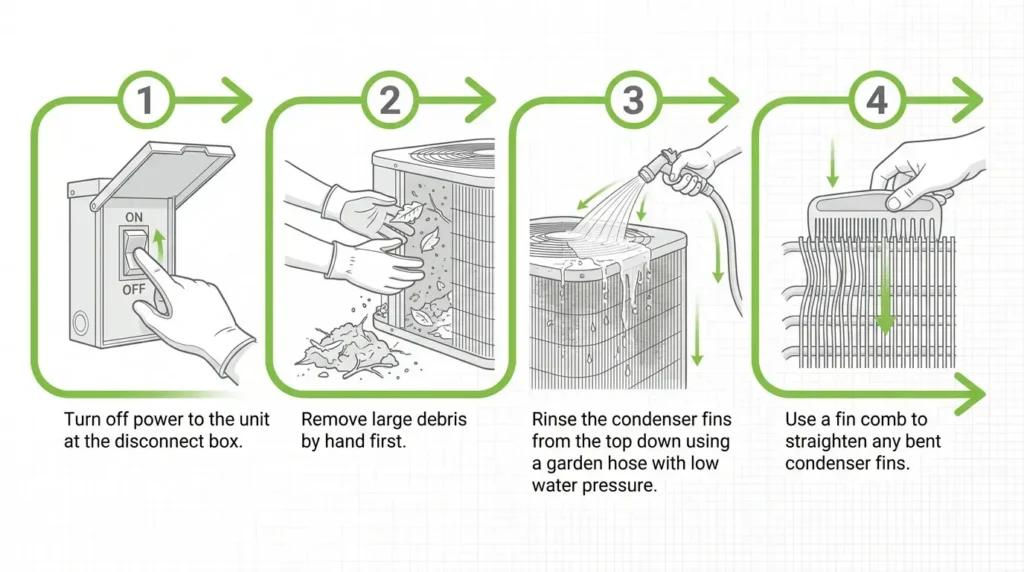
To clean your condenser unit safely:
- Turn off power to the unit at the disconnect box before touching anything.
- Remove large debris by hand first.
- Rinse the condenser fins from the top down using a garden hose with low water pressure. Avoid using a pressure washer, as it can bend the fins and damage the coil.
- Use a fin comb to straighten any bent condenser fins and restore proper airflow.
Maintain a 2-foot clearance around the unit so air can move freely. Avoid covering the outdoor unit with airtight materials, since trapped moisture can cause rust.
During Utah’s cottonwood season, check the unit at least once a week. A condenser that looked clear on a Monday can be noticeably restricted by Friday.
Condensate Drain Line Maintenance
An air conditioner removes moisture from your indoor air and channels it away through the condensate drain line. In Utah, hard water minerals and dust can clog that line much faster than in areas with softer water.
Over time, mineral deposits gradually build up inside the drain line, increasing the risk of backups, water damage, and unexpected system shutdowns.
To keep the condensate drain line clear:
- Flush the line once each season with a diluted white vinegar solution to help dissolve algae and mineral buildup.
- Follow with clean water to flush out any remaining residue.
- Check the drain pan near the air handler for standing water, which may indicate a partial blockage.
Thermostat Settings and Smart Thermostat Use
Your thermostat controls when and how long your AC runs, making it one of the biggest factors in your system’s overall efficiency. Even a small temperature error can lead to unnecessary runtime and higher energy bills.
What to check and set:
- Set to 78°F when you’re home and more than that when you’re away. This is the standard energy-efficient baseline for cooling season
- Keep the thermostat away from direct sunlight, lamps, or heat-generating appliances that cause false readings
- A programmable or smart thermostat can automate seasonal schedules and log runtime data, which helps you spot efficiency changes before they become repair calls
- Before summer, switch the thermostat to cooling mode and confirm the system is blowing cold air
- Include replacing batteries in seasonal thermostat prep if your thermostat uses them
If your thermostat receives direct afternoon sunlight, it may read warmer than the actual room temperature and cause your AC to run unnecessarily. Relocating it or reducing direct sun exposure can improve both comfort and efficiency, and adjusting settings by a few degrees can help. Smart thermostats can save up to 15% on energy bills.
What Only a Professional Should Handle
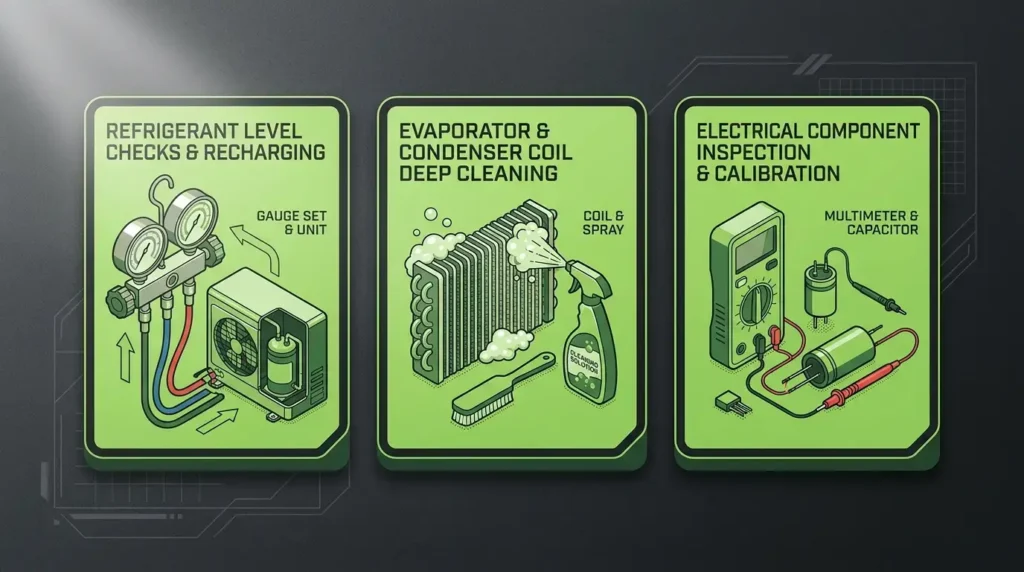
Some AC maintenance tasks are safe to handle yourself. Others require specialized tools, professional training, and certifications that homeowners simply don’t have, which is where professional maintenance covers deeper inspections, troubleshooting, and preventive care beyond basic homeowner upkeep.
Knowing where to draw the line protects your system, keeps you safe, and in some cases, ensures compliance with federal regulations, especially since some work should only be done by a licensed professional or qualified technician.
The following services complement the DIY maintenance tasks we’ve already covered.
Refrigerant Level Checks and Recharging
Refrigerant handling is regulated under the federal Clean Air Act. Only EPA Section 608-certified technicians can legally purchase and handle refrigerants, and that restriction exists for good reason, so this work should be left to a licensed HVAC technician.
At Salt Lake City’s elevation, refrigerant charge calculations aren’t straightforward. High-altitude HVAC systems require adjustments that account for reduced air density.
Therefore, a refrigerant charge that’s correct at sea level may leave a Utah system running inefficiently or even increase the risk of compressor damage. Getting refrigerant levels right here also requires the technician to account for local operating conditions and manufacturer specifications, not simply add refrigerant until pressures appear normal. Improper charging can also reduce cooling capacity.
What a certified technician checks during refrigerant service:
- Actual system pressure against manufacturer specifications adjusted for altitude.
- Signs of refrigerant leaks at coil connections, service valves, and line sets.
- Superheat and subcooling measurements to confirm proper charge.
Evaporator and Condenser Coil Deep Cleaning
Rinsing the outside of your condenser unit is a reasonable DIY task, but a deep clean of the coil is not. The indoor evaporator coil sits inside your air handler and requires disassembly to access properly. Cleaning it involves chemical coil cleaners that can damage surrounding components if misapplied.
Utah’s naturally hard water makes the job even more demanding. Mineral deposits accumulate on coil surfaces, reducing heat transfer and system efficiency. Removing that buildup often requires professional descaling products and techniques that aren’t suitable for homeowner use, so coil deep cleaning should be handled by a professional technician.
What professional coil cleaning covers:
- Chemical treatment of the evaporator coil with appropriate cleaners and proper neutralization.
- Acid-based descaling of mineral deposits caused by Utah’s hard water conditions.
- Inspection of coil fins for damage and airflow restriction.
Electrical Component Inspection and Calibration
There are several electrical components inside your AC system that require specialized tools and training to inspect safely.
- Capacitors store electrical charge even when a system is powered off.
- Contactors carry high-voltage current during every cooling cycle.
- electrical connections loosen over time from vibration and thermal expansion.
None of this is safe territory without proper testing equipment and training. Certified HVAC technicians use specialized diagnostic tools to test capacitor microfarad ratings, inspect contactor surfaces for pitting and wear, check wiring connections for signs of heat damage, and measure airflow, static pressure, and blower performance.
These measurements can reveal developing problems long before they’re visible during a basic visual inspection. That’s why electrical inspections are a critical part of professional AC maintenance, not something homeowners should attempt themselves.
When to Schedule: Seasonal Maintenance Timing in Utah
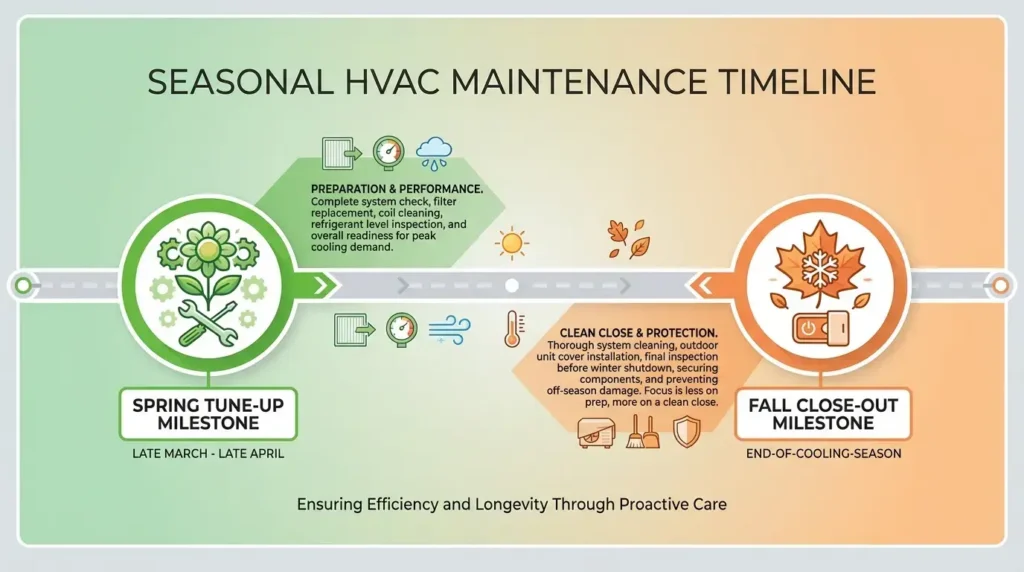
Timing is just as important as the maintenance itself. Schedule your AC service at the right time of year, and you’ll be more likely to avoid unexpected breakdowns and keep your system ready for Utah’s summer heat.
Spring: The Best Time to Schedule AC Maintenance in Utah
The ideal time to schedule a professional AC tune-up in Utah is during spring maintenance, from late March through late April, before the summer heat arrives. This is also why spring HVAC maintenance matters: it prepares your system for summer cooling before demand spikes. Waiting until the first hot spell often means competing with thousands of other Wasatch Front homeowners for limited appointment slots, when demand for HVAC service increases dramatically. If you want the best availability, book a spring maintenance appointment early and schedule service before calendars fill up.
Think of this as a spring HVAC maintenance checklist for Utah homeowners.
Technician schedules fill fast once temperatures begin to rise. Booking early gives you more flexibility, shorter wait times, and a better chance of securing your preferred appointment. It can also help you avoid longer wait times once peak-season demand begins.
Why spring timing is crucial in Utah:
- Cottonwood season starts in late May, and coils that aren’t cleaned before then get hit hard. A pre-season professional cleaning gives your system a clean start before the fuzz arrives.
- Salt Lake City’s elevation means your system is already working harder than average. Catching refrigerant or airflow issues before triple-digit heat arrives protects the compressor when it’s under maximum load
- A spring tune-up confirms your system is ready before you actually need it, not after it fails on the hottest day of July, and annual maintenance can reduce cooling energy consumption by 5 to 15 percent and lower energy costs during peak cooling months. Tune-up timing before the heating season works the same way, confirming a furnace is ready before the first hard freeze hits.
Fall: Closing Out the Cooling Season Correctly
Fall maintenance is less about preparation and more about a clean close. Once cooling demand drops, a brief end-of-season check protects the system during the months it sits largely idle.
A fall AC tune-up should cover end-of-season coil cleaning to remove accumulated summer debris, refrigerant verification, and condensate drain line clearing before the system transitions to low use. Utah’s hard water leaves mineral deposits in drain lines all season, so it’s important you have them flushed to prevent a clogged line from becoming a problem the following spring.
You can also perform a quick DIY maintenance check at the start and end of each cooling season:
- Replace the air filter.
- Clear leaves, dirt, and other debris from around the outdoor condenser unit.
- Inspect the system for visible signs of damage, loose panels, or blocked airflow.
These simple tasks help the system runs efficiently between professional visits, and this proactive care can reduce service calls over time by lowering the likelihood of small issues turning into costly repairs.
Warning Signs Your AC Needs Urgent Attention
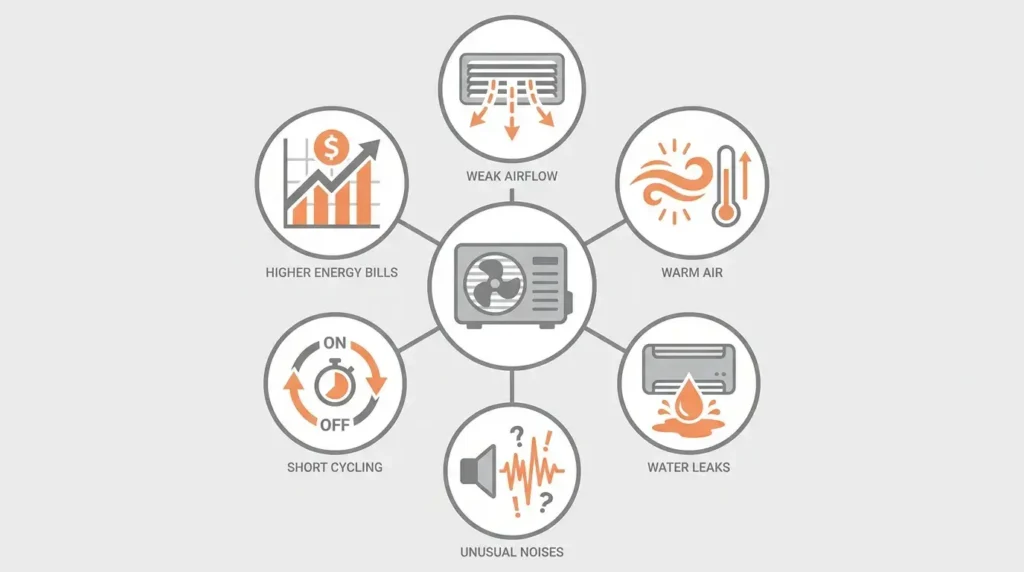
Not every AC problem causes an immediate breakdown. Many start as small performance issues that gradually become expensive repairs and, if ignored, can lead to emergency repairs. Watch for these common warning signs and what they typically indicate.
- Weak Airflow: Weak airflow often points to a clogged air filter or a condenser coil blocked by dirt and cottonwood buildup. Check the filter first, and make sure supply vents are not blocked, as both are quick and relatively inexpensive fixes.
- Warm Air: If your AC is blowing warm air, the cause could be low refrigerant, a dirty evaporator coil, or a failing compressor. These issues require professional diagnosis and repair.
- Water Leaks: Water pooling around the indoor unit usually indicates a clogged condensate drain line. Utah’s hard water accelerates mineral buildup, making drain blockages more common than many homeowners realize.
- Unusual Noises: Grinding, squealing, rattling, or banging sounds often signal worn motors, loose components, or failing fan assemblies. These noises rarely resolve on their own and typically worsen over time.
- Short Cycling: Frequent on-and-off cycling may be caused by thermostat problems, refrigerant issues, restricted airflow, or an improperly sized system. Some homes may also experience uneven cooling when airflow or duct issues are present. Identifying the root cause is essential before making repairs.
- Higher Energy Bills: An unexplained increase in cooling costs or monthly utility bills often indicates declining system efficiency caused by dirty coils, airflow restrictions, or refrigerant problems, and rising monthly energy bills are another common warning sign.
A more detailed guide to common air conditioner problems can help you narrow down the cause. If your system is showing more than one of these warning signs, it’s best to schedule a professional AC inspection before a minor issue turns into a major repair.
Maintenance Plans vs. Pay-Per-Visit: What Makes Sense for Utah Homeowners
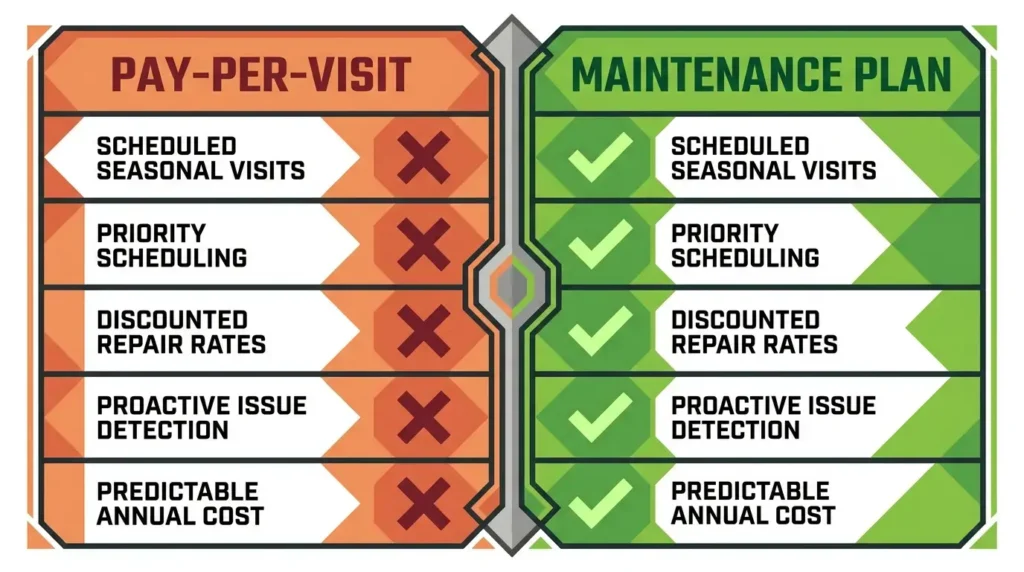
Pay-per-visit service can work for newer systems with few issues, but it can leave homeowners waiting during peak summer demand. On the Wasatch Front, though, where triple-digit heat arrives fast and technician schedules fill faster, reactive maintenance is a gamble most homeowners eventually lose.
Let’s compare the long-term value of both approaches. A single emergency repair during peak cooling season can easily cost as much as, or more than, a full year of scheduled HVAC maintenance. That’s why many Utah homeowners find that preventive maintenance pays for itself over time.
Maintenance plans offer something pay-per-visit service cannot: routine inspections that identify developing problems before they lead to unexpected breakdowns.
Here’s a side-by-side comparison of the two maintenance approaches:
| Feature | Pay-Per-Visit | Maintenance Plan |
| Scheduled seasonal visits | No | Yes |
| Priority scheduling | No | Yes |
| Discounted repair rates | No | Often Included |
| Proactive issue detection | Unlikely | Yes |
| Predictable annual cost | No | Yes |
Scheduled seasonal visits catch refrigerant issues, dirty coils, and electrical wear while they’re still minor and inexpensive to correct. Priority scheduling also means you’re not waiting behind every other homeowner who postponed maintenance until the first heat wave.
Scheduled seasonal visits catch refrigerant issues, dirty coils, and electrical wear while they’re still. Priority scheduling means you’re not waiting behind every other homeowner who also skipped spring service.
The Green Shield Membership Plan is SameDay Heating & Air’s solution for proactive homeowners. It includes two HVAC tune-ups each year, priority scheduling, and discounts on repairs and system replacements, helping you stay ahead of unexpected breakdowns and costly emergency service.
There’s also a lifespan argument worth considering. A well-maintained central AC system in Utah can often last 15 to 20 years, while neglected systems typically average 10 to 12 years. That difference translates into thousands of dollars in long-term replacement costs, making routine maintenance one of the smartest investments you can make.
Keep Your Utah AC Running Before the Heat Hits
Utah’s climate puts far more stress on air conditioning systems than most parts of the country. High elevation, extreme summer heat, cottonwood season, and hard water all make regular AC maintenance essential for keeping your system efficient, reliable, and ready for summer.
Homeowners who stay ahead of maintenance are far less likely to face expensive breakdowns during the hottest weeks of summer. A little preventative care today can save thousands in repair and replacement costs later while helping keep the system at peak efficiency.
At SameDay Heating & Air, we’ve been helping Wasatch Front homeowners keep their AC systems running at peak performance since 1957. Whether you need a seasonal tune-up, preventative maintenance, or expert advice, our experienced technicians are here to help you get the most from your cooling system.
Beyond AC upkeep, monitoring indoor humidity with humidifiers can improve comfort during Utah’s dry winters.
Schedule your AC maintenance service today and enjoy reliable, efficient cooling all summer long.
Frequently Asked Questions About AC Maintenance Tips for Utah Homeowners
How Often Should Utah Homeowners Replace Their AC Air Filters?
Replace your AC air filter every 1–3 months under normal conditions. During Utah’s cottonwood season and high-dust months, inspect it monthly and replace it whenever airflow becomes restricted or the filter appears dirty.
What Is Cottonwood Season, and Why Does It Affect My AC?
Cottonwood season typically runs from late May through June along the Wasatch Front. The airborne fluff can quickly clog condenser fins, restricting airflow, reducing efficiency, and forcing your air conditioner to work much harder.
Do I Need a Professional AC Tune-Up Every Year in Utah?
Yes. A yearly tune-up by a qualified technician helps catch refrigerant issues, dirty coils, electrical wear, and airflow problems early and avoid costly breakdowns. Utah’s heat, elevation, and hard water make yearly tune-ups especially important.
What Causes Water to Pool Near My Indoor AC Unit?
Water around your indoor AC unit usually indicates a clogged condensate drain line. In Utah, hard water mineral deposits and dust accelerate blockages, making seasonal drain inspections and cleaning an important part of routine maintenance.
When Is the Best Time to Schedule an AC Tune-Up in Utah?
The best time to book a spring maintenance appointment is late March through late April, before peak summer temperatures arrive. Scheduling early provides better appointment availability, avoids seasonal delays, and prepares your system before Utah’s hottest weather begins, so plan service before appointment slots tighten.
Can AC Maintenance Lower My Energy Bills?
Yes. Regular maintenance improves airflow, keeps coils clean, and helps your system operate efficiently. A well-maintained air conditioner uses less energy, which can lead to lower energy bills; in fact, regular AC maintenance can reduce energy consumption by 5 to 15 percent while placing less strain on major components.
Can I Perform AC Maintenance Myself?
Homeowners can handle basic tasks like replacing air filters, cleaning around the outdoor condenser, inspecting the condensate drain, and checking thermostat settings, but refrigerant service, electrical testing, and deep coil cleaning should be left to a licensed professional.
What Happens If I Skip Annual AC Maintenance?
Skipping routine maintenance allows dirt, restricted airflow, refrigerant issues, and electrical wear to build up over time. The result is higher energy bills, more frequent repairs, reduced system lifespan, and an increased risk of summer breakdowns.