A broken air conditioner is never convenient, but during a Utah heatwave, it can quickly become a serious problem. As indoor temperatures rise, your home can become uncomfortable within hours, especially if you have young children, older adults, pets, or anyone sensitive to extreme heat.
So, how do you know whether your AC problem is a true emergency or something that can safely wait until regular business hours?
The answer depends on the symptoms you’re seeing and how quickly conditions inside your home are changing.
In this guide, we’ll explain what qualifies as an emergency AC repair, which troubleshooting steps are safe to try yourself, when to call a professional, and how to stay safe while waiting for help.
Key Takeaways
- An AC failure becomes an emergency when rising indoor temperatures, electrical problems, refrigerant symptoms, or water leaks threaten people or property.
- Check only the thermostat, circuit breaker, air filter, and outdoor unit clearance before calling for help.
- Stop troubleshooting if the breaker trips again, ice returns, you smell burning, or the outdoor unit hums without starting.
- Move vulnerable household members to the coolest available room or another air-conditioned location if the home becomes dangerously hot.
- SameDay Heating & Air provides 24/7 emergency AC repair across Salt Lake City and surrounding Wasatch Front communities.
When Is an AC Problem an Emergency in Utah?
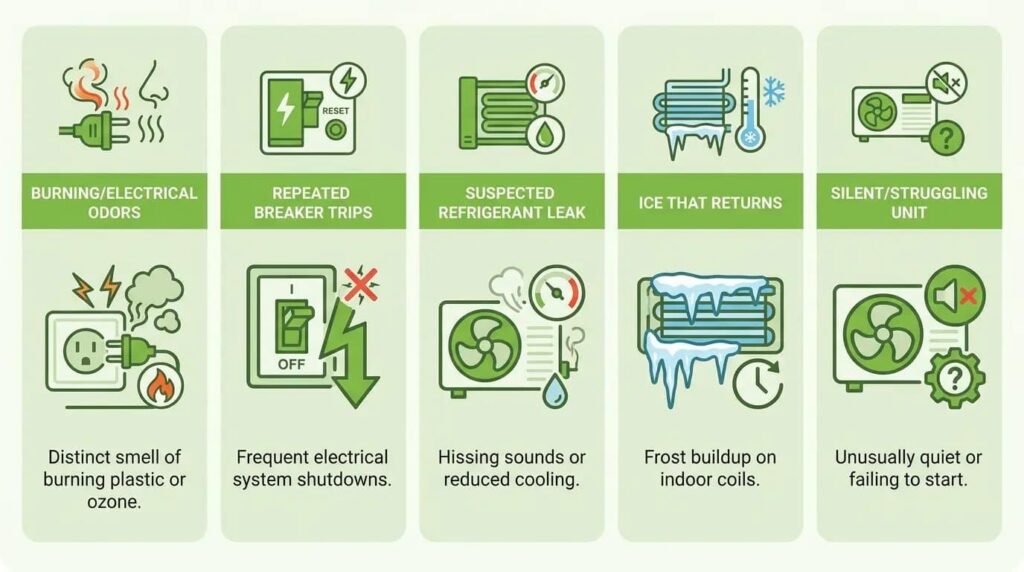
An AC problem is an emergency when it creates a health or safety risk or threatens the home. A mild evening may allow you to wait for regular service, but rapidly rising indoor temperatures, repeated breaker trips, burning odors, or leaking water require prompt attention.
Five Signs Your AC Needs Emergency Attention
Watch for these warning signs of an ac issue that needs immediate attention:
- Burning or Electrical Odors: Hot-plastic smells, burning smells, or unusual odors from vents can indicate an electrical problem, so shut the system down.
- Repeated Breaker Trips: A breaker that keeps tripping, buzzing, or showing scorch marks can signal a serious electrical fault.
- Suspected Refrigerant Leak: Hissing sounds, sudden loss of cooling, or oily residue near a refrigerant line require professional diagnosis.
- Ice That Returns: Ice on the coil or copper lines after the system has thawed can signal a deeper airflow or refrigerant problem.
- A Silent or Struggling Outdoor Unit: A unit that hums without starting, repeatedly shuts down, or stays completely silent may have a component failure.
Cooling breakdowns are more common than many homeowners realize. The U.S. Census Bureau’s American Housing Survey defines cooling equipment as broken when it stops working for six hours or more, highlighting how often households experience such failures.
During prolonged Wasatch Front heat, homes with west-facing windows, limited shade, or weak insulation can warm quickly after cooling stops. Warm overnight temperatures can also limit the home’s chance to cool naturally. A complete loss of cooling in severe heat can become a cooling emergency for vulnerable occupants.
If the indoor temperature keeps climbing or someone vulnerable is at risk, contact SameDay Heating & Air. Emergency HVAC service is available 24/7, day or night, including weekends, and holidays.
What to Check Before Calling for Emergency AC Repair
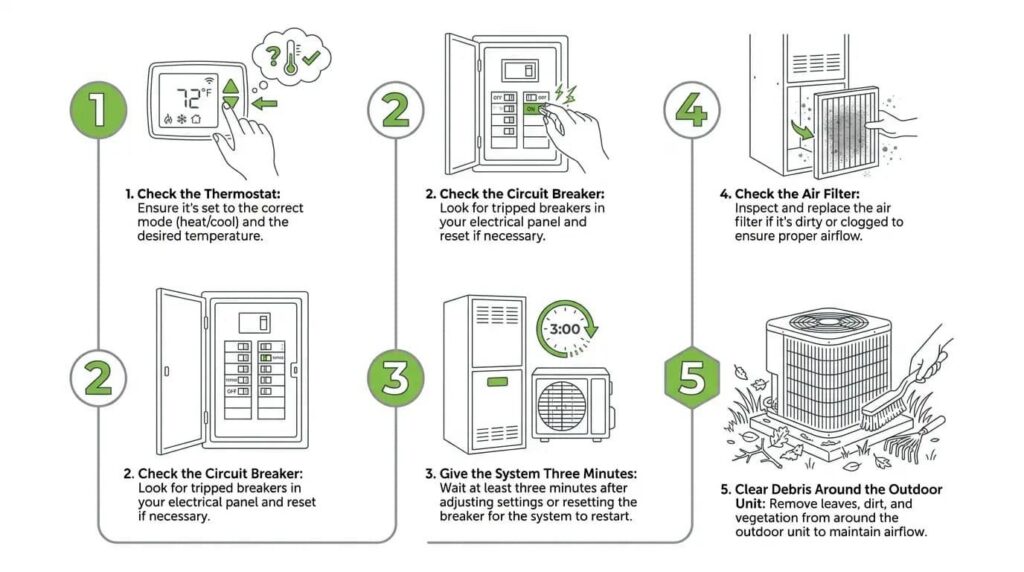
Before calling, check the thermostat, the breaker, the air filter, and the space around the outdoor unit. These steps may reveal a simple cause and give the technician useful information.
Stop if the breaker trips again, ice returns, or the system shows electrical or refrigerant symptoms. Do not open panels or handle wiring, capacitors, or refrigerant lines.
Check the Thermostat
Make sure the thermostat is set to Cool, the fan is set to Auto, and the temperature is set at least 5 degrees below the current room temperature. If the thermostat uses batteries, replace them if the display is dim or blank.
An incorrect mode or dead batteries can prevent the system from starting even when the equipment is otherwise working.
Check the Circuit Breaker
Look at your electrical panel for the breaker controlling the AC. A tripped breaker may sit between the On and Off positions.
If it has tripped, reset it once and see whether the system starts. If the breaker trips again, leave it alone and call a technician immediately. Repeated trips can indicate an electrical problem that needs professional attention.
Give the System Three Minutes
After restoring power, wait about three minutes for the system’s built-in delay and pressures to stabilize before expecting cooling to resume.
Avoid repeatedly switching the system on and off if it doesn’t start.
Check the Air Filter
A heavily clogged filter can restrict airflow and cause the evaporator coil to freeze. Hold the filter toward a light. If you can barely see through it, replace it with the correct size.
If you find ice on the system, or notice ice buildup, turn the AC off and allow the ice to melt completely before restarting it. If the ice returns, stop troubleshooting and call a technician.
Clear Debris Around the Outdoor Unit
Check the outdoor condenser for leaves, grass clippings, and the cottonwood fluff common along the Wasatch Front. Maintain about two feet of clearance so the unit can release heat.
Remove only loose exterior debris. Do not open the electrical panel or reach inside the unit. If cooling does not return after these checks, call SameDay Heating & Air.
When to Stop Troubleshooting and Call an AC Technician
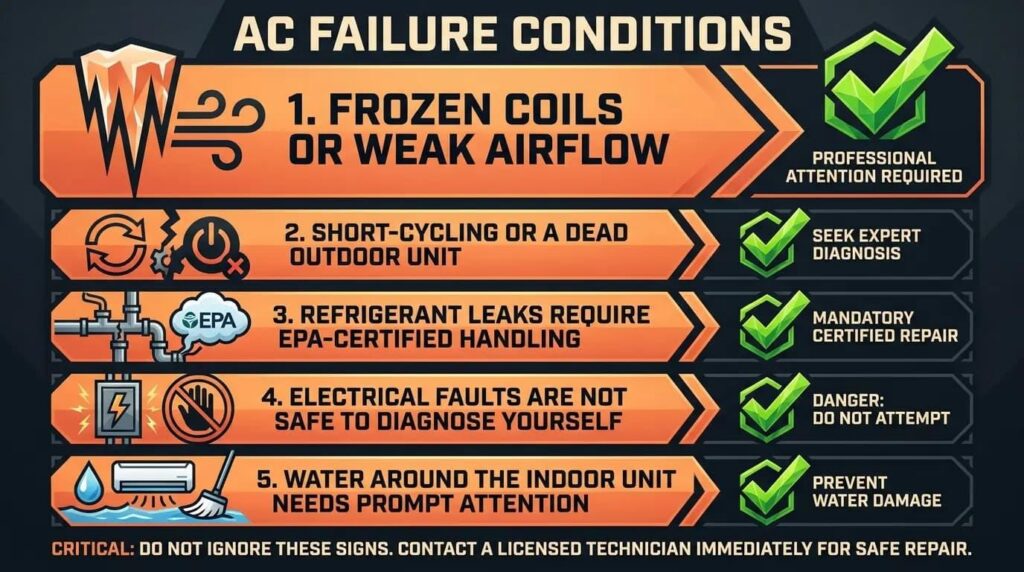
If the basic checks do not restore cooling, stop troubleshooting when the symptoms involve electricity, refrigerant, recurring ice, water damage, or warm air from the vents.
The situations below can indicate urgent situations that require diagnostic tools and trained handling.
Frozen Coils or Weak Airflow
If ice returns after you’ve replaced the filter and allowed the system to thaw, there’s likely a deeper airflow or refrigerant issue.
Poor moisture control can also lead to humidity problems and musty conditions after airflow restrictions or frozen-coil issues. Possible causes include low refrigerant, a failing blower motor, or restricted ductwork.
Weak airflow can also indicate several problems, so professional testing is needed to identify the cause. Refrigerant work is federally regulated and should only be handled by a certified technician.
Short-Cycling or a Dead Outdoor Unit
An AC that starts and stops within a minute or two, or an outdoor unit that hums without the fan turning, can indicate capacitor failure or compressor issues. These components sit behind electrical panels that can remain dangerous even after the system is switched off.
Stop troubleshooting and call a technician if:
- The circuit breaker trips again after being reset.
- The system requires repeated restarts to keep running.
- You notice burning odors, buzzing, or unusual electrical sounds.
- The outdoor unit makes unusual noises but doesn’t start normally.
Repeated restarts can strain the compressor and worsen the failure. These are among the most common causes of midsummer breakdowns, especially in the middle of a heat wave. If these signs appear, leave the system off and schedule professional AC repair services.
Refrigerant Leaks Require EPA-Certified Handling
Federal law determines who can repair and handle refrigerant. The EPA requires certified technicians to recover and handle refrigerants. Its refrigerant leak repair rules establish requirements for repairs and verification testing when a leak is confirmed.
Venting refrigerant into the atmosphere is also prohibited under the Clean Air Act refrigerant regulations. A qualified technician can locate the leak, repair the system, and recharge it to the manufacturer’s specifications.
Electrical Faults Are Not Safe to Diagnose Yourself
Electrical problems, including electrical failures, can involve damaged wiring, failed contactors, capacitors, or other components that remain dangerous even when the system appears to be off. Finding the faulty part requires electrical testing and the right equipment.
Rather than opening the electrical panel or testing components yourself, leave the system off and have a qualified technician diagnose the fault; this kind of HVAC emergency may require crews to respond quickly because unsafe components can remain energized.
Water Around the Indoor Unit Needs Prompt Attention
Water pooling around the indoor unit or a fresh ceiling stain can indicate a clogged condensate drain, a damaged drain pan, or a coil that is repeatedly freezing and thawing. If moisture has reached your walls or ceiling, you may also need water leak detection and repair to identify and address any hidden water damage.
Leaving the system running can allow water to reach nearby ductwork, electrical components, or other parts of the home. Shut the system down and have the Green Team identify the source before the damage spreads.
How to Stay Safe While You Wait for AC Repair
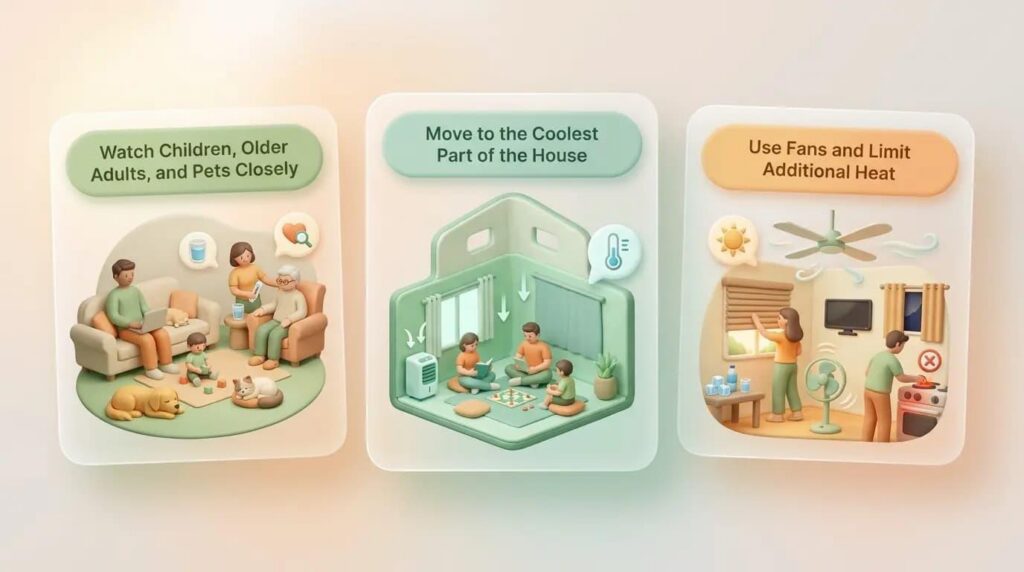
After requesting emergency service, move everyone to the coolest available space, reduce indoor heat sources, and monitor vulnerable household members closely.
Watch Children, Older Adults, and Pets Closely
Young children, adults over 65, and pets can be more vulnerable to extreme heat. Watch people for heavy sweating, dizziness, muscle cramps, headache, confusion, or unusual weakness.
Pets may show excessive panting, drooling, or unusual behavior when they’re struggling with the heat. If anyone develops severe symptoms such as confusion, fainting, or loss of consciousness, seek emergency medical help immediately.
Move to the Coolest Part of the House
Basements, lower floors, and rooms away from direct sunlight often remain cooler during an outage. West-facing rooms may heat up fastest during a northern Utah summer afternoon.
Use Fans and Limit Additional Heat
Use these measures to reduce added heat and stay more comfortable while you wait:
- Use ceiling fans to circulate air, but relocate if the home continues to become dangerously hot.
- Turn off unnecessary lights and heat-producing electronics.
- Avoid using heat generating appliances.
- Drink water regularly and check on children, older adults, and pets.
These steps can help you stay cool while you wait for service. If the home continues to heat up or anyone develops heat-related symptoms, move to an air-conditioned location and contact emergency AC service.
What to Expect During an Emergency AC Repair Visit
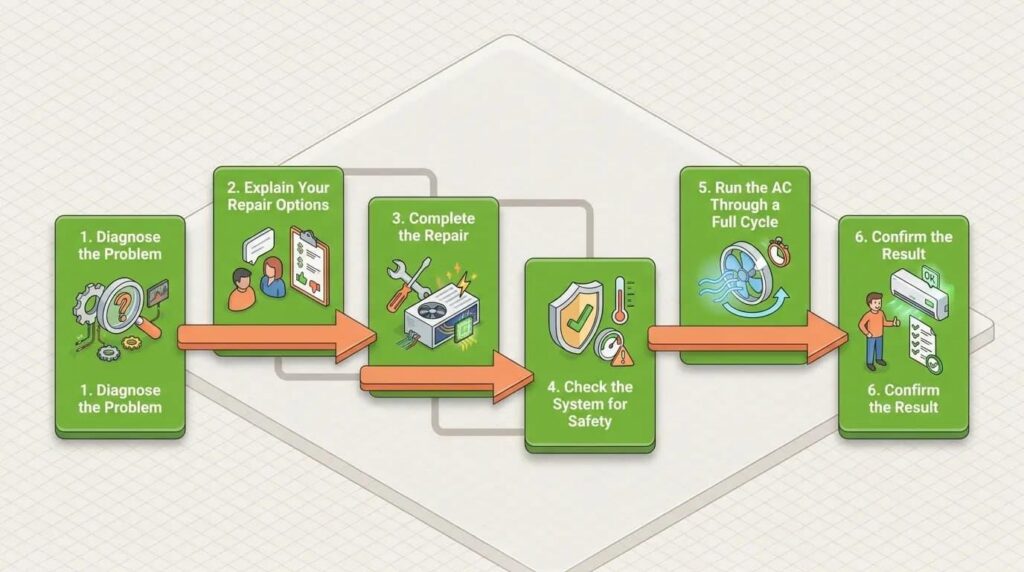
An emergency HVAC repair visit should move from diagnosis to clear options, approved work, and final testing. The process typically includes:
- Diagnose the Problem: A licensed technician checks the thermostat signal, electrical components, refrigerant pressures, and airflow to determine the cause of the failure as part of the HVAC repair process.
- Explain Your Repair Options: Once the problem is identified, the technician explains what needs to be fixed, why it failed, and what your options are. You’ll receive upfront pricing before any work begins. Clear communication matters during stressful HVAC emergencies, as highlighted in this HVAC homeowner communication study.
- Complete the Repair: After you approve the repair, the technician replaces or repairs the failed component and addresses any related issues needed to restore proper operation; common quick repairs may involve blown capacitors or simple sensor fixes.
- Check the System for Safety: Electrical connections, refrigerant levels, condensate drainage, and other critical components are checked to make sure the system is safe to operate, using quality parts and testing the system fully before finishing.
- Run the AC Through a Full Cycle: The technician tests the system to confirm that the outdoor unit starts properly, airflow is adequate, and the temperature difference between supply and return air is within the expected range.
Technicians arrive with fully stocked vehicles and can complete most emergency repairs on the first visit.
- Confirm the Result: SameDay Heating & Air tests the repaired system through a full cycle and confirms that it is cooling safely with honest service. Their emergency air conditioner repair service is available 24/7. If SameDay installed the air conditioner, no-overtime-fee coverage may apply for as long as you own the system.
What Affects Emergency AC Repair Costs?
Emergency AC repair costs depend on the failed component, system age, parts, labor, and access to the equipment. SameDay Heating & Air provides upfront pricing before work begins; emergency service calls may incur additional fees, which are disclosed in advance.
Failed Parts and System Age
A capacitor typically requires less labor and costs less to replace than a compressor. Older systems can also cost more to repair because parts may be harder to find or the equipment may be nearing the end of its service life.
| Cost Factor | What It Affects |
| Failed component | Parts and labor costs |
| System age and type | Parts availability and warranty |
| Unit accessibility | Time needed for the repair |
Refrigerant Repairs Require Specialized Service
Refrigerant repairs can cost more because they require certified handling, recovery equipment, and proper leak testing. The technician must locate and repair the leak before recharging the system to the manufacturer’s specifications.
When Repair Costs Point Toward Replacement
A common rule of thumb compares the repair cost with the system’s age and replacement value. If an older system needs a major repair that approaches the cost of a new unit, replacement may be the right call, but an emergency repair can still be the best short-term option and provide valuable time to plan.
How to Reduce the Risk of Another AC Breakdown
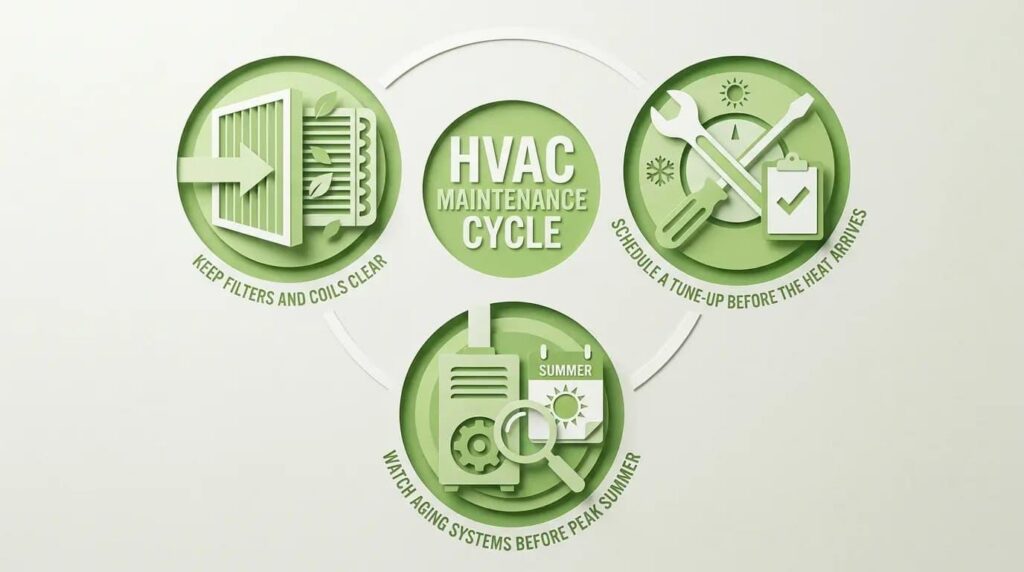
Regular filter checks, a clear outdoor coil, and regular maintenance with a tune-up before peak heat can reduce avoidable strain, improve overall system performance and lifespan, and reveal developing problems before a breakdown occurs.
A U.S. Department of Energy residential HVAC fault prevalence study found that faults are common in installed HVAC systems and can often be identified before a breakdown occurs.
Keep Filters and Outdoor Coils Clear
Construction dust, dry summer conditions, and cottonwood fluff can clog filters and outdoor coils across growing Wasatch Front communities such as Lehi. Check the filter monthly during the cooling season, replace it when dirty, and keep vegetation and debris away from the condenser.
Watch Aging Systems Before Peak Summer
Aging equipment may run nearly nonstop during valley heat, placing extra strain on capacitors, motors, and compressors. If the system struggled last summer or needed repeated repairs, schedule an inspection before the first sustained heatwave.
Schedule a Tune-Up Before the Heat Arrives
A spring tune-up can identify problems that homeowners cannot safely check themselves, including:
- Electrical connections and component readings
- Refrigerant charge and potential leaks
- Airflow and condensate drainage
Scheduling maintenance in April or May gives the Green Team time to address small problems before they become emergency repairs during the next heatwave.
Get Emergency AC Help When You Need It Most
Start with the thermostat, breaker, filter, and space around the outdoor unit. If you smell burning, see ice return, notice repeated breaker trips, or find water pooling, shut the system down and call a qualified HVAC technician.
SameDay Heating & Air provides 24/7 emergency HVAC service across Salt Lake City and surrounding Wasatch Front communities, including nearby communities. Pricing and any emergency-service fees are explained before any work is approved. No-overtime-fee coverage may apply when SameDay installed the system.
Call SameDay Heating & Air for emergency AC repair and urgent repairs.
Frequently Asked Questions About Emergency AC Repair in Utah
These answers cover common questions Utah homeowners have when their air conditioner suddenly stops cooling.
What is considered an AC emergency?
An AC problem is an emergency when it creates a health or safety risk or could damage the home. Not every AC issue is an emergency, but safety hazards, vulnerable occupants, or a rapidly rising home temperature can make it one. Examples include rapidly rising indoor temperatures, repeated breaker trips, burning odors, recurring ice, leaking water, and a struggling outdoor unit.
What should I check when my AC suddenly stops working?
Confirm that the thermostat is set to Cool and the fan is on Auto. You can also check the breaker once, inspect the air filter, and remove loose debris from around the outdoor condenser. Do not open equipment panels or handle wiring, capacitors, or refrigerant lines.
Should I turn off my AC if it is not cooling?
Turn the system off if you smell burning, hear electrical buzzing, see water pooling, notice recurring ice, or experience another breaker trip. Leaving it running could worsen the failure or create a safety risk.
How long should I wait after resetting my AC?
Wait approximately three minutes after restoring power before expecting the system to restart. Many air conditioners have a built-in delay that protects the compressor and allows system pressures to stabilize.
Can a clogged air filter cause the AC to stop cooling?
Yes. A heavily clogged filter can restrict airflow, reduce cooling, and cause the evaporator coil to freeze. Replace the filter with the correct size, allow any ice to melt completely, and call a technician if the ice returns.
Is a refrigerant leak an emergency?
A suspected refrigerant leak requires professional attention, especially when accompanied by hissing, sudden loss of cooling, recurring ice, or oily residue near a refrigerant line. Refrigerant should only be recovered and handled by an EPA-certified technician.
How can I keep my home cool while waiting for AC repair?
Close blinds on sun-facing windows, move to a basement or lower floor, use fans, turn off heat-producing appliances, and drink water regularly. If the indoor temperature continues rising or someone develops heat-related symptoms, relocate to an air-conditioned place.
Does SameDay Heating & Air offer emergency AC repair after hours?
Yes. SameDay Heating & Air provides 24/7 emergency air and HVAC service across Salt Lake City and surrounding Wasatch Front communities, including nights, weekends, holidays, and the middle of the night. Emergency calls are prioritized, especially for urgent repairs during extreme heat. Pricing and applicable emergency-service fees are explained before work begins.