A furnace that stops working in the middle of a Utah winter can turn a comfortable home cold faster than you’d expect. When you need emergency furnace repair, losing heat isn’t just uncomfortable. It can put vulnerable family members at risk and leave your plumbing exposed to freezing temperatures.
This guide is for Utah homeowners facing urgent furnace breakdowns and covers what to do before calling for emergency furnace repair, safety steps, and what to expect from professional service.
Before you assume you need a costly repair, take a breath. Some furnace problems have simple causes you can safely check yourself, while others need immediate professional attention. Knowing the difference can help you avoid unnecessary risks and make the right call.
This guide walks you through safe checks, evacuation warnings, and what to expect from emergency furnace repair. If you smell gas, get everyone outside and call the gas utility or 911 from a safe location. If you have a CO alarm, suspect CO exposure, or see smoke or fire, leave immediately and call 911. Do not troubleshoot the furnace in any of these situations.
Key Takeaways
- Gas odors, a CO alarm, possible exposure symptoms, or smoke or fire mean leave first and call for emergency help from outside.
- If there are no warning signs, check the thermostat, breaker once, accessible filter, door condition, and external service switch without opening the furnace.
- Recurring shutdowns or unresolved heat loss need professional diagnosis; symptoms alone cannot identify the failed part.
- If the house cannot stay safely warm, arrange another place to stay. Use electric space heaters only with the required clearances and precautions.
- SameDay offers 24/7 emergency service across the Wasatch Front; confirm availability and approve the repair price before work begins.
Five Checks That Are Safe to Make Before You Call Anyone
If there are no safety warnings, a few simple checks may identify a setting, power, or airflow problem before you call. These checks require no tools and do not involve opening the furnace cabinet, handling wiring, or touching gas components. Follow your equipment’s instructions and stop if anything appears damaged or unfamiliar.
Confirm the Thermostat Settings
- Set the thermostat to heat and raise the target temperature above the current room temperature. If the display is blank or weak, replace accessible batteries. If the thermostat remains unresponsive, stop here.
- Thermostat problems can look like furnace failure because the heating command never reaches the equipment. Note whether the display responds and whether the furnace starts when you raise the setting.
Reset the Breaker Once
- Check the labeled furnace circuit breaker. If it has tripped and there’s no sign of burning, moisture, or electrical damage, reset it once by moving it fully off, then back on. If it trips again, leave it off and call a professional. Repeated resets can expose you to electrical hazards.
Inspect the Heating System Air Filter
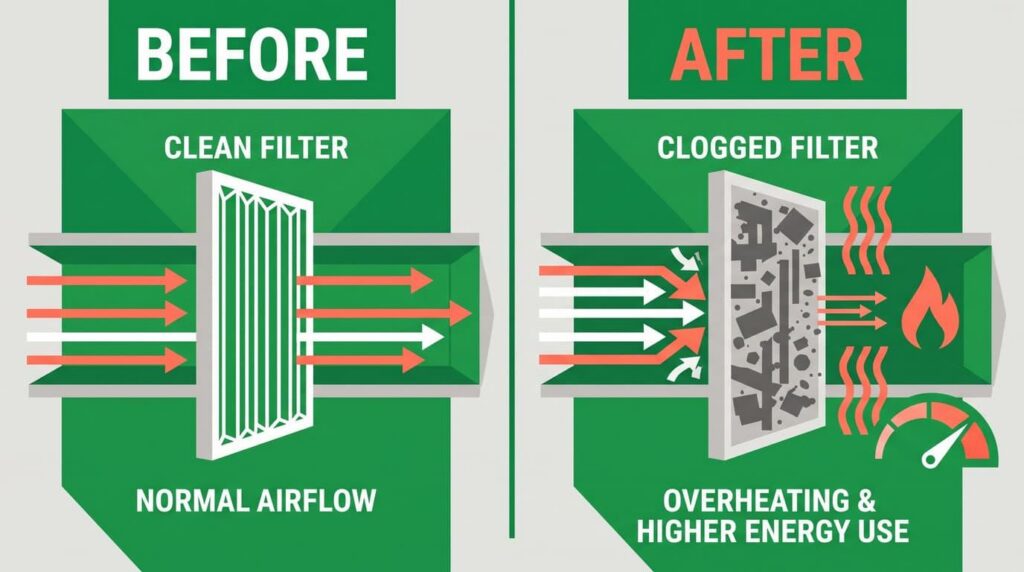
- Turn the thermostat off before checking an accessible filter outside the furnace cabinet. Replace a visibly clogged filter with the correct size and type, following the airflow arrow. If access requires removing a furnace panel, have a technician do the check.
- Clogged air filters can cause the furnace to overheat and shut down. A clean filter may restore normal airflow, while a clogged one can contribute to overheating and make the system use more energy, but it won’t fix a damaged switch or blower motor. If the furnace keeps starting and stopping, arrange professional service, and note that rapidly increasing energy bills can also signal a heating system issue.
Check the Furnace Door from Outside
- Look for a visibly loose or displaced furnace door panel without opening the cabinet. A door safety switch can interrupt operation if the panel is not seated. Do not bypass the switch, force a panel into place, or run the furnace with its door open; report the condition to the technician.
Check the External Service Switch
- If you can clearly identify the external furnace service switch, check whether it was accidentally turned off. It may resemble a light switch near the equipment. Use it only as described in your owner’s manual, and do not open an electrical box or remove a panel.
If these checks do not restore heat, or the furnace shuts down again, stop troubleshooting. Do not keep cycling the power or pressing reset buttons. Leave gas valves, burners, pilot lights, ignitors, and internal wiring to a qualified HVAC technician.
Common Furnace and HVAC Systems Faults in Utah Winter Conditions
If the checks above don’t restore heat, the problem may involve ignition, airflow, electrical controls, venting, or another internal component. Recognizing the symptoms can help you explain what’s happening when you call, but they don’t confirm a diagnosis.
- Short Cycling: Does your furnace keep starting, stopping, and restarting without warming your home? This is called short cycling. Rapid short-cycling of the furnace indicates a malfunction, often triggered by restricted airflow or sensor problems.
- Strange Noises: Loud banging or grinding noises signal mechanical failures in the furnace. Strange noises from the heating system indicate potential failure and should be reported to your technician.
- Pilot Flame Issues: A yellow or flickering pilot flame indicates potential carbon monoxide risks. Unusual pilot light colors may signal a malfunctioning furnace and should be checked by a professional.
- Gas Leak Signs: A rotten egg or sulfur smell signals a gas leak. If you notice this, evacuate immediately and call for emergency help.
- Airflow Problems: Cold or lukewarm air from vents signals a heating problem. If you feel cold air coming through the vents, tell your technician. These clues can help narrow down the problem without risking injury by testing internal components yourself.
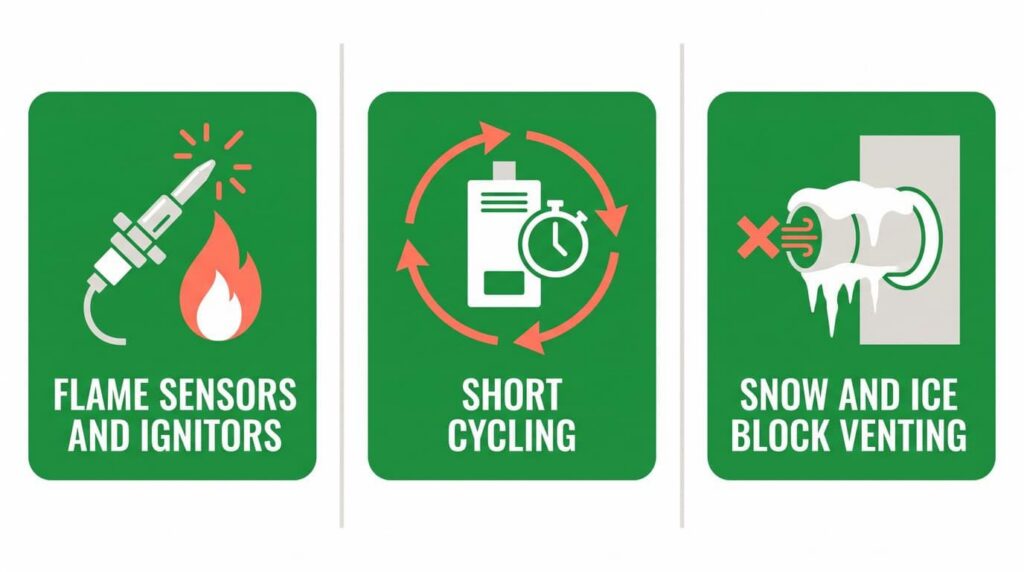
Flame Sensors and Ignitors Stop Ignition
A dirty flame sensor or cracked ignitor can prevent your furnace from producing heat, even when the blower motor runs. The ignitor starts combustion, while the flame sensor confirms that a flame is present.
If you hear clicking, notice brief bursts of heat, or feel cold air coming through the vents, tell your technician. These clues can help narrow down the problem without risking injury by testing internal components yourself.
Short Cycling Signals Another Fault
Short cycling, or rapid short-cycling, is when your furnace keeps starting, stopping, and restarting without warming your home. This indicates a malfunction, often triggered by restricted airflow or sensor problems.
If replacing a dirty filter doesn’t resolve the issue, arrange professional service rather than repeatedly restarting the system. SameDay’s overview of common furnace problems explains other symptoms you may notice.
Snow and Ice Can Block Venting
Utah’s winter weather can create another problem: snowdrifts and ice can block the outdoor intake or exhaust vent connected to your furnace. When airflow through these openings is restricted, the system may shut down to protect itself.
From a safe location, look for visible snow or ice around the exterior vent. Don’t climb onto icy surfaces, remove secured vent components, or attempt internal repairs. Before the next storm, review our advice on protecting HVAC equipment from snow and ice.
Signs That Mean Stop Troubleshooting and Get Everyone Outside
Gas leaks, carbon monoxide alarms, possible CO exposure, and visible smoke or fire require an immediate safety response. Get everyone outside before making calls or investigating the furnace.
Complete heat loss without these warning signs calls for prompt HVAC service and a safe plan for staying warm. It does not by itself mean a gas leak or CO incident has occurred.
Leave When a CO Alarm Sounds
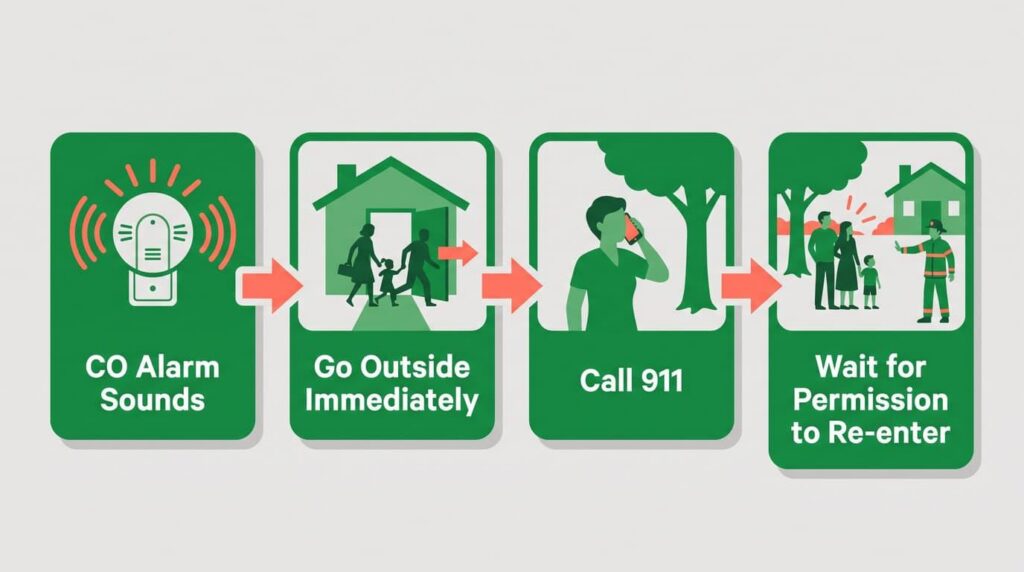
Take everyone outside immediately when a carbon monoxide alarm activates. Call 911 from outside, and do not re-enter until emergency responders give permission. Do not silence the alarm to continue troubleshooting the furnace.
The U.S. Consumer Product Safety Commission advises professional inspection of fuel-burning heating equipment after an alarm event. Do not restart the affected equipment until trained personnel have inspected and serviced it.
Leave When You Smell Gas
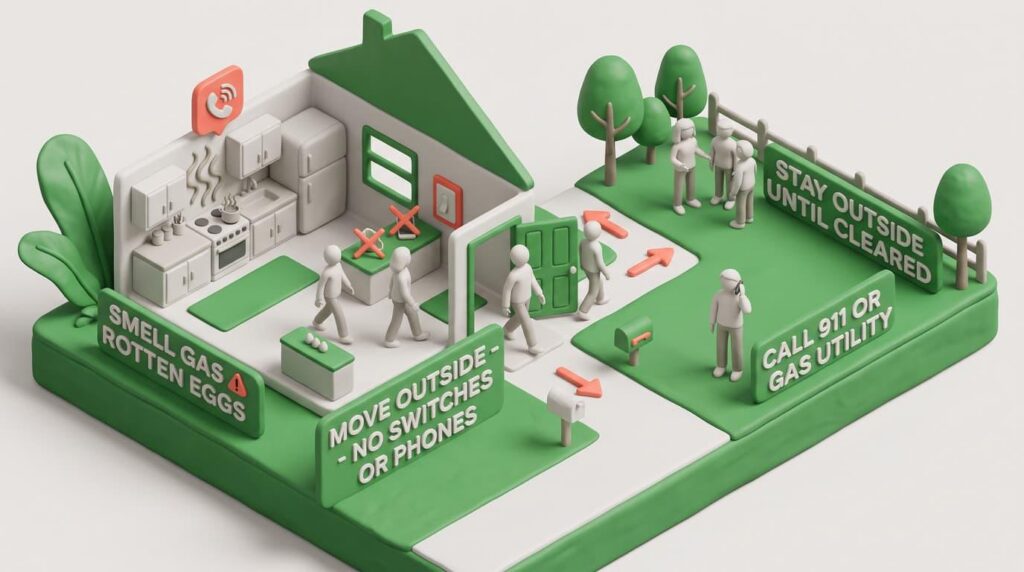
If you smell rotten eggs, or a carbon monoxide alarm activates in connection with a furnace or boiler, move everyone outside without operating switches, appliances, or a phone inside. Call 911 or the gas utility from a safe location before calling an HVAC company.
Don’t search for the source or attempt to close an indoor gas valve. Stay outside until emergency responders or the gas utility give permission to return.
Leave When Occupants Feel Ill
Move everyone into fresh air when headaches, dizziness, nausea, weakness, or confusion appear near operating heating equipment. Call 911 from outside and report possible carbon monoxide exposure.
These symptoms require medical and safety evaluation before anyone goes back inside. Don’t return indoors to open windows or collect belongings.
Leave When You See Smoke or Combustion Hazards
If you see smoke or fire, get everyone outside and call 911. Heavy soot or a visibly disconnected exhaust vent also warrants leaving the home and contacting the gas utility or emergency services; do not continue operating or inspecting the furnace.
A cracked heat exchanger, blocked vent, or poor draft can release carbon monoxide while the furnace still produces heat. The EPA’s combustion-product guidance confirms that operating fuel-burning equipment can create indoor pollutants, so warm air coming from the vents isn’t proof the system is safe.
When to Call for Emergency Heating Repair and How to Stay Safe
Not every heating repair issue requires an emergency call, but some situations do, and waiting too long can put your household at risk. If indoor temperatures keep dropping, your home can’t hold heat overnight, or vulnerable family members are at home, you may need prompt emergency furnace repair. When you call for emergency heating assistance, ask whether the HVAC technicians are licensed and insured, and when available, a response within 60 minutes is a reasonable expectation. Falling temperatures can also put exposed plumbing at risk of freezing.
If the home is becoming too cold to occupy safely, arrange a warm place to stay while service is pending. Prioritize infants, older adults, and anyone whose health makes cold exposure more dangerous.
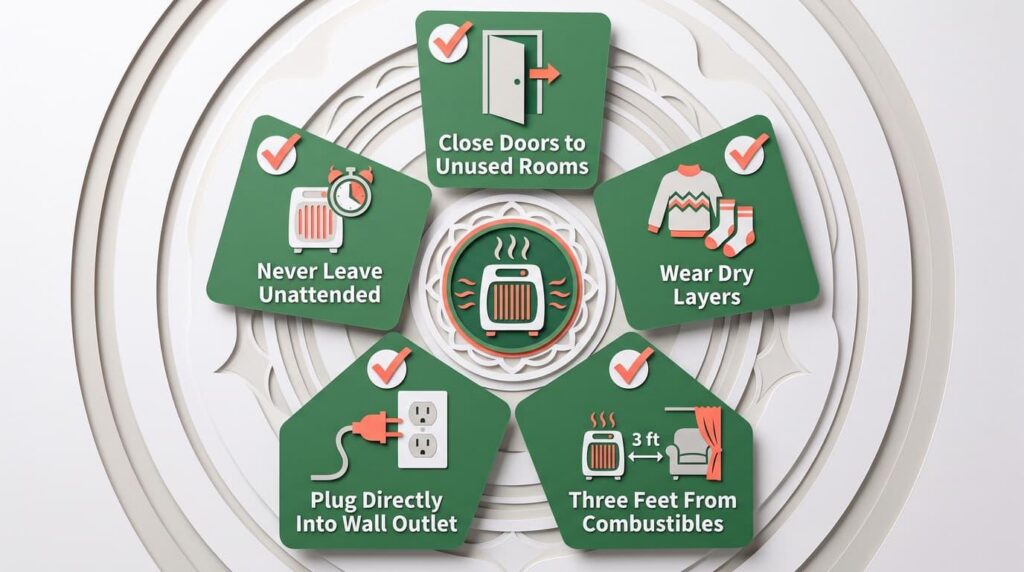
If it is safe to remain at home while waiting for help, conserve warmth without creating another hazard.
- Close doors to unused rooms to help contain the warmth.
- Wear dry layers and gather household members in one suitable room.
- Use an electric space heater only if you can follow its safety instructions.
For additional guidance, review the CPSC recommendations for keeping portable heaters safe. Apply these precautions whenever you use one:
- Place it on a stable, level surface at least three feet from bedding, curtains, furniture, and other combustible materials.
- Plug it directly into a wall outlet; never use an extension cord or power strip.
- Never leave it running unattended or while everyone sleeps.
Never use a gas stove, oven, grill, or outdoor heater to warm your home. These can introduce carbon monoxide and other dangerous pollutants indoors. The EPA’s winter weather and indoor air quality guidance explains these risks and offers additional cold-weather safety advice.
What to Expect from Emergency Furnace Repair Services
Emergency heating repair services are available 24/7, with response times as quick as 30 minutes and typically within 60 minutes. Technicians should be licensed and insured, and you should verify that they provide upfront pricing before work begins. Emergency repair can prevent issues like frozen pipes and help restore safe, comfortable conditions in your home. Choose an HVAC company that offers 24/7 emergency services and confirm availability for your address before scheduling service.
What Happens When the Green Team HVAC Technicians Get to Your Door
SameDay Heating & Air provides furnace diagnostics and repairs for Salt Lake City and other Wasatch Front households. Response times for emergency HVAC calls can be as quick as 30 minutes, depending on location and conditions. Our Green Team evaluates the reported symptoms and related safety concerns before recommending work. Tell us if the home is losing heat quickly or if anyone is especially vulnerable to the cold, so we understand how urgent your call is and can respond within our service hours.
Explore Salt Lake City Furnace Repair
After your technician arrives, they check the thermostat signal, electrical supply, airflow, ignition sequence, safety controls, combustion, and venting as appropriate to the system. These checks help identify why your furnace stopped working and what it will take to restore heat, and we keep you updated on the progress before recommending the repair schedule.
Same-day service may be available for calls placed before 3 PM, though response times vary with call volume, weather, diagnosis, and parts availability. Our furnace repair service also comes with no overtime charges, including emergency visits.
You Approve the Price First
You shouldn’t have to guess what a furnace repair will cost. SameDay provides a flat-rate quote before work begins, so you can review the recommended repairs and approve the price before the technician proceeds.
Review what the quote includes and ask about any diagnostic charges, parts delays, or additional work before authorizing service. The technician should explain what can be completed during the visit and whether further work is needed.
When Repairing May Not Be Enough
Some problems, such as a cracked heat exchanger or repeated major failures, may lead to a conversation about replacing your furnace. Before deciding, consider these factors:
| Factor | What to weigh |
|---|---|
| Equipment age | How much useful service life may remain |
| Repair history | How often the furnace has failed and what repairs have cost |
| Comfort | Whether the system heats your home evenly |
| Energy use | How its efficiency compares with newer models |
| A properly sized, professionally installed replacement may improve comfort and efficiency, but replacing equipment will not automatically correct duct or airflow problems. Ask how the proposed system addresses the issues identified during diagnosis. |
Consider efficiency and system performance when evaluating replacement equipment. The decision is yours, and SameDay’s guide to knowing when an HVAC system needs an upgrade explains additional signs to consider.
For Salt Lake City homeowners considering replacement, SameDay can compare equipment options with the findings from the repair visit. We discuss sizing, efficiency, and installation requirements before you choose a system. You receive the proposed scope and price for approval before replacement work begins.
Compare Furnace Replacement Options
Prepare a Clear Work Area
A little preparation can help your technician get started without delay:
- Clear a path to the furnace and make sure the equipment is accessible.
- Keep children and pets away from the work area.
- Note any error codes, unusual noises, or repeated shutdowns you noticed before the failure.
- Tell the technician which checks you’ve already completed, including the thermostat, breaker, and filter.
These details can help the technician understand what happened, particularly if the problem comes and goes. If your furnace breaks overnight or on a weekend, that information can also help speed up emergency repairs. In some cases, the fix can be completed on the same visit, though repair time depends on the issue and whether parts are available.
Once heat is restored, SameDay can help you plan routine maintenance before the next Wasatch Front heating season. A tune-up can include cleaning, inspection, and operating checks suited to your equipment. Maintenance may identify developing problems and support reliable operation, but it cannot prevent every breakdown or guarantee a longer service life.
Explore Furnace Maintenance Services
Get Professional Help When Heat Cannot Wait
Knowing when to stop is the most important part of a furnace action plan. Use the basic checks only when there are no safety warnings, then arrange diagnosis if heat does not return. Keep a safe backup plan for warmth while you wait.
SameDay Heating & Air has served Wasatch Front homeowners for decades. Our Green Team provides furnace diagnostics, repairs, and emergency heating repair, with upfront pricing before we begin any approved work. We offer 24/7 emergency service, including nights, weekends, and holidays, and respond to after-hours calls across the Wasatch Front with no overtime charges. Call to describe the problem, confirm availability for your address, and schedule service.
Request Emergency Furnace Repair
Frequently Asked Questions About Emergency Furnace Repair
Cost of Emergency Furnace Repair
How much does emergency furnace repair typically cost?
Emergency furnace repair costs depend on the failed component, parts availability, and the work required. Ask for an itemized quote before approving repairs so you understand the charges and available options.
Plumbing Risks During Outages
Can plumbing freeze during a Utah heating or power outage?
Yes. Prolonged heat loss can allow exposed water pipes to freeze, especially near exterior walls or in unheated spaces. If it is safe to remain indoors, opening sink-cabinet doors can help warmer room air reach pipes; keep household chemicals away from children. Contact a plumber if you suspect a frozen pipe, and never use an open flame to thaw it.
Deciding on Furnace Replacement
Should I replace my furnace if it needs frequent repairs?
Not necessarily. Consider the furnace’s age, repair costs, reliability, and remaining service life. Ask a qualified technician to compare the cost of another repair with replacement before you decide.
Furnace Blowing Cold Air After Power Outage
Why does my furnace blow cold air after the power comes back?
A furnace may need time to restart its heating cycle after an outage. If it continues blowing cold air, check the thermostat settings and contact a technician if normal heating doesn’t resume.
Furnace Operation During Power Outage
Can I run my furnace during a winter power outage?
Most gas furnaces and any connected HVAC unit need electricity for their controls and blower, so they generally stop during a power outage. Use backup power only through a properly installed, equipment-compatible connection. Portable generators must stay outdoors, at least 20 feet from the home, with exhaust directed away from buildings; never use one in a garage or backfeed a wall outlet.