Replacing a furnace in Utah is a major home expense, but the final price depends on more than the equipment itself. Your home’s heating load, furnace efficiency, ductwork, venting, labor, and permit requirements can all affect the total.
A phone estimate may give you a starting number, but it cannot account for what your specific home actually needs.
Getting the right furnace size is also important, since an oversized or undersized system can affect comfort and performance for years.
In this guide, we’ll break down typical furnace replacement costs in Utah for 2026, explain the factors that move the price, and show you what to look for when comparing installation quotes.
Key Takeaways
- Utah furnace replacement typically costs $3,000 to $8,000, with premium systems reaching around $10,000.
- Furnace sizing should follow a heating-load calculation, not square footage alone.
- Efficiency ratings, staging, venting, labor, permits, and optional upgrades can significantly change the final price.
- Comparing complete installation scopes helps homeowners understand why furnace quotes can differ by thousands.
- Utah utility rebates and federal tax incentives may reduce the net cost of qualifying high-efficiency equipment.
- Repair versus replacement depends on furnace age, condition, repair history, efficiency, and remaining service life.
Utah Furnace Replacement Costs and the Factors Behind Them
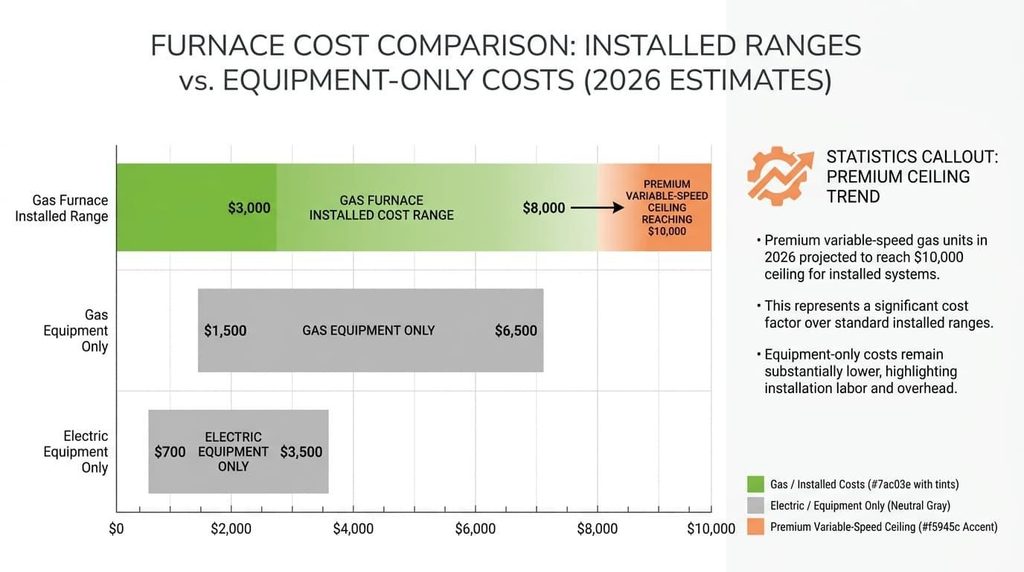
A furnace replacement in Utah can cost roughly $3,000 to $8,000 installed in 2026, while premium variable-speed systems with higher AFUE ratings can reach $10,000. Gas furnaces are the most common type in Utah, and for furnace cost context, the new furnace cost for equipment only typically runs about $1,500 to $6,500 for gas and $700 to $3,500 for electric units. Utah furnace pricing data for 2026 reflects a broad statewide range, but your home’s requirements ultimately determine the actual price.
What Determines Your Furnace Replacement Cost?
Six factors can move your total:
- British Thermal Units (BTU) capacity based on your heating load
- AFUE efficiency rating
- Single-stage, two-stage, or modulating operation
- Ductwork or venting modifications
- Permit and inspection fees
- Installation labor costs
The furnace installation cost depends on capacity, efficiency, ductwork, permits, and labor. BTU sizing deserves particular attention. Choosing equipment based only on square footage can result in an oversized furnace that cycles too frequently. An accurate price for a new furnace installation should start with a manual J load calculation, where a technician evaluates the house before recommending equipment. The final installation cost can also shift with home size and job complexity, so understanding local labor costs helps you budget more accurately.
Single-stage furnaces are usually the budget option for homeowners, while more advanced staging raises the new furnace cost.
Qualifying high-efficiency systems may also be eligible for Utah utility rebates or the federal 25C tax credit, which can reduce your net cost. We cover those potential savings later in the guide.
Why Utah Furnace Quotes Can Differ by Thousands
A $3,000 bid and an $8,000 bid can both be legitimate when the installation scopes are different. One contractor may include only the equipment and basic labor, while another may account for removal, disposal, permit handling, startup, and other project-specific work.
The biggest differences often appear in what happens around the furnace itself. An installation may require additional electrical work, modifications to the gas connection, changes to the condensate setup, or disposal of the existing equipment. Some estimates also include labor for cleanup and final system testing, while others list those services separately.
Compare the Complete Installation Scope
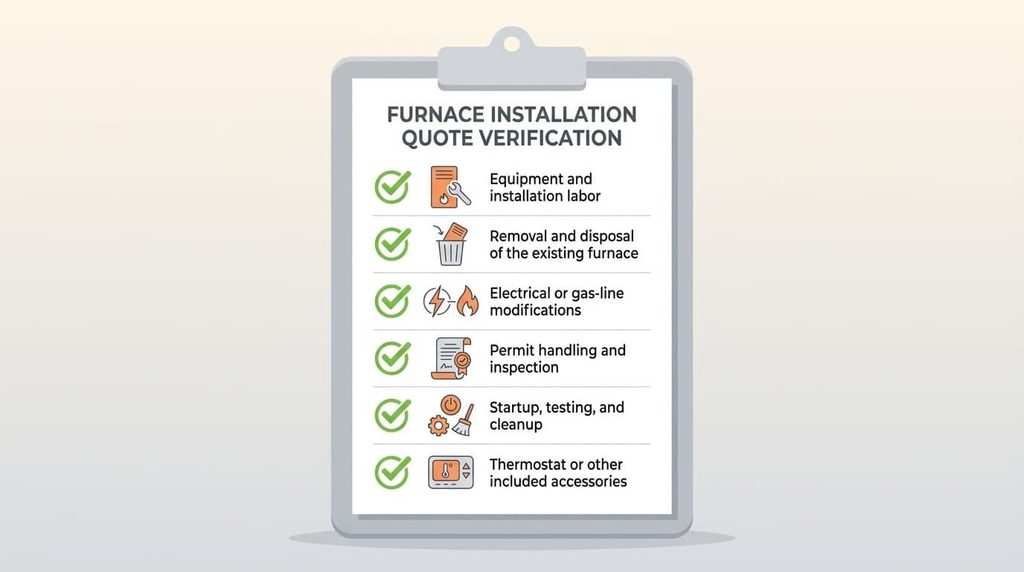
Before choosing the lowest quote, check whether each written estimate clearly identifies:
- Equipment and installation labor
- Removal and disposal of the existing furnace
- Electrical or gas-line modifications
- Permit handling and inspection
- Startup, testing, and cleanup
- Thermostat or other included accessories
Get at least three quotes before choosing a furnace installer.
Verify that the contractor is licensed and insured, and check customer reviews before approving the work.
A detailed estimate makes comparisons much easier. It’s the same reason homeowners benefit from knowing what to expect from a furnace tune-up before scheduling service. Understanding the scope makes it easier to recognize what you’re actually paying for.
Furnace Type, Efficiency, and Staging All Affect the Equipment Cost
Three equipment choices have a direct effect on your furnace replacement price: the capacity your home requires, the efficiency rating, and how the furnace controls its output. The Department of Energy’s furnace efficiency guidance distinguishes standard non-condensing furnaces around 80% AFUE from condensing models that can reach 90% to 98% AFUE. Higher-AFUE equipment can cost more upfront, but it is often more energy efficient, can improve overall energy efficiency, and may help reduce energy bills over time while sometimes requiring different venting.
ENERGY STAR’s furnace efficiency criteria also set minimum efficiency requirements for qualifying gas furnaces in northern climates.
Single-Stage, Two-Stage, and Variable-Speed Furnaces
Staging determines how aggressively the furnace delivers heat. A single-stage model runs at full output whenever it calls for heat and usually has the lower upfront cost, while two-stage and variable-speed systems can adjust their output for longer, steadier heating.
| Furnace Type | How It Operates | Typical Price Position |
|---|---|---|
| Single-stage | Runs at full output during each heating cycle | Lower |
| Two-stage | Uses a lower output for most heating demands | Mid-range |
| Variable-speed | Adjusts output for steadier temperatures and quieter airflow | Higher |
A higher-end furnace isn’t automatically the better choice for every home, though two-stage and variable-speed models can deliver more energy savings over time while raising the furnace cost. Choosing the right furnace comes down to matching the equipment to your home’s heating needs, comfort expectations, and budget.
Venting, Labor, and Disposal Can Increase Installation Costs
Equipment isn’t the only part of the replacement price. A high-efficiency condensing furnace may require new intake and exhaust piping plus a condensate drain.High-efficiency condensing furnace requirements outline these venting requirements, but the installation complexity of a retrofit can add several hundred dollars to the price.
Labor costs, gas lines, disposal of the old furnace, and other installation work can also increase the overall installation cost. Older homes may also have leaky or undersized ductwork that needs modification during installation.
Optional Upgrades Add to the Final Price
A replacement is also often an opportunity to add equipment that isn’t required for the furnace itself. Smart thermostats, media filtration cabinets, and whole-home humidifiers can each increase the project cost.
Keeping these upgrades separate on the estimate makes it easier to decide which ones are worth adding.
Furnace Sizing Should Follow Heating Load, Not Square Footage
The furnace’s efficiency and staging affect equipment cost, but its capacity determines whether the system is actually suited to your home. Square footage alone isn’t enough to make that decision. Insulation, windows, ceiling height, air leakage, and local conditions all affect how much heat a house loses.
Two 2,000-square-foot homes along the Wasatch Front can therefore require different furnace capacities. Oversizing can lead to frequent cycling, while an undersized system may struggle to maintain the desired temperature on the coldest days.
Manual J Load Calculations
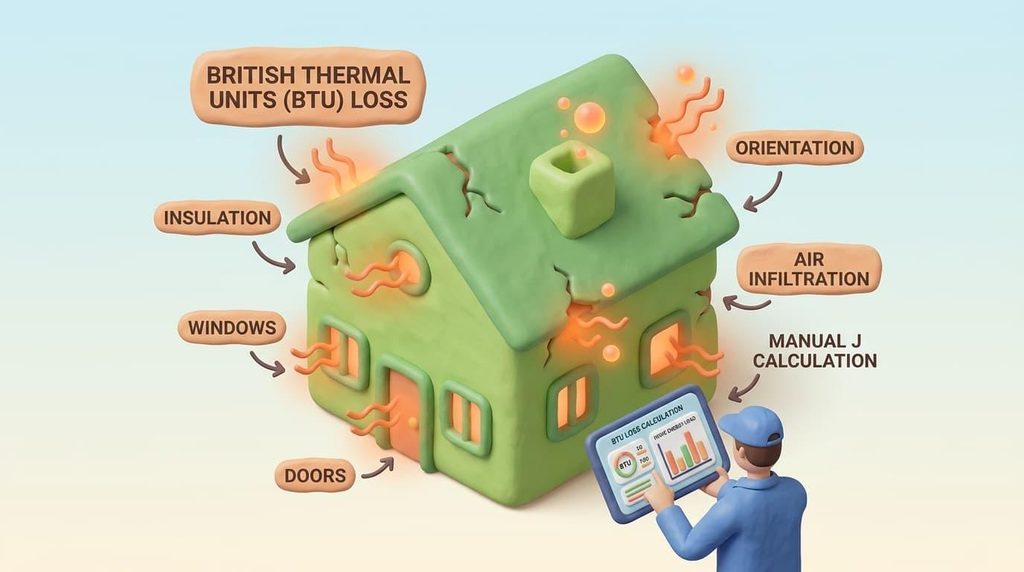
A Manual J load calculation estimates how many British Thermal Units of heat the home loses under design conditions, giving the technician a basis for selecting the appropriate furnace capacity. The Department of Energy’s heating load sizing guidance explains why equipment should be sized around the building’s actual heating requirements rather than a simple square-footage formula, and this is especially important in Utah because local elevation can affect both heating capacity and cooling capacity when an HVAC system is being sized as part of a broader replacement project.
That assessment considers details such as insulation, windows, doors, orientation, and air infiltration. It also helps prevent the comfort and efficiency problems that can come with choosing equipment that’s too large or too small.
Ductwork Condition and Furnace Performance
Correct furnace sizing doesn’t guarantee good performance if the duct system has problems. Leaking connections, undersized returns, restricted supply runs, or poor distribution can keep heated air from reaching certain rooms effectively.
A furnace replacement assessment should therefore include the existing ductwork. Fixing a significant airflow problem may be more important than increasing furnace capacity, particularly when some rooms consistently remain colder than others.
Wasatch Front Elevation Affects Furnace Capacity
Utah’s elevation also belongs in the sizing calculation. At roughly 4,300 feet and higher, thinner air can affect combustion and furnace output compared with sea-level conditions. A technician familiar with local installations accounts for those conditions when determining the appropriate equipment capacity.
SameDay Heating & Air helps Utah homeowners choose furnace equipment sized for their home’s actual heating needs and local conditions. Our technicians can assess your existing system and recommend a replacement based on the home, not a square-footage guess.
Schedule Your Furnace Assessment
Should You Repair or Replace an Aging Furnace?
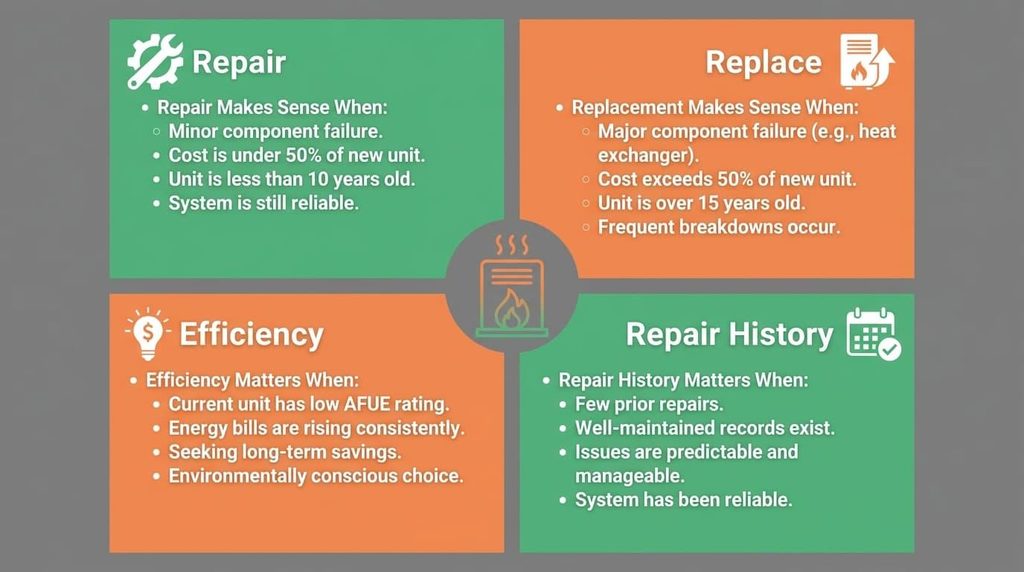
The right choice depends on the furnace’s age, condition, repair history, and expected remaining service life. Instead of treating one repair bill as an automatic reason to replace the system, here’s how to look at the bigger picture:
- Repair Makes Sense When: The furnace is relatively young, the problem is isolated, and the repair costs are reasonable compared with the system’s remaining service life.
- Replacement Makes Sense When: Repairs are becoming frequent, major components are failing, parts are difficult to source, or the furnace is approaching or beyond its typical service life.
- Efficiency Matters When: An older 80% AFUE furnace uses significantly more fuel than a newer high-efficiency model, making continued operation more expensive over time.
- Repair History Matters When: Multiple breakdowns across consecutive heating seasons suggest you’re spending repeatedly to keep an aging system running.
There isn’t a universal dollar threshold that determines when replacement becomes worthwhile. A technician needs to consider the furnace’s actual condition, repair history, efficiency, and remaining service life before making a recommendation.
For a closer look at the decision, the signs that it’s time to repair or replace your furnace can help you evaluate what you’re seeing at home.
Emergency Furnace Replacement During Utah Winters
A planned replacement gives you time to compare equipment and schedule installation around your availability. A furnace that fails during a winter cold snap creates a different situation, where diagnosis, equipment availability, and installation timing become the immediate priorities.
Assessment Before Replacement
A technician should inspect the furnace before determining whether replacement is necessary. No heat, repeated short cycling, or rising energy bills can indicate a serious problem, but several common furnace problems can still be repaired. An in-home assessment identifies the issue and establishes whether repair or replacement makes more sense.
Equipment Availability and Installation Timing
If replacement is necessary, the installation timeline depends on having the right equipment available and completing any required permitting or inspection. Capacity and efficiency should still match the home’s heating requirements rather than whatever furnace happens to be available first.
SameDay’s Green Team provides a flat-rate price before work begins and keeps you informed about equipment availability and scheduling. If you’re deciding whether your current system is approaching replacement, these signs your system needs an upgrade can help you evaluate the situation.
Utah Factors That Can Change Your Furnace Replacement Cost
The final cost of a furnace replacement depends on more than equipment and installation. Local heating demand, permitting requirements, utility rebates, and available tax incentives can all affect what you ultimately pay.
Wasatch Front Climate and Heating Demand
Wasatch Front winters can put substantial demand on a furnace, which can influence the heating capacity required for a home. In colder climates along the Wasatch Front, many homeowners choose gas furnaces because they tend to be more effective and cost-efficient for long heating seasons. That capacity, combined with the efficiency tier you select, affects the equipment cost.
Salt Lake City Permits and Inspection Requirements
Salt Lake City and salt lake county require a mechanical permit for furnace replacement in Utah, and permit fees commonly range from $75 to $250, adding both a fee and an inspection step to the project. Permit timing can also affect scheduling during busy winter periods. Skipping permits can create resale problems and may void homeowner’s insurance coverage. SameDay handles permitting for every Utah HVAC installation.
Utah Utility Rebates
HVAC rebates can reduce the out-of-pocket cost of qualifying high-efficiency equipment. Eligibility varies based on your equipment, efficiency rating, and service address.
| Program | Administered By | Potential Coverage |
|---|---|---|
| Rocky Mountain Power Wattsmart | Rocky Mountain Power | Qualifying electric-side HVAC upgrades |
| ThermWise | Enbridge Gas Utah | Qualifying high-efficiency gas furnaces |
Rocky Mountain Power Wattsmart may offer HVAC rebates of up to $2,000 for qualifying upgrades. If you’re considering a heat pump or cold-climate heat pump instead of a furnace-only replacement, check current heat pump rebates before you decide.
Our Green Team can review available incentives during your in-home assessment, whether you’re in Salt Lake City or scheduling HVAC service in Lehi, UT. That gives you a clearer picture of your potential net cost before approving the work.
Section 25C Tax Credit Considerations
Federal tax incentives can also affect the final cost of a qualifying furnace replacement. ENERGY STAR’s information on federal tax credits for qualifying furnaces outlines available requirements and limits. Because federal eligibility can change, review the IRS guidance on residential energy credits for the tax year that applies to your installation.
Gas vs. Electric Furnace Operating Costs in Utah
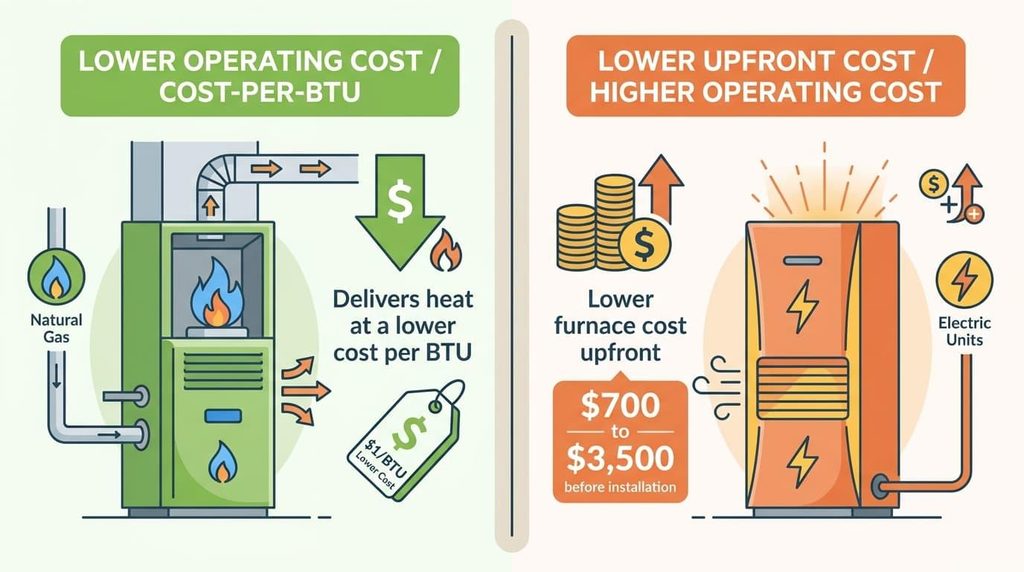
For many Wasatch Front homes, natural gas is often more cost-effective to operate than electric resistance heat, and an oil furnace is far less common locally than either option. EIA residential heating fuel cost data for the Mountain division shows natural gas delivering heat at a lower cost per BTU than electric resistance, while electric units can have a lower furnace cost upfront.
Electric furnaces typically cost about $700 to $3,500 before installation, though operating costs may be higher. However, your actual bill depends on utility rates, equipment efficiency, and how much heat your home requires.
What Matters Beyond the Purchase Price
The furnace with the lowest upfront price isn’t necessarily the least expensive system to operate. A higher-efficiency gas furnace costs more initially but uses less fuel during each heating cycle.
Consider these operating-cost factors:
- Efficiency: A 96% AFUE furnace converts more of its fuel into usable heat than an 80% model.
- Heating Demand: Utah’s long heating season means efficiency differences can accumulate across many months of operation.
- Blower Electricity: An ECM variable-speed blower can use less electricity than an older single-speed motor while providing more consistent airflow.
- Utility Rates: Gas and electricity prices vary, so your home’s actual operating cost depends on current local rates.
The comparison is about operating costs rather than specific brands or models. SameDay’s Green Team can use your home’s equipment, heating needs, and utility costs to help you compare the numbers before choosing a replacement.
Get a Furnace Replacement Price Based on Your Home
An accurate furnace replacement price starts with an in-home assessment, not a phone estimate. That’s especially true when the quote involves system replacement or full system replacement rather than furnace-only work. Your heating load, equipment choice, ductwork, venting, and local permit requirements all affect the final cost, and those details cannot be measured remotely.
Replacing both the furnace and central AC commonly ranges from $8,000 to $16,000+ depending on equipment, ductwork, and project scope.
A complete furnace system upgrade may also involve airflow corrections or other HVAC changes, which is why furnace system pricing varies.
SameDay Heating & Air has served homeowners across the Wasatch Front since 1957. Our Green Team assesses your home, explains the recommended equipment and installation requirements, and provides a flat-rate price before work begins. You approve the job before we move forward, with no pressure or surprise charges added afterward.
Schedule Your Furnace Assessment
Frequently Asked Questions About Furnace Replacement
How much does it cost to replace a furnace in a 2,000 sq. ft. house?
A 2,000-square-foot Wasatch Front home may cost $3,500 to $7,000 for furnace replacement in 2026. Your heating load, efficiency choice, ductwork, and venting determine the final price.
Are furnace prices going up in 2026?
Furnace equipment and installation costs have increased with labor and material expenses, while efficiency requirements have shifted more installations toward higher-cost condensing systems. Available rebates and tax credits can reduce qualifying project costs.
What is the best time of year to buy a new furnace?
Spring and fall typically offer more scheduling flexibility because demand is lower between peak cooling and heating seasons. Planning ahead also gives you time to compare equipment, installation scope, and written estimates.
Should a 25-year-old furnace be replaced?
A 25-year-old furnace is well beyond the typical 15-to-20-year service life. Replacement may make more sense when repairs become frequent, parts are difficult to find, and the system operates at lower efficiency.
Does a new furnace increase house value?
A new furnace can improve a home’s appeal by addressing an aging mechanical system and reducing concerns during inspection. However, homeowners should view replacement primarily as a comfort, reliability, and operating-cost investment.
How long does it take to remove and install a furnace?
A straightforward furnace replacement can take four to eight hours when existing ductwork and venting remain suitable. Projects requiring new venting, condensate drainage, duct modifications, or gas-line changes may take longer.