Utah’s HVAC efficiency rules have changed, but many homeowners are still seeing outdated SEER ratings and conflicting advice online. If you’re shopping for a new air conditioner or heat pump, knowing the current requirements can help you avoid confusion and make a better investment.
So, what SEER2 rating does your new system actually need to meet in Utah?
The answer depends on the federal efficiency standards that took effect in 2023, not the older SEER ratings that still appear across many websites and contractor pages.
In this guide, we’ll explain Utah’s current SEER2 requirements, why SEER changed to SEER2, how the ratings affect your home, and what they mean for your next HVAC upgrade.
Key Takeaways
- Utah’s minimum efficiency requirement for new split-system air conditioners is 13.4 SEER2.
- SEER2 replaced SEER in 2023 using more realistic HVAC performance testing standards.
- Older, properly functioning air conditioners remain legal and do not require mandatory replacement.
- Higher SEER2 ratings improve efficiency, but savings depend heavily on installation and home conditions.
- Proper system sizing often impacts comfort and efficiency more than choosing a higher SEER2 rating.
- Utility rebates may require higher efficiency levels than Utah’s minimum federal SEER2 standard.
- Always verify AHRI-certified equipment ratings before purchasing a new air conditioner or heat pump.
What SEER2 Rating Does a New AC Need in Utah?
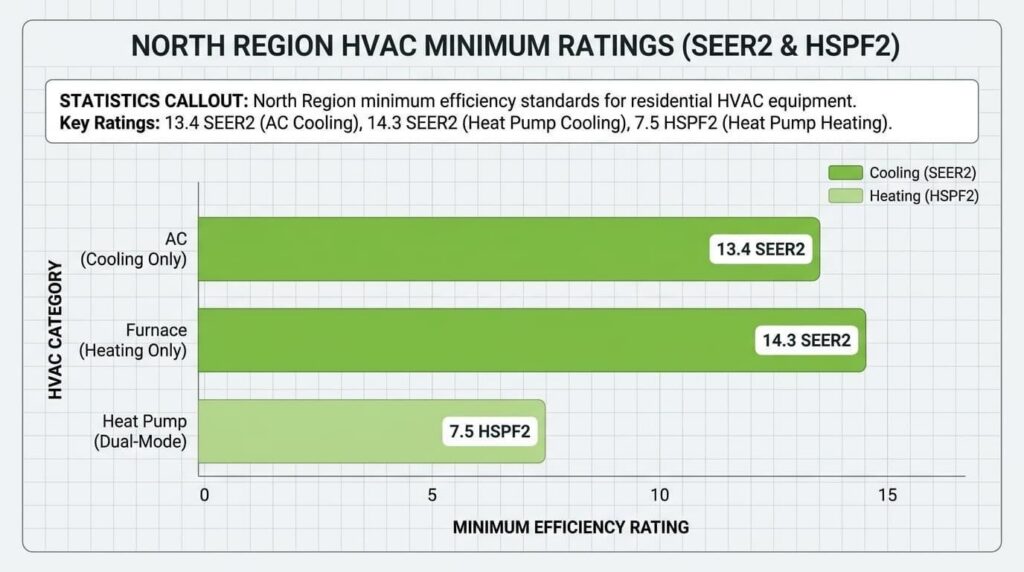
For a new split-system central air conditioner in Utah, SEER stands for seasonal energy efficiency ratio and measures cooling efficiency over the entire cooling season; the federal minimum seer2 is 13.4.
Utah follows the national minimum for the North region, unlike the Southeast and Southwest regions. Single-package air conditioners have the same minimum, while heat pumps must meet separate cooling and heating thresholds.
Why do some websites still mention 14 SEER2 or the former 14 SEER standard?
The 14 SEER2 requirement applies to the South and Southwest regions, not Utah. Meanwhile, articles referencing 14 SEER are using the old rating system that was replaced when the DOE introduced SEER2 efficiency standards. Unfortunately, those outdated numbers continue to circulate, leaving many Utah homeowners with the wrong information.
Choosing the right SEER2 rating is only one part of selecting a new HVAC system. Efficiency standards set the legal minimum seer, but factors such as airflow, filtration, and overall system design also influence comfort and indoor air quality in Utah homes.
According to the U.S. Department of Energy’s 2023 HVAC efficiency standards, the current North region minimums are:
- 13.4 SEER2 for split-system central air conditioners
- 13.4 SEER2 for single-package air conditioners
- 14.3 SEER2 and 7.5 HSPF2 for split-system heat pumps
It’s also important to understand that these are minimum requirements, not recommended targets. Utah doesn’t impose additional state-level HVAC efficiency requirements beyond the federal standards, so a 13.4 SEER2 air conditioner is fully compliant.
While a higher SEER rating can provide better energy efficiency and cost savings, the legal requirement is still the minimum threshold. Choosing a 16 or 18 SEER2 system is simply a decision based on energy savings, comfort, and long-term operating costs.
When you’re comparing installation quotes, keep this difference in mind. If you’re installing a new air conditioning system, air conditioning units and other HVAC equipment rated 13.4 SEER2 or higher meet the minimum seer2 needed to legally install equipment in Utah. From there, the decision becomes whether paying more for a higher-efficiency model makes financial sense for your home and cooling habits.
Why Did SEER Change to SEER2?

On January 1, 2023, the Department of Energy (DOE) replaced SEER with SEER2 for air conditioners and heat pumps. The change did not make existing equipment less efficient. Instead, SEER2 is based on more realistic testing conditions that better reflect real-world operating conditions.
To achieve this, the DOE introduced a more demanding test with more realistic testing conditions than the old standard.
The M1 testing procedure simulates the resistance air encounters as it moves through ductwork, filters, and other parts of a home’s HVAC system, and SEER2 uses higher static pressure for testing than SEER when simulating airflow resistance in ducted homes.
Because the new test incorporates realistic airflow resistance, a SEER2 rating provides homeowners with a better basis for comparing cooling systems.
Why SEER2 Ratings Are Lower Than Older SEER Ratings
SEER2 values are generally lower than older SEER values for equivalent equipment because the newer test is more demanding. For equivalent equipment, SEER2 ratings are typically about 4.5% to 5% lower than older SEER ratings.
Under the M1 test, equipment must move air against higher external static pressure, representing resistance from ductwork, filters, bends, and vents, which is why the unit’s SEER rating under the older method does not equal its SEER2 result.
Keep these distinctions in mind when comparing Utah HVAC proposals:
- SEER and SEER2 are different rating scales. For example, a 16 SEER unit manufactured before 2023 is not equivalent to a modern 16 SEER2 system, so comparing the two directly isn’t accurate.
- Utah’s 13.4 SEER2 minimum replaces the old 14 SEER standard. According to the DOE’s SEER2 and EER2 efficiency requirements, the current North region minimum reflects the previous federal efficiency requirement under the updated testing method.
- EER2 measures something different. While SEER2 estimates seasonal efficiency, EER is the energy efficiency ratio, and EER2 is the energy efficiency ratio at 95°F, which measures performance at a specific outdoor temperature and helps compare system performance during peak summer heat.
- SEER is a seasonal performance factor for cooling, while HSPF2 is the seasonal performance factor for heating used to measure heat pump heating efficiency over the full heating season.
The federal SEER2 testing regulations define the testing standards manufacturers must follow, which is why every new HVAC system now carries a SEER2 rating instead of a SEER rating. Therefore, when you’re comparing high-efficiency air conditioning systems, make sure every quote lists SEER2 rather than the older SEER rating so you’re making an apples-to-apples comparison.
How SEER2 Requirements Vary by HVAC System Type
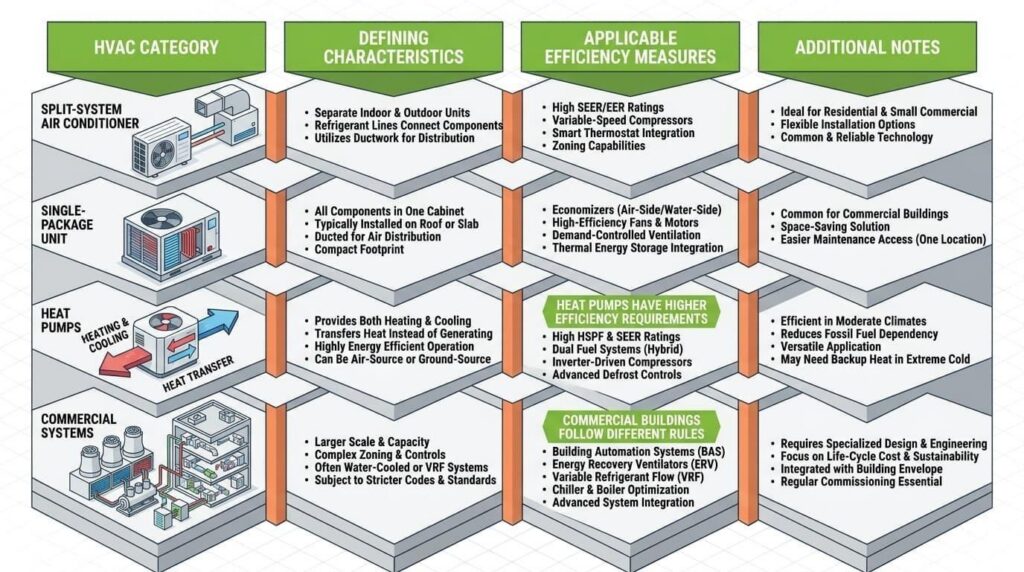
Federal efficiency requirements vary by equipment type. Before comparing Utah HVAC quotes, identify whether each proposal covers a split-system air conditioner, a packaged unit, a heat pump, or a commercial system.
The categories below explain which ratings apply to common residential systems.
Split Systems vs. Packaged Units
Although both split-system air conditioners and single-packaged units must meet the same 13.4 SEER2 minimum in Utah’s North region, they’re classified differently under the Department of Energy’s standards.
Here’s the difference across the different types of “HVAC unit” homeowners may see in quotes:
- Split-System Air Conditioner: The outdoor condenser and indoor evaporator coil are installed separately, making this the most common setup in Utah homes.
- Single-Package Unit: All cooling components are housed in a single outdoor cabinet, typically installed on a roof or concrete pad.
You’ll also often come across ductless mini-split systems, which fall under their own efficiency classifications and installation guidelines.
Before comparing estimates, confirm which type of system each contractor is quoting. Likewise, following the proper maintenance schedule for your HVAC system helps ensure it continues to operate near its rated efficiency.
Heat Pumps Have Higher Efficiency Requirements
Heat pumps are designed to provide both cooling and heating, so they must satisfy two federal efficiency ratings instead of one.
For systems installed in Utah, the current minimum requirement is:
- 14.3 SEER2 for cooling efficiency
- 7.5 HSPF2 for heating efficiency
A heat pump must meet both standards to comply with federal regulations, since its performance is evaluated across both operating modes.
Commercial Buildings Follow Different Rules
The SEER2 requirements discussed throughout this guide apply to residential HVAC systems. Commercial buildings follow a separate set of energy-efficiency standards established under Utah’s commercial energy code, which uses different equipment categories and compliance tables.
For that reason, don’t assume a SEER2 requirement listed on a commercial specification sheet also applies to your home. Residential and commercial HVAC systems are evaluated under different regulatory frameworks, even when the equipment appears similar.
Do You Need to Replace Your Existing AC Because of SEER2?
SEER2 does not require Utah homeowners to replace a working air conditioner. The current standards govern new equipment, while an existing system remains legal if it met the rules in effect at the time of its installation.
An air conditioner installed in 2005, 2016, or any other year only had to meet the efficiency standards in place at the time of installation. The 2023 transition to SEER2 didn’t make older systems illegal.
The Air-Conditioning and Refrigeration Institute (AHRI) also allowed contractors to install qualifying equipment manufactured before the 2023 cutoff and already sitting in inventory, which is why you may still come across legally installed systems carrying older SEER ratings.
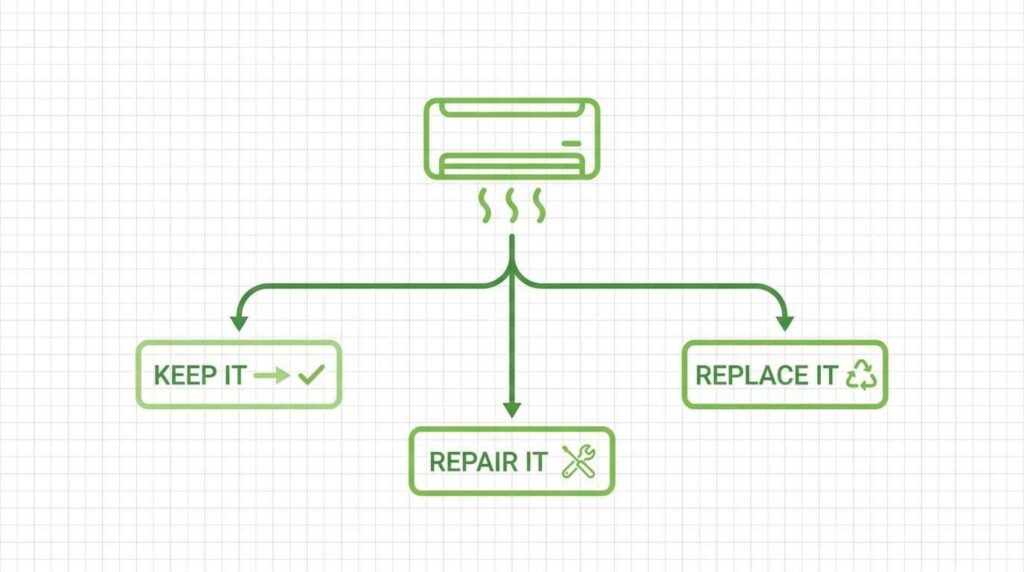
Use condition and cost, not the current minimum rating alone, to decide what to do with an older system:
- Keep It: Continue using a reliable system that cools the home evenly and has manageable operating costs.
- Repair It: Routine repairs remain an option when parts are available, and the cost is reasonable for the unit’s age.
- Replace It: Consider an upgrade when breakdowns become frequent, comfort declines, or a major repair approaches the cost of a new system.
A practical guide to repairing vs. replacing your AC system can help you compare the costs, while avoiding these common air conditioner mistakes may help extend your system’s lifespan.
The Department of Energy’s consumer guide to central air conditioners and heat pumps also explains the long-term benefits of higher-efficiency equipment.
How Utah’s Climate and Your Home Affect SEER2 Performance
SEER2 is measured in a laboratory, but Utah homes operate under very different conditions. Along the Wasatch Front, hot, dry afternoons, cool nights, elevation, sun exposure, and large seasonal temperature swings all affect cooling demand. Ductwork and insulation determine how much of the rated efficiency reaches the living space.
Proper System Sizing Matters More Than You Think
During sustained heat on the Wasatch Front, an air conditioner may run for long periods, and choosing the right SEER rating depends as much on the home as on the equipment.
A higher SEER2 rating can reduce electricity use, but only a load calculation shows how much energy a new system is likely to use under local conditions, rather than relying solely on a higher-efficiency system label.
An oversized system may short-cycle, while an undersized unit may run continuously during the hottest afternoons. Either problem can increase wear, raise operating costs, and create uneven temperatures.
That’s why Utah’s heat pump training guidance and published research on climate-zone system selection emphasize matching equipment to your home’s actual cooling load instead of simply choosing a larger unit.
Your Home Can Limit Efficiency
Homes across northern Utah range from older properties with aging ducts to newer, tightly built houses. In either case, these conditions can prevent high-efficiency equipment from reaching its rated performance:
- Leaky ductwork that allows conditioned air to escape into attics, crawlspaces, or wall cavities.
- Poor insulation that allows outdoor heat to enter the home more quickly.
- Long or poorly balanced duct runs make it difficult to maintain consistent room temperatures.
- Leaking return ducts that pull dust and unconditioned air into the HVAC system.
Improving these areas often increases comfort and helps your equipment perform much closer to its rated efficiency. Proper duct sealing, insulation upgrades, and airflow improvements all help your system operate more effectively.
Is a Higher SEER2 Rating Worth the Extra Cost?
A higher SEER2 rating usually means better efficiency and lower energy costs over time, but it typically comes with a higher upfront cost.
The practical question is whether new systems with higher ratings can deliver cost savings and lower long-term energy consumption for your Utah home, which often depends on usage and installation quality.
What Determines Your Actual Savings?
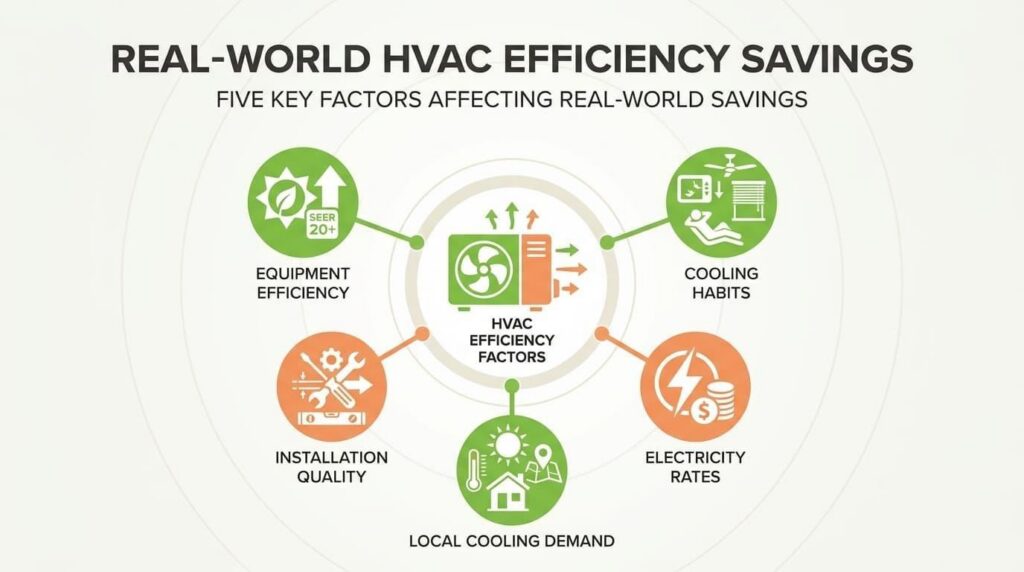
Actual savings depend on the equipment, installation, home, and cooling habits. Compare these factors before paying for a higher tier:
- Cooling Habits: Lower thermostat settings and longer operating hours can increase potential savings.
- Electricity Rates: The higher your utility rates, the more valuable each efficiency improvement becomes.
- Local Cooling Demand: Homes in lower-elevation Wasatch Front communities generally use more cooling than homes in cooler mountain locations. Sun exposure and thermostat settings also change the calculation.
- Installation Quality: Proper airflow, refrigerant charge, and matched equipment help the system achieve its published efficiency.
- Equipment Efficiency: An AC unit with a higher SEER2 rating uses fewer watt-hours for the same cooling output over time, but the financial return still depends on your home’s cooling demand.
Following these tips to reduce cooling costs this summer can help you get the most from your HVAC system, regardless of its SEER2 rating.
Higher-efficiency systems also offer quieter operation, more consistent temperatures, and improved comfort, especially when replacing an inefficient current system.
EER2, listed alongside SEER2 on the equipment label, still helps compare performance during peak outdoor temperatures; EER is measured at peak conditions, while SEER2 reflects seasonal performance across the cooling season.
The Department of Energy’sguide to central air conditioner efficiency explains how these ratings affect operating costs. However, if you’re still experiencing AC performance problems after upgrading, professional testing can identify issues such as poor airflow, incorrect sizing, or installation errors.
At SameDay Heating & Air, we take the time to explain your options and recommend solutions that make sense for your home and budget. Our goal is to help you maximize comfort, energy efficiency, and long-term savings, not simply sell you a higher-rated system.
Utah HVAC Tax Credits and Incentives Available to Homeowners in 2026
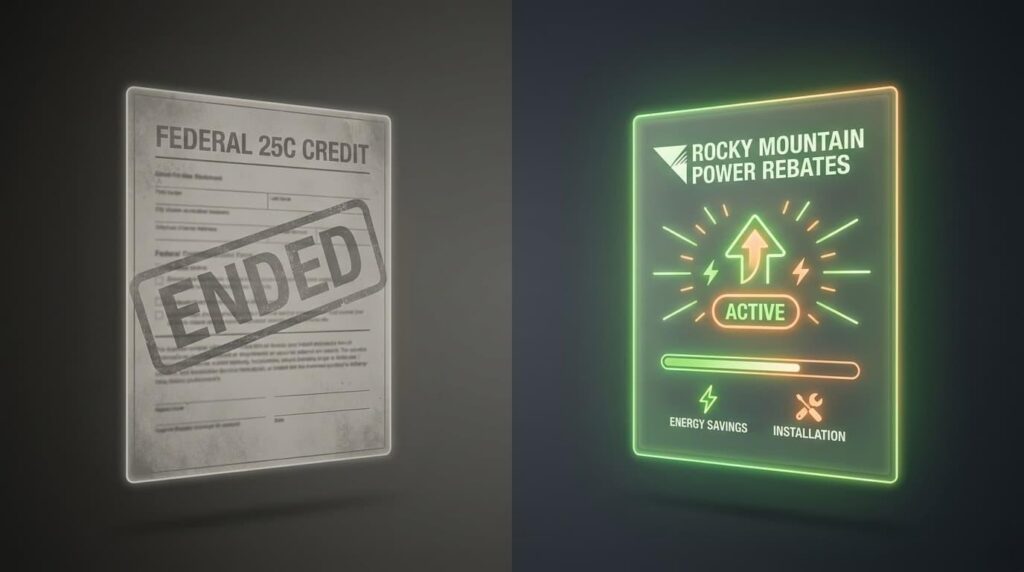
The federal Energy Efficient Home Improvement Credit (25C) changed at the end of 2025. So, Utah homeowners need to distinguish between federal tax credits and utility rebates when planning an HVAC upgrade.
- Federal 25C Credit: The credit for qualifying high-efficiency air conditioners and heat pumps ended for equipment placed in service after December 31, 2025. If you completed eligible work in an earlier tax year, the IRS energy efficiency tax credit instructions explain how to claim it.
- Rocky Mountain Power Rebates: Utah customers can still qualify for incentives on certain high-efficiency heating and cooling equipment through the utility’s residential energy efficiency program.
Meeting Utah’s 13.4 SEER2 minimum doesn’t automatically qualify a system for a rebate. Utility programs can require higher efficiency levels and specific equipment models, so the rating alone isn’t enough.
If you’re investing in a more efficient system, combining it with practical strategies for reducing cooling costs can help maximize your long-term savings. The ENERGY STAR efficiency definitions provide additional context on qualifying efficiency tiers.
Before signing an HVAC proposal, verify that the exact model number appears on the current utility’s approved equipment list. After installation, consistent seasonal AC maintenance helps your system continue operating at its intended efficiency for years to come.
Verifying a SEER2 Rating Before You Buy
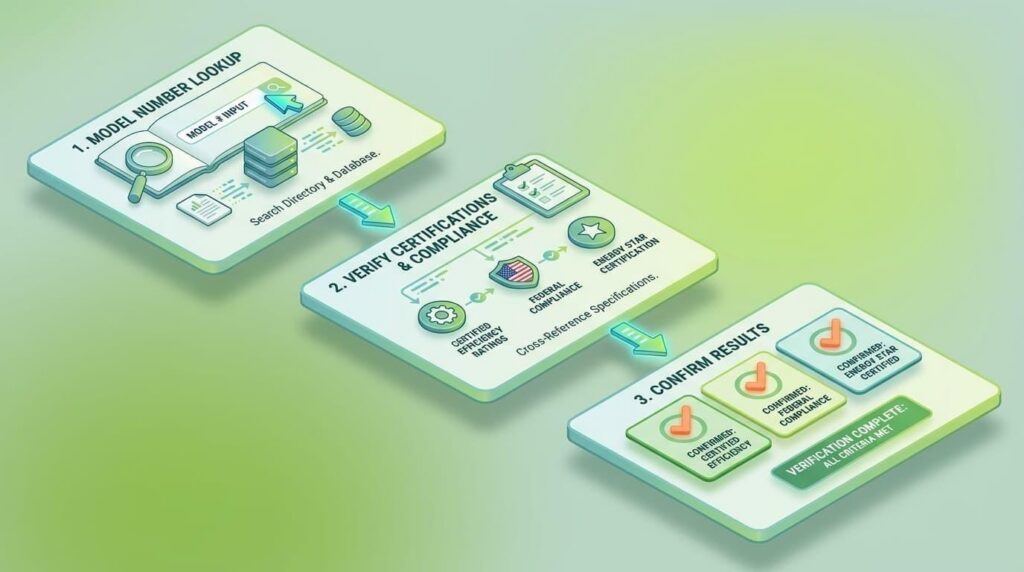
You don’t have to take a contractor’s word for a system’s efficiency. Every AHRI-certified HVAC system has published performance ratings that homeowners can verify before making a purchase. That means the SEER2 rating on your proposal should match an independent certification, not just a sales brochure.
Use the AHRI Directory to Confirm System Ratings
The AHRI Certified Directory allows homeowners to verify certified equipment ratings in just a few minutes. Looking up the model number on your quote can confirm:
- Certified efficiency ratings for the complete matched system, including SEER2, EER2, and HSPF2.
- Federal compliance, showing whether the system meets Utah’s North region minimum efficiency requirements.
- ENERGY STAR certification, which can determine eligibility for certain utility rebate programs.
Ask your contractor for the model numbers of both the outdoor unit and the indoor coil before signing a proposal. That allows you to verify the exact equipment combination rather than assuming every compatible component delivers the same performance.
Whether you’re planning AC installation in Lehi or elsewhere along the Wasatch Front, requesting AHRI-certified ratings is a simple way to compare proposals with confidence. At SameDay Heating & Air, we’re happy to provide those certified performance figures in writing before installation begins.
Making the Right SEER2 Decision for Your Utah Home
For Utah homeowners, 13.4 SEER2 is Utah’s minimum SEER rating for new split-system central air conditioners. A higher rating may be worthwhile, but it should be evaluated alongside system sizing, duct condition, installation quality, and local cooling demand.
Use the minimum as a compliance baseline, then compare total installed cost, projected operating savings, comfort features, warranty coverage, and available utility incentives.
SameDay Heating & Air has served Salt Lake City and surrounding Utah communities since 1953, offering everything from plumbing services in Salt Lake City to complete HVAC solutions. If you’re considering a new air conditioner or heat pump, SameDay Heating & Air can verify the certified ratings, assess your home’s cooling load, and explain which efficiency level fits your budget.
Contact SameDay Heating & Air to schedule an in-home assessment and compare properly sized options for your Utah home.
Frequently Asked Questions About HVAC SEER2 Ratings in Utah
What SEER Rating Does a 20-Year-Old Air Conditioner Typically Have?
Most central air conditioners installed around 2006 were rated between 10 and 13 SEER under the old efficiency scale. In addition to lower efficiency, age-related wear—such as dirty coils, declining airflow, and refrigerant issues—further reduces real-world performance.
Is It Better to Oversize or Undersize an Air Conditioner?
Neither. An oversized unit short-cycles, wasting energy and providing poorer humidity control, while an undersized system struggles to keep up during Utah’s hottest days. A professional load calculation is the only reliable way to determine the correct system size.
Does a Larger Home Need a Higher SEER2 Rating?
Not necessarily. Home size determines the cooling capacity your system needs, while SEER2 measures energy efficiency. Larger homes often benefit more from higher-efficiency equipment because longer cooling hours increase the potential energy savings.
Does a Higher SEER2 Rating Always Mean Lower Energy Bills?
Not necessarily. While higher SEER2 systems use less electricity under the same conditions, actual savings depend on proper sizing, installation quality, ductwork, insulation, thermostat settings, and how often your air conditioner runs throughout Utah’s cooling season.
Can I Check My Air Conditioner’s SEER2 Rating Myself?
Yes. If you’re buying a new system, ask for the outdoor unit and indoor coil model numbers, then verify the certified ratings through the AHRI Certified Directory. This lets you confirm the system’s SEER2, EER2, and, for heat pumps, HSPF2 ratings before purchase.