When your AC breaks down during a Utah summer, repair usually makes sense if the system is under 10 years old, has a solid service history, and the cost passes the $5,000 and 50% rules. Replacement is often the better call if the unit is over 15 years old, keeps needing major repairs, uses R-22 refrigerant, or the repair bill crosses those financial thresholds or raises safety concerns. Replacing it too early, however, could mean giving up years of useful service.e
SameDay Heating & Air Utah has helped Wasatch Front homeowners make informed AC decisions since 1957. For Utah homeowners and landlords managing rental properties along the Wasatch Front, our technicians look at the full condition of the system and recommend the option that offers the best long-term value.
This guide explains how to weigh system age, repair frequency, repair cost, efficiency, safety, and performance in northern Utah’s climate so you can protect comfort during long summer heat, avoid wasting money on the wrong fix, and get the most from your system’s lifespan. You’ll also learn how to apply the $5,000 and 50% rules, spot signs that point to repair versus replacement, and review Utah-specific factors such as climate, rebates, and tax credits before approving any work.
Find the Best Option for My AC
Key Takeaways
- Repairing usually makes sense when the AC is under 10 years old, has a reliable service history, and needs a minor or warranty-covered fix.
- Replacement may offer better long-term value when the system is over 15 years old, relies on R-22 refrigerant, or requires repeated major repairs.
- Use the $5,000 and 50% rules together to compare the repair cost against the system’s age and replacement price.
- Safety risks such as carbon monoxide, damaged electrical components, or serious refrigerant leaks can override cost considerations.
- Utah’s prolonged summer heat and demanding operating conditions may cause AC systems to wear out sooner than national estimates suggest.
Three Simple Rules to Help You Decide Between AC Repair and Replacement
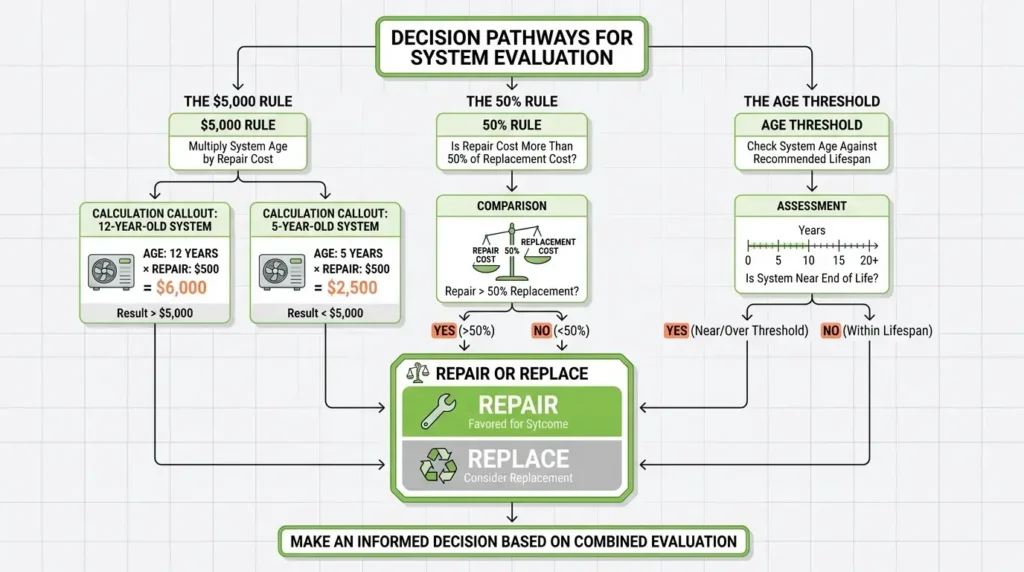
Before you call an AC technician or commit to replacing your system, consider these three rules first. They’re not hard rules, but when used together, they can help you make a more confident and cost-effective decision.
The $5,000 Rule
Multiply your AC unit’s age in years by the repair quote. If the result exceeds $5,000, then it’s better to replace the unit.
For example, a 12-year-old system needing a $500 repair lands at $6,000, which tells you replacement is the smarter move. On the other hand, a 5-year-old system with the same quote lands at $2,500, which favors repair. The $5,000 rule helps decide between repair and replacement, and homeowners often use it in hvac replacement makes decisions as a useful starting point, though your system’s condition, efficiency, and repair history should also guide the final call.
The 50% Rule
If the repair costs more than half the price of a new system, you’re likely to get a better value from a full system replacement.
Typical air conditioning replacement costs range from $5,800 to $17,000 depending on size, efficiency, and system match. Any repair quote that pushes the AC replacement cost past 50% of a new system is usually money better applied toward replacement.
The Age Threshold
Systems under 10 years old almost always favor repair, and air conditioner ages are a key factor in deciding when it’s time to replace instead. From 10 to 15 years, you are in the grey zone where the other two rules become more important.
For an AC system at over 15 years of age, major repairs become harder to justify once the unit is significantly older than 15 years, and replacement wins in nearly every scenario, since efficiency losses alone make continued repair less worthwhile.
Before making a final decision, apply at least two of these rules. If both point in the same direction, you’ll usually have a clear answer.
When Repairing Your AC Is the Right Call
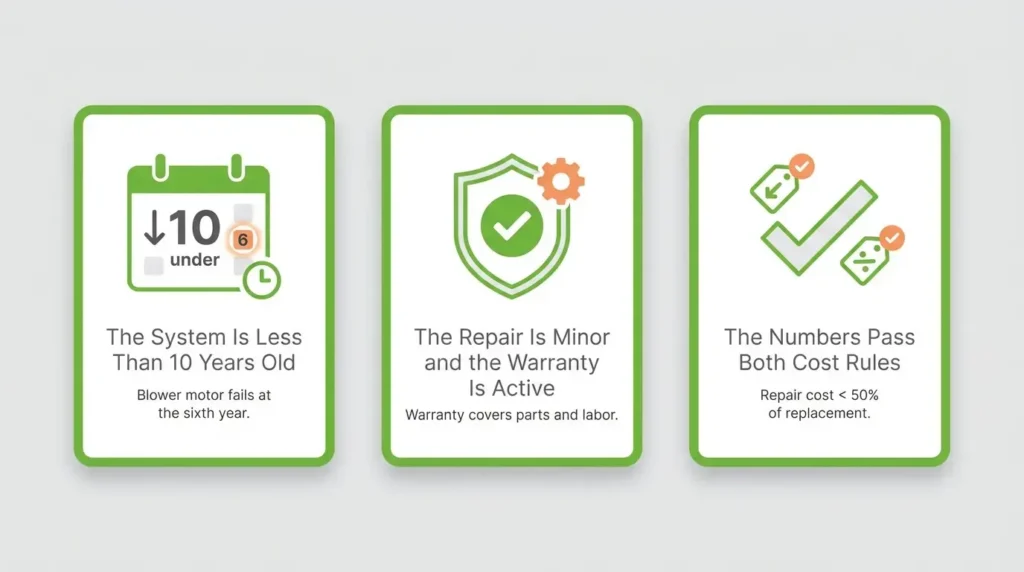
Not every repair quote is a warning sign. Sometimes the numbers, the age, and the system’s condition all point clearly toward fixing what you have rather than replacing it. Here are the conditions where repair is the right move.
The System Is Less Than 10 Years Old
A single component failure on a newer system is rarely a reason to replace. For instance, if the blower motor fails at the sixth year of usage, that’s a mechanical issue, not a sign the system is dying.
Repair is usually the better option when the current system is under 10 years old and the issue is minor. Systems under 10 years old typically have years of reliable service left, so replacing them early means you’re paying full replacement cost for a new system before you’ve gotten the full value from the one you already own.
Evaporator coil and condenser coil repairs on systems in this age range are also worth taking seriously. These are not cheap fixes, but on a unit with a solid service history, no pattern of repeated failures, and no need for frequent repairs, the repair math usually turns out favorable.
The Repair Is Minor and the Warranty Is Active
Before authorizing any repair, check your HVAC warranty status, including whether coverage is still active or nearing expiration, since warranty status can influence the decision to repair or replace an AC system.
Manufacturer warranties on compressor replacement and major components can provide warranty coverage that significantly reduces repair costs and would otherwise tip the math toward replacement. Many homeowners skip this step and end up paying out of pocket for work that was covered.
For example, a capacitor swap or blower motor replacement on a system that’s still under warranty is almost always the right call. The part cost drops, the labor is manageable, and you preserve a system that still has useful life ahead of it. When there’s an expired warranty, more of that cost burden often shifts to the homeowner.
The Numbers Pass Both Cost Rules
When you run the $5,000 rule and land well below the threshold, and the repair quote sits under 30% of full replacement cost, repair wins. That combination means you’re not throwing money at a failing system. A qualified air conditioner repair service can help you confirm whether a repair quote fits within those boundaries before you commit.
Still unsure whether the repair is worth it? SameDay Heating & Air can inspect the full system, perform a full system evaluation when the repair-versus-replace decision is unclear, identify the failed component, and check for other signs of wear.
Our licensed HVAC technician explains the findings clearly and helps you compare the repair cost with the system’s remaining value. Same-day appointments are available throughout the Wasatch Front, so you can get answers before a small issue becomes a complete breakdown.
Tell Me If My AC Is Worth Repairing
Signs That Point Toward Replacing Your AC
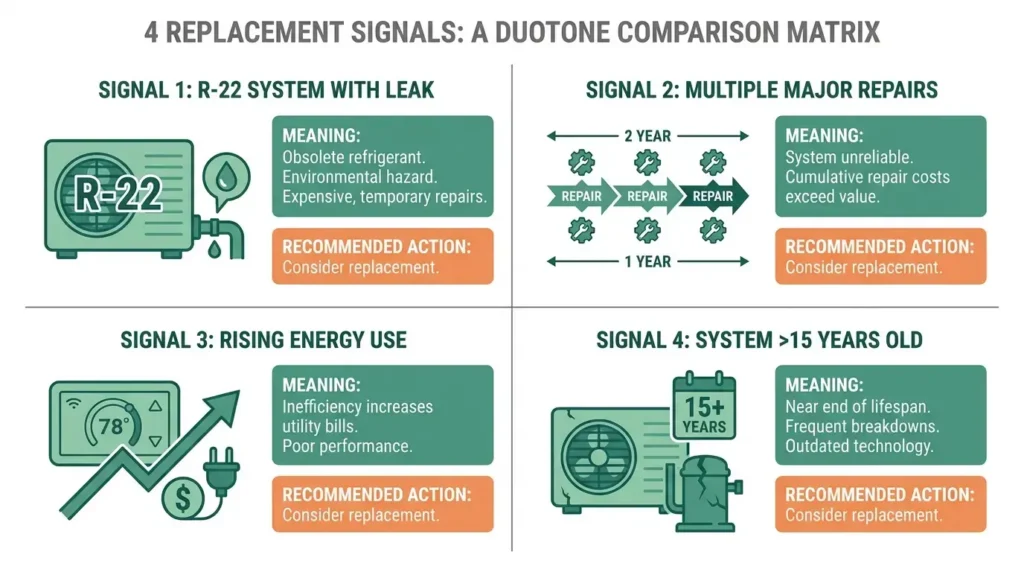
Some AC repairs are worth making, while others simply delay the inevitable. If your system shows any of the following signs, replacing it is often the smarter long-term investment.
Your System Is Running on R-22 Refrigerant
U.S. production and import of R-22 refrigerant ended on January 1, 2020. Many older units and residential units installed before newer standards relied on R-22, also known as Freon®. Existing systems can still be serviced, but technicians must rely on reclaimed or previously produced supplies, whose price and availability may change over time.
The Environmental Protection Agency regulates this phase-out, and Freon® use is often a sign the system is nearing the end of its service life.
An R-22 system does not automatically require replacement. However, a refrigerant leak can make continued repairs less practical, particularly when the equipment is older, inefficient, or already experiencing repeated problems, since new air conditioning units are no longer made to use R-22. There is also no simple “drop-in” refrigerant replacement because converting the system may require component changes.
If your AC uses R-22, consider its age, condition, repair cost, and refrigerant availability together. Replacement may offer better long-term value when several of these factors point toward continued expenses.
Repair Costs Keep Stacking Up
One repair doesn’t mean your AC is failing. But frequent repairs within one or two years can show that several components are wearing out. Multiple breakdowns over a couple of seasons often mean a failing ac system is nearing the end of its lifespan.
Add previous expenses for parts such as the blower motor, coils, or compressor to the current estimate. If you also need to replace broken parts because of corrosion or major component failure, and the total reflects high repair costs that approach 50% of a comparable replacement, putting more money into the existing system may offer limited value.
Your Energy Bills Keep Increasing
Rising cooling costs can indicate that an aging AC is starting to lose efficiency over time, use more electricity, and drive higher energy costs to maintain the same temperature. However, utility rate changes, extreme weather, duct leaks, poor insulation, and neglected maintenance can also increase monthly bills.
A properly sized, higher-efficiency system can reduce cooling energy use, and modern air conditioning units are generally more energy efficient than older equipment, but actual savings depend on your home, equipment, installation quality, and cooling habits. Comparing the most efficient AC systems for Utah homes can help you understand how SEER2 ratings relate to local cooling demands. If an older unit scores lower than a SEER rating of 13 or falls below the minimum standard rating, replacement deserves serious consideration.
Since ENERGY STAR efficiency criteria vary by equipment type and may change, confirm the current requirements before choosing a replacement.
The System Is Over 15 Years Old
An AC system can continue running after 15 years, but age increases the likelihood of worn components and unexpected breakdowns. Parts may also become harder to source as the equipment gets older.
Age shouldn’t decide the outcome alone. When an older system also needs a costly repair or no longer cools the home reliably, replacement often provides greater long-term value.
The table below brings these four replacement signals together for a quicker comparison:
| Signal | What It Means | Recommended Action |
| R-22 system with a refrigerant leak | Servicing depends on limited supplies, and conversion may require equipment changes | Consider replacement |
| Multiple major repairs within two years | Cumulative spending may be approaching replacement cost | Compare total repair and replacement costs |
| Rising energy use caused by the AC | The system requires more energy to maintain comfort | Compare potential operating savings |
| System over 15 years old with performance issues | Reliability is declining as components wear out | Consider replacement |
Safety Triggers That Override Every Cost Calculation
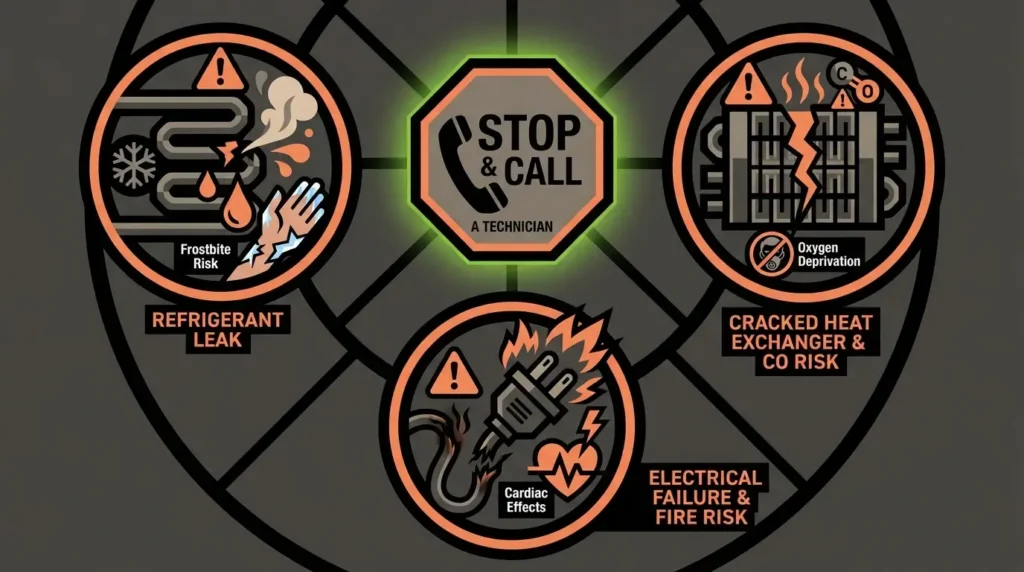
Some warning signs require you to stop using the equipment and call a qualified technician before comparing repair and replacement costs. The correct solution depends on whether the problem involves the air conditioner itself or another part of the broader HVAC system.
Refrigerant Leaks
A refrigerant leak can reduce cooling performance, damage the compressor, and create exposure risks. Refrigerant exposure hazards can include oxygen deprivation, cardiac effects, and frostbite, so homeowners should not attempt to locate or recharge a leak themselves.
The good news is that a leak may not be an automatic signal that you need a replacement. A technician should locate the leak, assess the system’s age and condition, and determine whether repairing the affected component offers reasonable long-term value.
Carbon Monoxide and Cracked Heat Exchangers
A standalone air conditioner does not produce carbon monoxide. This risk applies to fuel-burning heating equipment, such as a furnace, that may share ductwork, controls, or an air handler with the cooling system. Cracked furnace heat exchangers and improperly maintained flues can allow combustion pollutants into the home.
If an inspection identifies a cracked heat exchanger or possible carbon monoxide exposure, stop using the heating equipment and follow the technician’s safety instructions. Repair or replacement decisions should focus on the affected furnace or combined HVAC system, not necessarily on the outdoor AC unit.
Electrical Failures and Fire Risks
Burned wiring, scorch marks, unusual odors, or repeated breaker trips can indicate an electrical fault within the AC or connected HVAC equipment. Turn the system off and arrange an inspection instead of repeatedly resetting the breaker. The U.S. Fire Administration recommends having electrical work completed by qualified professionals.
Some electrical problems can be repaired safely, while extensive damage to an older system may support replacement. A professional diagnosis should determine which components are affected and identify the safest next step before cost becomes part of the decision.
Why Utah Homeowners Should Look Beyond National AC Advice
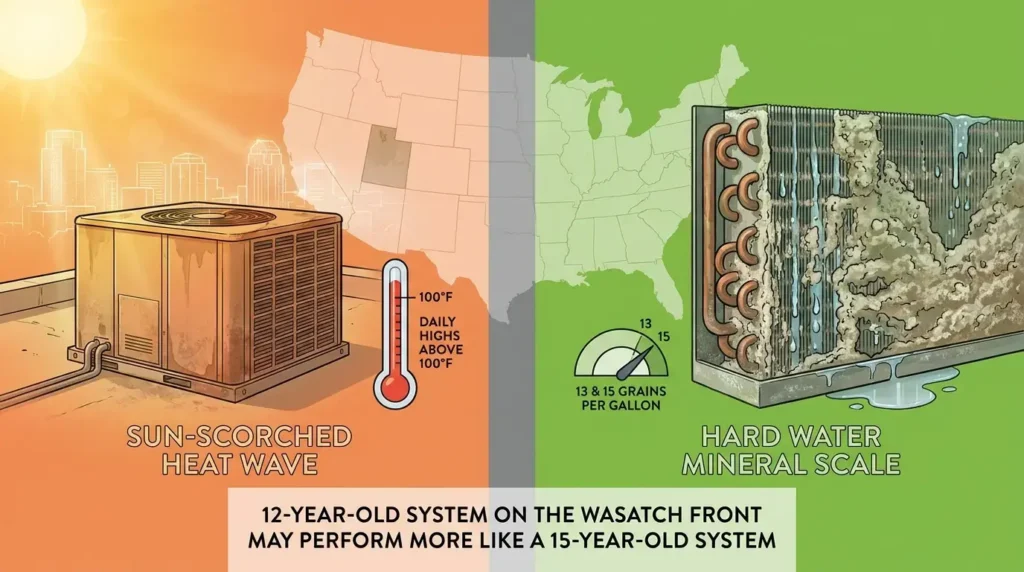
Most AC repair vs. replacement guides are written for a typical American homeowner, but Utah’s climate is far different from what you’ll find in many other parts of the country. There are two conditions in particular that place extra strain on air conditioning systems and can shift the repair-versus-replace decision sooner than national guidelines suggest.
Wasatch Front Heat and How It Accelerates Wear
Salt Lake City regularly sees daily highs above 100°F during peak summer. Unlike many parts of the country that experience only short-lived heat waves, the Wasatch Front often endures weeks of sustained extreme temperatures. That prolonged heat forces your HVAC system to run longer, harder cooling cycles than systems in milder climates.
The high-altitude, low-humidity conditions also affect refrigerant pressure and system efficiency in ways that can require more frequent servicing than national maintenance schedules suggest.
A 12-year-old system on the Wasatch Front may perform more like a 15-year-old system in a milder climate. That’s why we generally recommend homeowners across northern Utah evaluate their systems using local conditions rather than national age benchmarks alone.
SameDay Heating & Air diagnoses AC systems throughout the Wasatch Front, where prolonged summer demand can reveal problems that national age guidelines may overlook. Our certified technicians evaluate cooling performance, component wear, repair history, and the system’s ability to keep up during Utah’s hottest days. That local context helps homeowners decide whether another repair is worthwhile or replacement with a new system will provide better long-term value.
Get My Utah-Specific AC Assessment
Hard Water and Its Effect on AC Components
Utah has some of the hardest water in the country, running between 13 and 15 grains per gallon in many Wasatch Front communities. That mineral load doesn’t only stay in your plumbing system. It builds up on evaporator coils, and clogged drain repair services can become necessary when mineral buildup causes condensate drain lines to back up, reducing energy efficiency and shortening component life in ways that never appear in national guides.
Mineral deposits on the evaporator coil and condenser coil force the system to work harder to move the same amount of heat. Over time, that added strain drives up repair frequency and pulls the system toward failure earlier than the manufacturer’s rated lifespan would suggest. Staying current on how often to change your air filter is one of the simplest ways to reduce the compounding effect of Utah’s hard water on your system.
What Landlords Should Know About AC Repair vs. Replacement
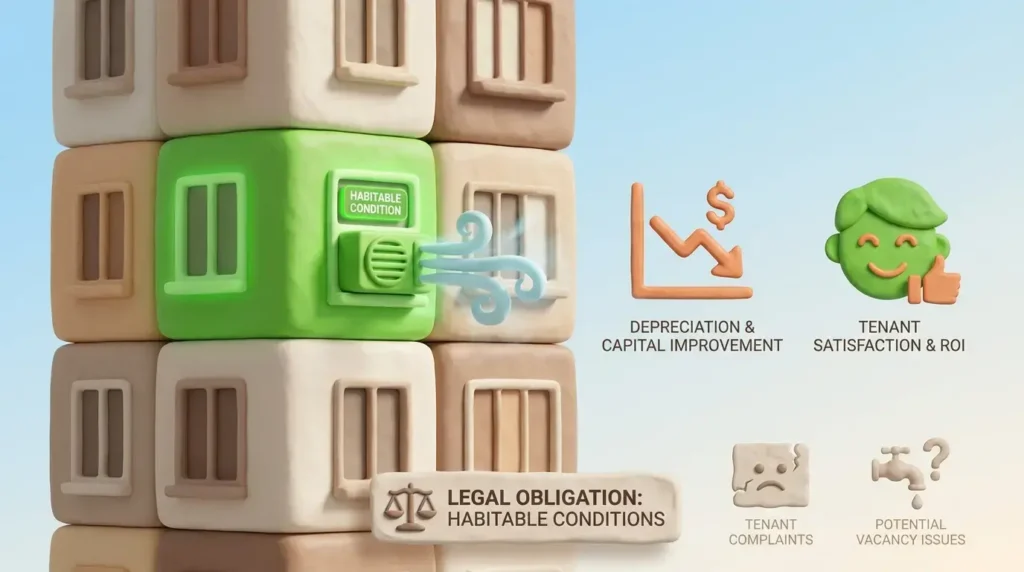
Owning a rental property changes how you approach AC repair vs. replacement. Repair costs still matter, but they’re only one part of the decision when tenants depend on a functioning cooling system.
Habitability Obligations and Repair Timelines
Landlords and property managers in Utah have a legal obligation to provide habitable conditions for their tenants. When an air conditioner fails during a Salt Lake City summer, it often requires prompt attention rather than a repair that can wait a few days. Delaying repairs can quickly affect tenant comfort and create larger property management issues.
For multi-unit properties, coordinating repairs can also be more challenging. Extended downtime may lead to tenant complaints, potential vacancy issues, and lost rental income, all of which add costs that never appear on a standard repair estimate.
Multi-Unit Cost Logic and Long-Term ROI
For landlords managing multiple units, proactive replacement of aging systems before failure is often cheaper than emergency HVAC repair or replacement decisions made under pressure across several properties at once, especially after comparing bids from several hvac companies.
Replacement also opens tax considerations that repairs do not. A new HVAC system qualifies as a capital improvement and can be depreciated over time. A repair bill, on the other hand, cannot.
There’s also a marketing angle to your property. A newer, high-efficiency system, whether it’s an air conditioner or heat pump, with a strong SEER2 rating and a transferable warranty can make your rental more attractive to prospective tenants. Improved energy efficiency can also help reduce utility-related complaints, which can quietly contribute to better tenant satisfaction and lease renewals.
For landlords running multiple units on the Wasatch Front, the smarter question is not just whether to repair or replace today. It’s which option best protects your investment while keeping tenants comfortable for the long term, and what trusted hvac companies recommend after evaluating the full condition of each system.
Rebates and Tax Credits That Can Tip the Decision Toward Replacement
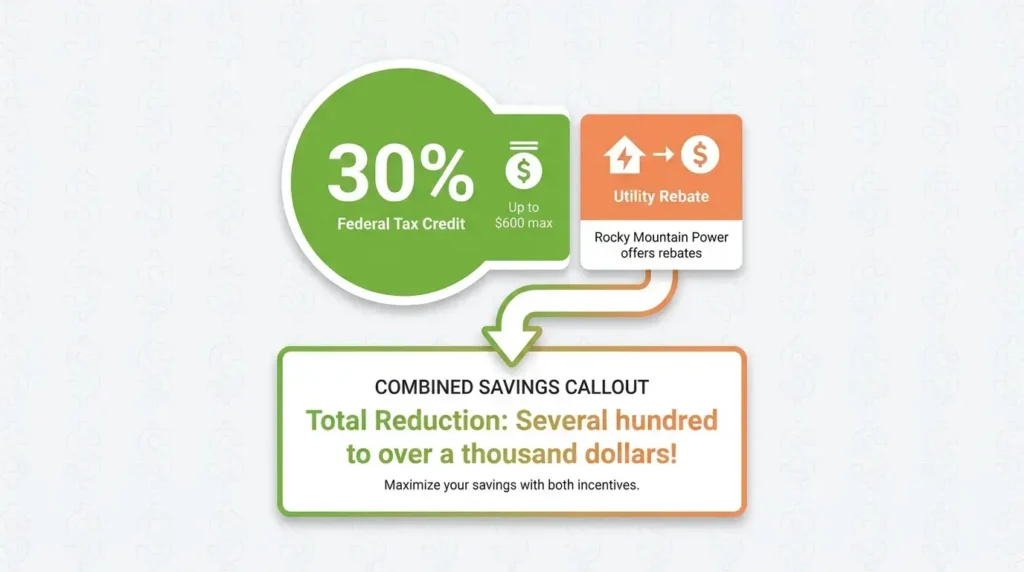
Before you rule out replacing your AC because of the price, take a look at the incentives. Depending on the system you choose, rebates and tax credits can substantially reduce your out-of-pocket cost.
Federal Tax Credits Under the Inflation Reduction Act
The Inflation Reduction Act savings include a federal tax credit of up to 30% on qualifying high-efficiency AC replacements, capped at $600. To qualify, the system must be ENERGY STAR certified and meet minimum SEER2 thresholds set by the IRS.
Not every new system qualifies for this incentive. The SEER2 rating on the equipment spec sheet determines eligibility, so confirm that detail before completing your purchase. The eligibility requirements are also subject to change, so always verify current thresholds with a tax professional or the ENERGY STAR replacement guidelines directly.
Utah Utility Rebates for High-Efficiency Upgrades
Rocky Mountain Power offers rebates for qualifying high-efficiency central AC installations in Utah. However, rebates may also come from utilities, HVAC manufacturers, or local programs depending on the equipment selected, and the rebate amount depends on the system’s SEER rating and installation type, so higher-efficiency equipment—sometimes paired with features like smart thermostats—typically earns a larger rebate.
When you combine a federal tax credit with a utility rebate, the combined reduction can reach several hundred to over a thousand dollars off the effective replacement cost. For many homeowners, those incentives can improve the cost comparison and make replacement a smart investment for the long term. Thus, a replacement that looked expensive at full price may land well within range once both incentives are applied.
Still Not Sure Whether to Repair or Replace Your AC?
The right call between repairing vs. replacing an air conditioner system comes down to the age and condition of the current system, its repair history, any safety concerns a technician has flagged, and the replacement cost.
At SameDay Heating & Air, we’ve been working through these decisions with Wasatch Front homeowners since 1957. Our experienced team brings decades of local experience to every diagnostic, and we can evaluate the entire system, not just a single failed part, before recommending AC replacement or repair. We will not leave until the answer is clear and the work is done right.
If you’re ready to stop guessing, schedule your air conditioner repair service consultation today.
Talk to Us for AC Repair or Replacement
Common Questions About AC Repair vs. Replacement
These quick answers can help you compare repair costs, system age, efficiency, and long-term value before making a decision.
Is It Better to Repair or Replace an AC Unit?
If your system is under 10 years old, has a good service history, and the repair passes both the $5,000 and 50% rules, repairing usually makes sense. Older systems with repeated failures and high repair costs often justify a new unit instead.
What Is the $5,000 Rule for AC?
Multiply your AC’s age by the estimated repair cost. If the total exceeds $5,000, replacement is generally the better financial decision because investing more in an aging system rarely provides good long-term value.
Is It Worth Fixing a 20-Year-Old AC Unit?
Usually not. A 20-year-old air conditioner is usually well past the time to replace it, and a new air conditioner will generally be more efficient and reliable while reducing the chances of more costly breakdowns even after repairs.
How Long Should a Central Air Conditioner Last?
Most central air conditioners last about 10 to 15 years before air conditioning replacement becomes more likely, though some last longer with proper maintenance. As systems age, efficiency declines, repairs become more frequent, and replacement often becomes the more economical long-term solution.
When Should I Get a Second Opinion on an AC Repair Quote?
Consider a second opinion if you’re facing an expensive repair, a compressor replacement, or a recommendation to replace a relatively new system.
Comparing diagnoses from several HVAC companies is especially helpful when a newer setup is being condemned or when replacing either the indoor furnace or the outdoor air conditioner separately is on the table, since swapping only the outdoor unit without a matched indoor component can reduce efficiency and reliability and you’re making the right financial decision.