When your furnace behaves differently, it is not always obvious whether you are dealing with a minor airflow issue or a genuine safety hazard. We know that uncertainty is stressful, especially when temperatures are falling.
The top signs your furnace needs professional attention include little or no warm air, uneven heating, weak airflow, short cycling, unusual noises, burning smells, a rotten-egg odor, a carbon monoxide alarm, a yellow burner flame, rising energy bills, and water around the unit.
Some common signs are easy to see, but other visible signs of furnace issues may be subtle, and not every symptom means your furnace is failing. This guide helps Wasatch Front homeowners decide what can wait for an appointment and what requires immediate action during Utah’s heating season. Local winter conditions are documented in the National Weather Service climate data.
Key Takeaways
- Treat safety warnings as emergencies: Leave immediately if you smell rotten eggs or a carbon monoxide alarm sounds. Call the appropriate emergency service from outside before arranging furnace repair.
- Check only the basics yourself: There are a few things you can check safely: confirm the thermostat setting, inspect the filter, and make sure visible vents are open. Leave gas, combustion, electrical, and internal component checks to a qualified technician.
- Look for patterns: One symptom can have several causes. Note when the issue starts, which rooms are affected, and whether it happens during every heating cycle so the technician can diagnose it efficiently.
- Repair does not automatically mean replacement: The furnace’s condition, repair history, safety test results, and expected performance matter more than age alone.
Know Which Furnace Signs Are Emergencies
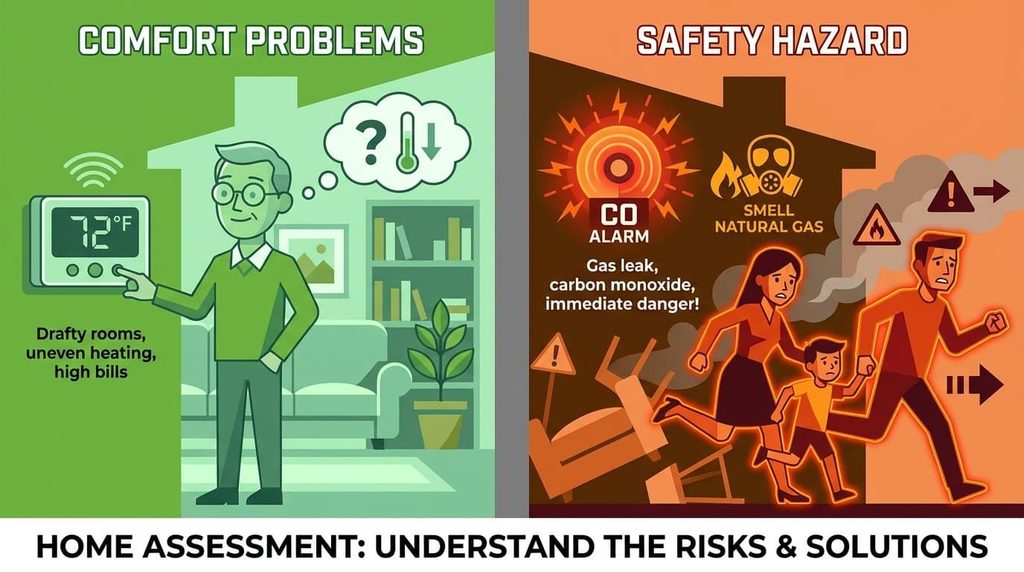
Before we walk through the full list, we want to make one distinction clear: comfort problems and potential safety hazards require different responses.
If you smell natural gas, leave immediately and call the gas company from a safe location. If a carbon monoxide alarm sounds or anyone develops symptoms of possible exposure, get everyone into fresh air and call 911.
We understand the instinct to find the source first, but do not remain inside to troubleshoot the furnace. Enbridge Gas gives Utah customers leave-first instructions, while the CDC calls carbon monoxide odorless and colorless. Exposure can cause sudden illness or death.
1. The Furnace Produces Little or No Warm Air
If your thermostat is set to heat but the house stays cold, the furnace is not completing its job.
Start with a few safe checks:
- Confirm the thermostat mode and temperature
- Replace a visibly dirty filter
- Make sure supply and return vents are open
If the furnace still blows cool air, shuts down, or cannot reach the setting, we recommend professional diagnosis. The cause may involve the ignition system, gas supply, controls, or heat exchanger rather than a simple thermostat mistake.
Along the Wasatch Front, a cold house becomes more urgent as temperatures drop, particularly for households with children, older adults, or plumbing vulnerable to freezing. Do not use an oven or outdoor fuel-burning appliance to heat the home; the CDC warns about indoor carbon monoxide.
This normally starts as a repair call because ignition, control, airflow, and fuel-supply faults may be correctable. Consider replacement only if testing finds a serious safety defect, the furnace is near the end of its service life, or the repair cost is difficult to justify against a new system.
2. Rooms Heat Unevenly
We often hear from homeowners who keep raising the thermostat because one room will not warm up.
If another room is already overheating, more heat is not the real solution. The pattern can point to blocked vents, duct leakage, thermostat problems, a dirty filter, or an improperly sized heating system. ENERGY STAR recommends evaluating uneven heating.
Check that furniture and rugs are not covering registers. If the same cold spots remain, an HVAC technician can test airflow and determine whether the problem sits in the furnace, ductwork, or controls.
This matters in Salt Lake Valley homes with finished basements, additions, or multiple levels because each area can place different demands on the duct system. Persistent uneven heating also encourages longer cycles and higher thermostat settings, so correcting the distribution problem can improve comfort without simply asking the furnace to run longer.
Uneven heating usually calls for repair or airflow correction, not immediate furnace replacement. Replacement becomes necessary when the furnace is improperly sized for the home, or when an aging unit can no longer deliver consistent heat even after the ductwork and controls are corrected.
3. Airflow From the Vents Is Weak
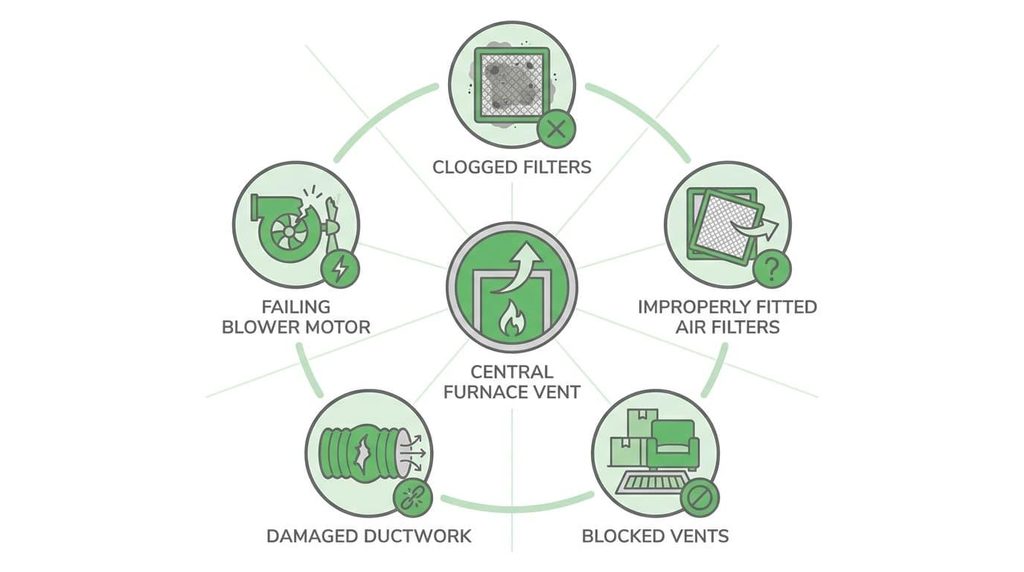
Hold your hand near a supply vent while the furnace is running. If the air feels warm but barely moves, the system may be producing heat but cannot push air effectively through the home. In our experience, clogged filters, improperly fitted air filters, blocked vents, damaged ductwork, and a failing blower motor can all cause the same symptom. Carrier links weak airflow to blower problems.
Check the filter and visible registers first. If airflow remains weak across multiple rooms, schedule service rather than raising the thermostat setting. A dirty filter can slow airflow and make the system work harder, as ENERGY STAR explains dirty-filter airflow restrictions. That restriction wastes energy and may contribute to early equipment failure. Excessive dust near Salt Lake City supply vents can be another visible sign that the filter or duct system needs attention.
Weak airflow is generally a repair issue involving the filter, blower motor, vents, or ductwork. A new furnace should enter the discussion only when a major component has failed, and the system’s age, condition, and repair history make another repair poor value.
4. The Furnace Starts and Stops Too Often
A furnace that starts, stops, and restarts in short intervals is short-cycling. We do not recommend ignoring this pattern just because the home still receives some heat. A dirty filter, a thermostat issue, an airflow restriction, an overheating safety control, or an oversized furnace can trigger it.
Repeated starts waste energy and place added demand on ignition and electrical components. Replace a dirty filter and confirm that the thermostat is not next to a supply vent or another heat source. If the same problem continues, have the system diagnosed before it progresses to a complete breakdown during a Wasatch Front cold spell.
Short cycling usually requires repair after the technician identifies the trigger. Replacement may be the better option when the furnace is substantially oversized, repeatedly overheats due to age-related deterioration, or continues to fail after prior repairs.
5. You Hear Banging, Squealing, Grinding, or Clicking
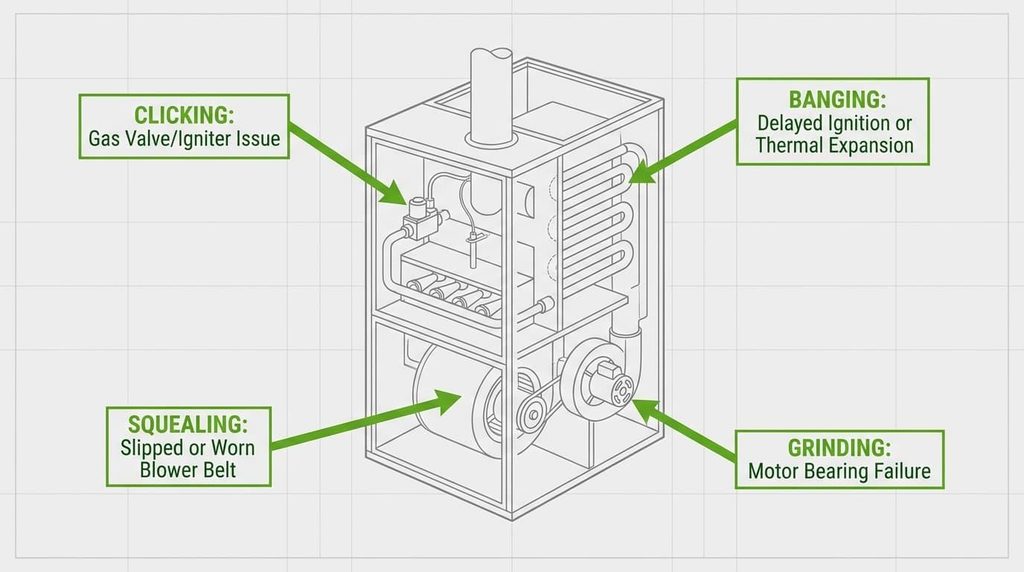
You know the normal hum of your own heating system. Strange noises coming from the furnace during every cycle deserve attention, especially during a long Wasatch Front heating season.
From a diagnostic standpoint, the type and timing of the sound matter: banging may accompany ignition or loose-component problems; squealing can involve belts or motor bearings; grinding may indicate mechanical wear; and repeated clicking can point to an ignition or electrical fault. Carrier explains common furnace noises.
Turn the furnace off if you hear a loud bang or grinding sound, see smoke, or smell an electrical odor. Otherwise, record when the sound begins and whether it changes when the blower is on. That information helps a technician narrow the diagnosis without treating every unusual noise as the same furnace problem.
Most unusual noises lead to a targeted repair, such as securing a loose part or servicing the blower assembly. Replacement is considered when inspection confirms extensive internal damage or a major failure on an older furnace that already needs frequent repairs.
6. Burning or Electrical Smells Persist
We know a first-start dusty smell can be unsettling when a Salt Lake City furnace comes on in autumn. A brief odor may be normal, but a persistent burning-plastic, hot-wire, or smoky smell is different. It may indicate an overheating motor, damaged wiring, or debris near a hot component.
Shut the system off if the odor is strong or if it is accompanied by smoke, sparks, repeated breaker trips, or unusual heat at the furnace cabinet. Call the fire department if you see a fire or smoke. Do not remove panels or touch electrical components; those checks belong to a qualified HVAC technician.
A persistent burning or electrical odor requires an urgent inspection for repair. Replacement is appropriate only if heat or electrical damage is extensive, the affected components cannot be repaired safely, or the overall condition of an older furnace makes repair unreasonable.
7. You Smell Rotten Eggs Near a Gas Furnace
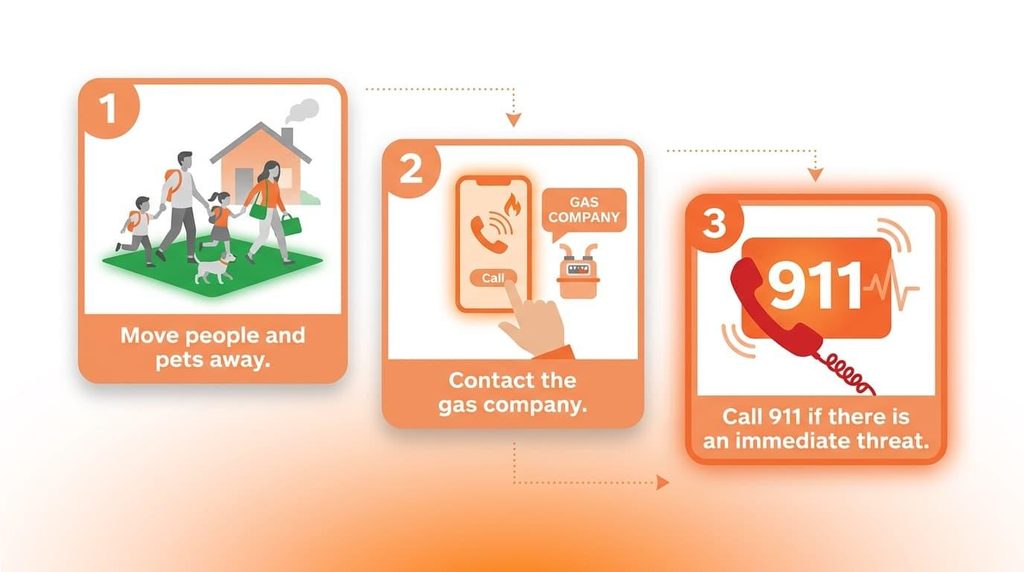
A rotten-egg odor is not a wait-and-see furnace symptom. A gas leak can be extremely dangerous, and the odor may mean natural gas is escaping. Utah’s gas utility adds an odorant so customers can detect a potential leak, and Enbridge Gas lists Utah emergency instructions, including calling 1-800-767-1689 from a safe distance.
Do not switch lights on or off, use a phone inside, start a vehicle nearby, search for the leak, or attempt to close the gas valve. Move people and pets away, then contact the gas company. Call 911 if there is an immediate threat. This warning sign is a gas emergency first, not a routine furnace repair appointment.
Leave first and let the gas company or emergency responders make the property safe. After the leak source is identified, a technician may repair a furnace connection or component. Replace the furnace only if the unit itself is damaged or cannot be returned to safe operation.
8. A Carbon Monoxide Alarm Sounds or Symptoms Appear
Because carbon monoxide has no smell, you cannot rely on your senses to detect it. In any Wasatch Front home, a CO alarm or possible exposure symptoms must be treated separately from a natural gas odor. The CDC lists common carbon monoxide symptoms. Several people feeling ill at the same time, especially without a fever, strengthens the concern.
If an alarm sounds or exposure is suspected, everyone should leave for fresh air and call 911 from outside. Do not re-enter until emergency responders say it is safe. A furnace, venting defect, or another fuel-burning appliance may be involved, but an HVAC diagnosis comes only after the immediate medical and fire-safety response.
Emergency response comes before any repair-or-replace decision. A venting, burner, or control problem may be repairable. A confirmed cracked heat exchanger or another defect that prevents safe operation may necessitate furnace replacement.
9. The Burner Flame Is Yellow or Soot Appears
When we evaluate a gas furnace, burner appearance is one clue, not a complete diagnosis. Burners in Salt Lake City homes normally produce a steady blue flame. On older furnaces with a standing pilot light, a yellow pilot light also deserves inspection. A persistent yellow or flickering burner flame, soot around the cabinet, or scorch marks can indicate improper combustion and require prompt professional inspection. These components are included in ENERGY STAR’s heating safety checklist.
Do not adjust burners or continue running the furnace to see whether the color changes. Shut the system off and arrange service. A technician can measure combustion and inspect the venting and heat exchanger instead of relying on flame color alone to diagnose a cracked heat exchanger or other safety issues.
Arrange a prompt combustion and safety inspection rather than choosing repair or replacement from flame color alone. Cleaning or burner adjustment may resolve the problem, but a confirmed cracked heat exchanger or an irreparable combustion defect generally indicates replacement.
SameDay can inspect combustion, venting, and furnace controls before recommending the appropriate repair.
Request A Furnace Safety Check
10. Heating Bills Rise Without a Clear Reason
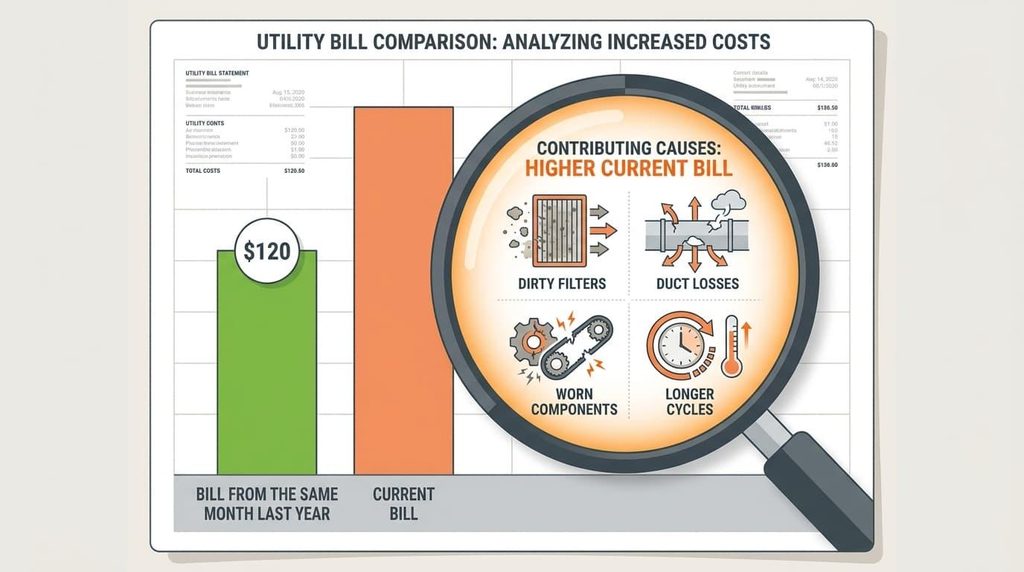
We understand why a higher heating bill can immediately make you suspect the furnace, but one expensive month does not automatically mean costly repairs.
It becomes one of the more useful warning signs when thermostat settings, household routines, utility rates, and weather are comparable. Dirty filters, worn components, duct losses, and longer cycles can make the heating system use more energy to keep the same house warm.
Compare the current bill with the bill from the same month last year and confirm whether the utility company changed its rates. Salt Lake City winters vary, so a month-to-month increase alone does not prove the furnace is failing. If usage rises alongside weak heat, longer cycles, short cycling, or frequent repairs, schedule a professional efficiency and safety evaluation.
Higher bills alone do not justify replacing the furnace. Start with diagnosis and repair if the cause is a dirty filter, a worn component, a control problem, or a duct loss. Replacement becomes more reasonable when an older furnace remains inefficient, performs poorly, and needs frequent or expensive repairs.
11. Water Pools Around the Furnace
Finding water near heating equipment is understandably concerning, but the source is not always the furnace itself. High-efficiency condensing furnaces used in Wasatch Front homes produce condensate that should be drained away. A blocked condensate line, a failed pump, a loose connection, or a damaged drain component can cause water to pool around the unit.
Turn the furnace off if water is reaching electrical parts or spreading across the floor. Do not assume the furnace caused every puddle; a humidifier, water heater, paired cooling coil, or nearby plumbing may be responsible. A technician can identify the source and prevent water damage or an unexpected shutdown.
Water around the unit usually leads to repairs to the drain, pump, connection, or nearby equipment. Furnace replacement is uncommon unless leaking has caused severe corrosion or electrical damage, or the aging system has other major failures that make repair impractical.
When Furnace Repair Becomes Furnace Replacement
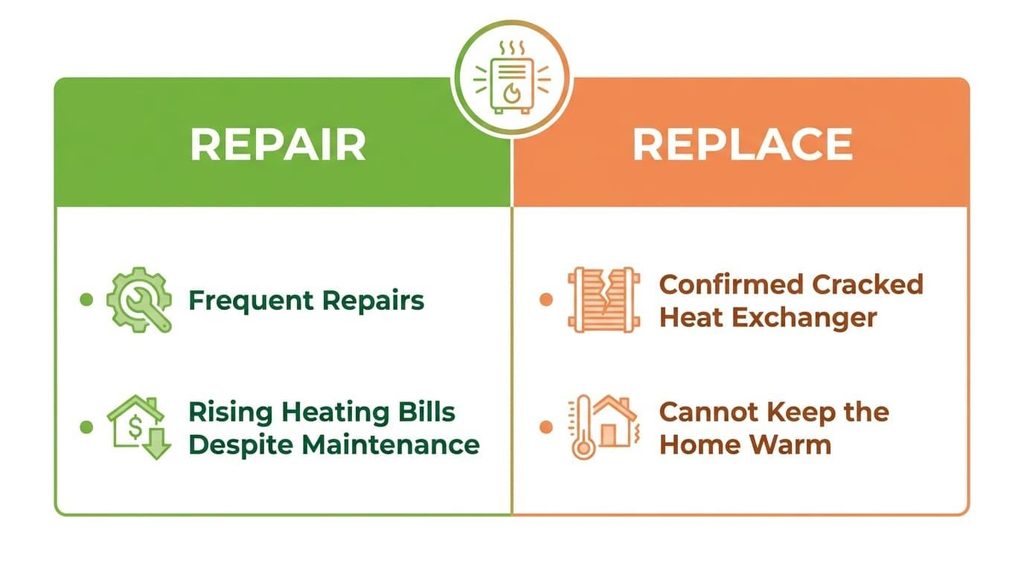
We do not treat one warning sign as an automatic reason to install a new furnace.
A proper recommendation starts with the system’s actual condition. Replacement becomes more reasonable when an aging system requires frequent repairs, has a confirmed cracked heat exchanger, cannot keep the home warm, or continues to produce rising heating bills despite maintenance. The same factors appear in ENERGY STAR’s furnace replacement guidance.
Age is context rather than a deadline. A furnace may be approaching the end of its useful life when there is a frequent need for service, declining performance, and repeated expensive repairs. Ask the HVAC contractor to compare the repair cost, availability of remaining parts, combustion results, and expected performance of replacement options. That gives Salt Lake City homeowners evidence to decide whether to repair or replace your furnace rather than relying on age alone.
Schedule Furnace Repair Before the Next Cold Spell
We cannot promise that regular maintenance will prevent every failure, but it gives us a chance to catch dirty burners, unsafe gas connections, airflow restrictions, and worn components before they cause significant damage or peak-season breakdowns. ENERGY STAR recommends annual heating checks and monthly filter inspections during heavy-use periods.
You should not have to guess whether a furnace symptom is inconvenient, damaging, or dangerous. Recognizing the signs you need furnace repair helps keep a minor airflow, ignition, or control problem from becoming a cold-house emergency. Address no heat, uneven temperatures, weak airflow, short cycling, loud noises, unexplained odors, safety alarms, flame changes, higher energy use, and water leaks according to their urgency so you can keep the house warm, stay comfortable all winter long, and keep your family safe.
SameDay Heating & Air, Plumbing, and Electrical provides same-day furnace repair and 24/7 emergency support throughout the greater Salt Lake City area. Certified technicians diagnose the cause before explaining repair or replacement options.
Schedule Your Annual Furnace Tune-Up
Furnace Repair FAQs
What Is the Most Urgent Sign of Furnace Trouble?
A rotten-egg odor or sounding carbon monoxide alarm requires the fastest response. Leave the house first. For a gas odor, call Utah’s gas emergency line from a safe location; for a CO alarm or symptoms, call 911. Do not wait inside for an HVAC contractor.
Can a Dirty Filter Make a Furnace Stop Working?
Yes. A severely clogged filter can restrict airflow, make the furnace overheat, and cause a safety control to stop the heating cycle. ENERGY STAR recommends monthly filter checks and changing it when dirty. If the furnace still short cycles after a filter change, it needs professional diagnosis.
How Often Should a Furnace Be Serviced?
Schedule annual maintenance before heating season. Annual service should include combustion, gas connection, heat exchanger, airflow, and control checks appropriate to the system.