In Utah, the best time to schedule an HVAC tune-up is spring (April to May) for your air conditioner and early fall (September to October) for your furnace, so your system is ready before peak heat or winter cold arrives.
Utah’s HVAC systems face two demanding seasons each year, from intense summer heat to freezing winter temperatures, and that makes timely maintenance important if you want efficient operation, fewer breakdowns, and dependable comfort.
For Utah homeowners, scheduling during these milder periods gives technicians more flexibility and leaves time to address problems before your furnace or air conditioner is working at full capacity.
Beyond timing, it helps to know what homeowners can safely check themselves, what warning signs mean you need professional service, what a tune-up actually includes, and how to plan maintenance before seasonal demand puts more strain on the system.
Key Takeaways
- Schedule furnace tune-ups in late summer or early fall before winter demand increases.
- Spring is a practical time to service your air conditioner before extreme heat arrives.
- Homeowners can safely replace filters, test thermostats, clear vents, and check carbon monoxide detectors.
- Gas, electrical, refrigerant, and internal furnace work should be handled by qualified professionals.
- Persistent odors, unusual noises, short cycling, weak airflow, or uneven heating warrant professional attention.
- A professional tune-up typically includes inspection, targeted cleaning, adjustments, and component condition checks.
- Scheduling maintenance early gives you more flexibility and time to address developing HVAC problems.
Early Fall (September to October) Is the Best Time for a Utah Furnace Tune-Up
Late summer through early fall is a practical window for a furnace tune-up and inspection service in Utah. Your heating system has been sitting mostly unused since spring, making a mild day a good time to check its condition before colder weather arrives and appointment demand increases.
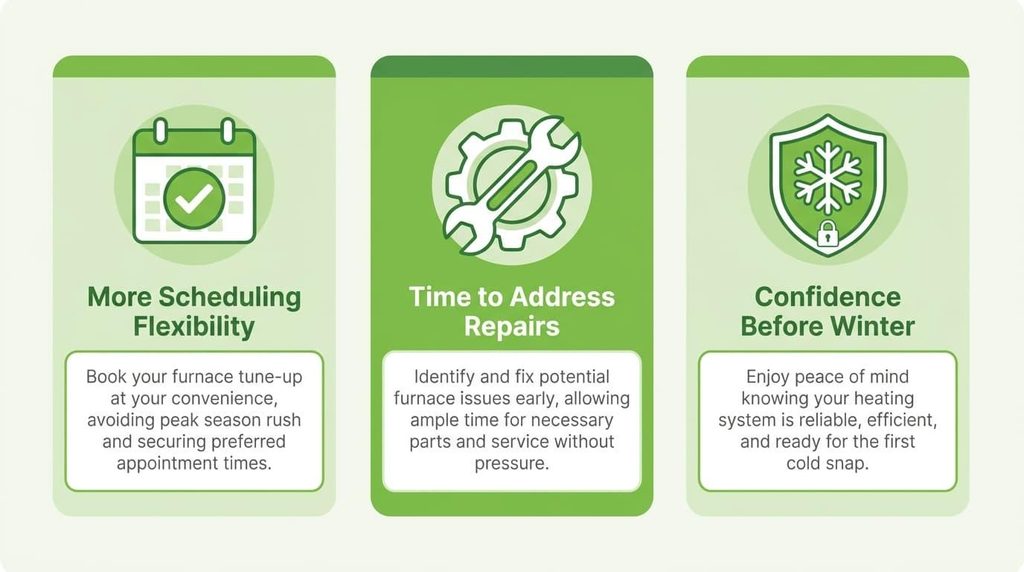
An early-season appointment gives you three practical advantages:
- More Scheduling Flexibility: You can choose an appointment that fits your schedule instead of waiting for an opening during the winter rush.
- Time to Address Repairs: If the technician finds a worn component or other issue, there’s time to order parts and complete the repair before temperatures drop.
- Confidence Before Winter: Testing the furnace ahead of the heating season confirms that it starts, runs, and produces heat properly.
Preparing your furnace before the cold weather settles is a practical choice. There’s no single date that every Utah homeowner must schedule maintenance, but booking early gives you and your technician more breathing room if something needs attention.
An early appointment is also a good opportunity to review HVAC tips for winter with your technician and make sure you’re prepared for the heating season. You can also discuss ways to protect your equipment during winter, including steps to protect your HVAC system against snow and ice, before the first major storm arrives.
Spring (April to May) Is the Best Time for a Utah AC Tune-Up
Spring is a practical window for air conditioner maintenance in Utah, and a spring AC tune up is a simple way to address issues before the valley reaches its first stretch of triple-digit heat. Your AC has spent the colder months mostly idle, so checking it during mild weather gives you a chance to catch problems early.
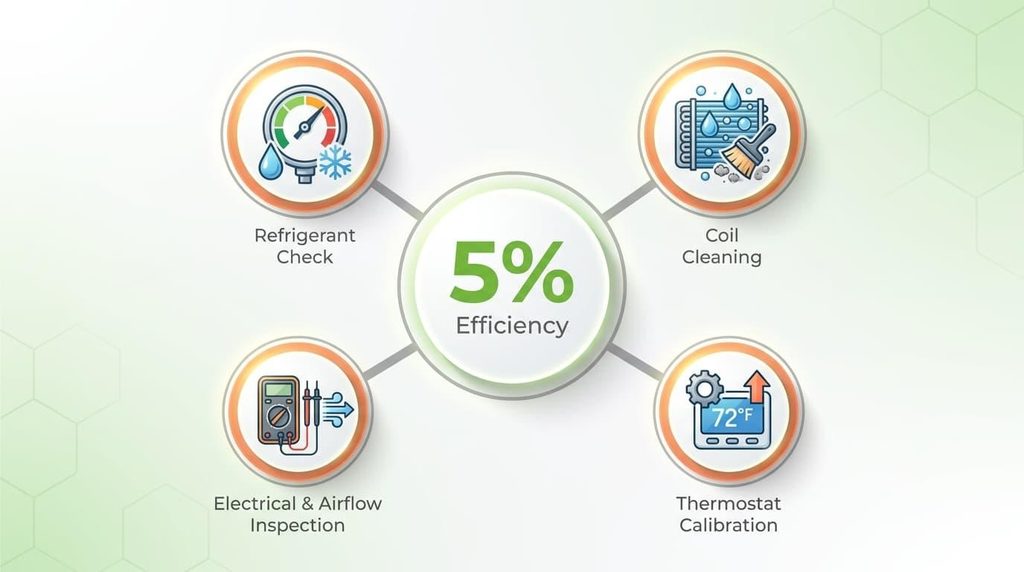
A cooling-season visit covers four checks you can’t make from inside the house:
- Refrigerant Check: A technician checks coolant levels and pressure, and investigates signs of a leak before recharging the system.
- Coil Cleaning: Dust and cottonwood debris on the condenser coil and indoor evaporator coil can restrict heat transfer.
- Thermostat Calibration: A thermostat that reads inaccurately can cause the system to run longer than necessary.
- Electrical and Airflow Inspection: Loose connections, worn contactors, and restricted airflow can be identified before the cooling season begins.
Scheduled maintenance may improve efficiency by roughly 5%, though results vary by system.
Clean coils and a proper refrigerant charge can support efficient operation, but actual energy performance varies by equipment, ductwork, insulation, and other factors. Utah’sresidential energy efficiency recommendations include cooling equipment maintenance as part of overall household energy use.
If your system predates the current SEER HVAC regulations in Utah, spring maintenance is also a good opportunity to discuss whether its efficiency still makes sense for your home.
Spring appointments can fill quickly once warmer weather arrives. Booking early gives you more scheduling flexibility and time to address any issues before you need your AC every day. Routine maintenance can also help extend the lifespan of heating and cooling equipment.
Safe Fall (September to November) HVAC Checks Utah Homeowners Can Handle
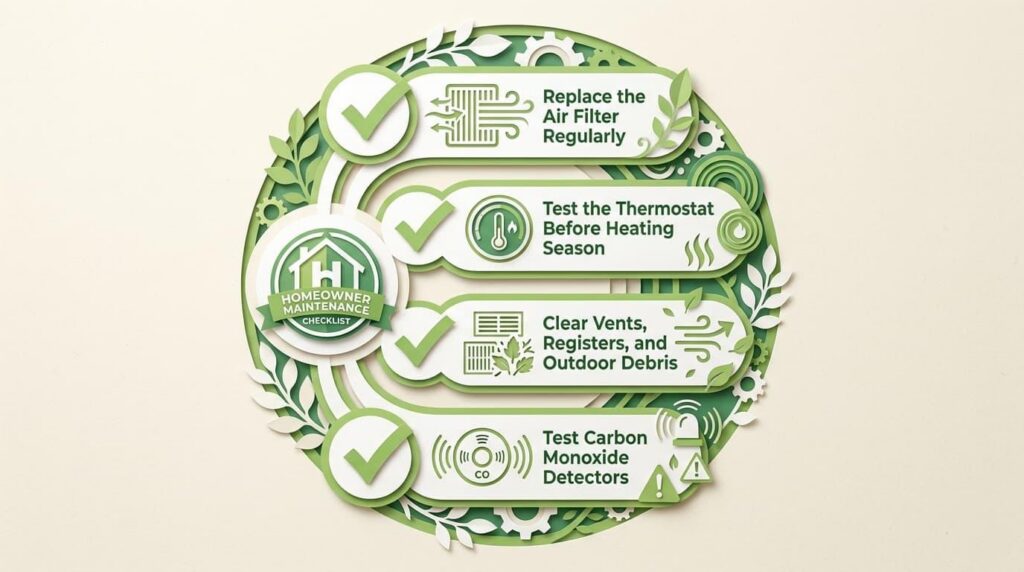
Most homeowners can handle a few basic HVAC checks before heating season without opening the furnace cabinet or handling gas, electrical, or refrigerant components. These simple checks can help identify airflow or thermostat issues early and make sure basic safety equipment is working properly.
For a broader breakdown of homeowner and technician responsibilities, see our HVAC maintenance checklist.
Replace the Air Filter Regularly
Air filter replacement is one of the simplest ways to support proper furnace airflow. Check the filter monthly during the heating season and decide on replacement based on its condition rather than relying only on a fixed calendar schedule. Dry conditions and construction dust can cause some filters to collect debris faster than others. A dirty filter can also raise energy bills by forcing the system to work harder.
Test the Thermostat Before Heating Season
Testing your thermostat takes only a few minutes. Switch it to Heat, raise the temperature a few degrees above the current room temperature, and listen for the furnace to start. You can also place a separate thermometer nearby to compare readings. If the temperatures differ noticeably, mention the mismatch to your technician so they can verify thermostat accuracy before the heating season gets underway.
Clear Vents, Registers, and Outdoor Debris
Dust, cottonwood, pet hair, leaves, and other debris can restrict airflow around your HVAC system. Check these areas before heating season:
- Vacuum supply and return registers and move furniture or rugs away from them.
- Remove leaves, cottonwood, and grass clippings from around the outdoor unit.
- Check basement floor vents for toys, clothing, or other debris.
Keeping these areas clear helps maintain airflow and can reduce uneven temperatures throughout the home.
Test Carbon Monoxide Detectors
Carbon monoxide safety should be part of every fall furnace checklist. Press the test button on each detector, replace old batteries, and check the expiration date on the device.
The CPSC’s carbon monoxide safety guidance recommends placing detectors on every level of the home and outside sleeping areas. If an alarm sounds, leave the home immediately and call for help from outside.
Furnace Work That Should Stay With a Professional
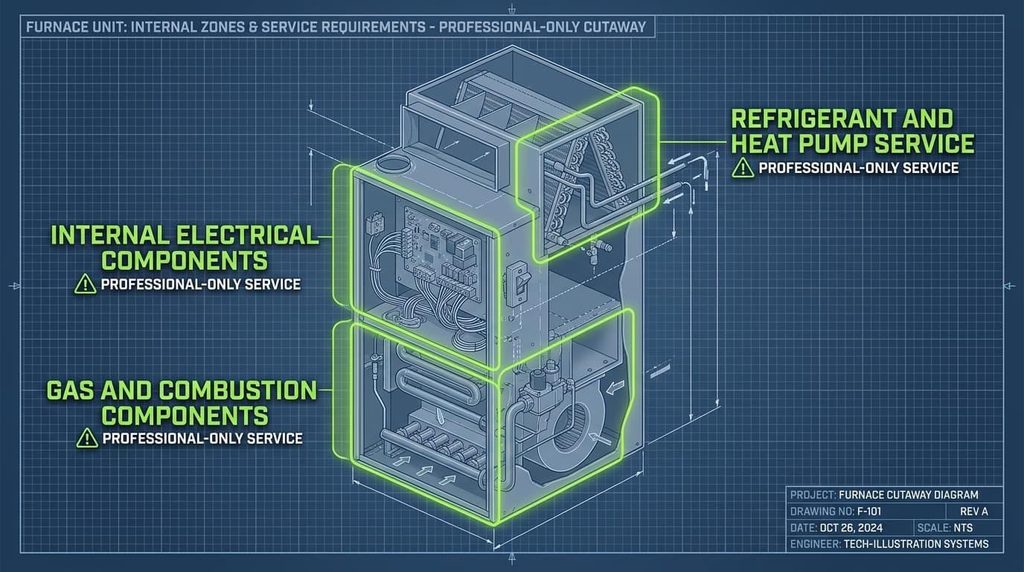
Some furnace tasks should not be part of a homeowner maintenance checklist. Gas and combustion components, internal electrical systems, and refrigerant circuits require specialized equipment, training, or certification.
Gas And Combustion Components
Gas and combustion work requires tools and training that go beyond routine homeowner maintenance. A technician can inspect burner condition, flame quality, draft, and heat exchanger integrity, while also checking gas connections for potential problems.
A cracked heat exchanger, for example, can be difficult to identify without the right equipment and experience. It’s also one of the more serious common furnace problems. If you smell gas in the home, leave immediately and contact the appropriate emergency service from outside.
Internal Electrical Components
Electrical work inside the furnace cabinet involves wiring, capacitors, control boards, blower motors, and safety switches. Even when the system is switched off, some components can retain a dangerous electrical charge, so these checks should be left to a qualified technician.
Refrigerant And Heat Pump Service
Refrigerant checks are also outside normal homeowner maintenance. Heat pump systems require specialized equipment for checking charge and identifying leaks, while refrigerant handling and recovery are subject to federal certification requirements.
Furnace Warning Signs That Need Professional Attention
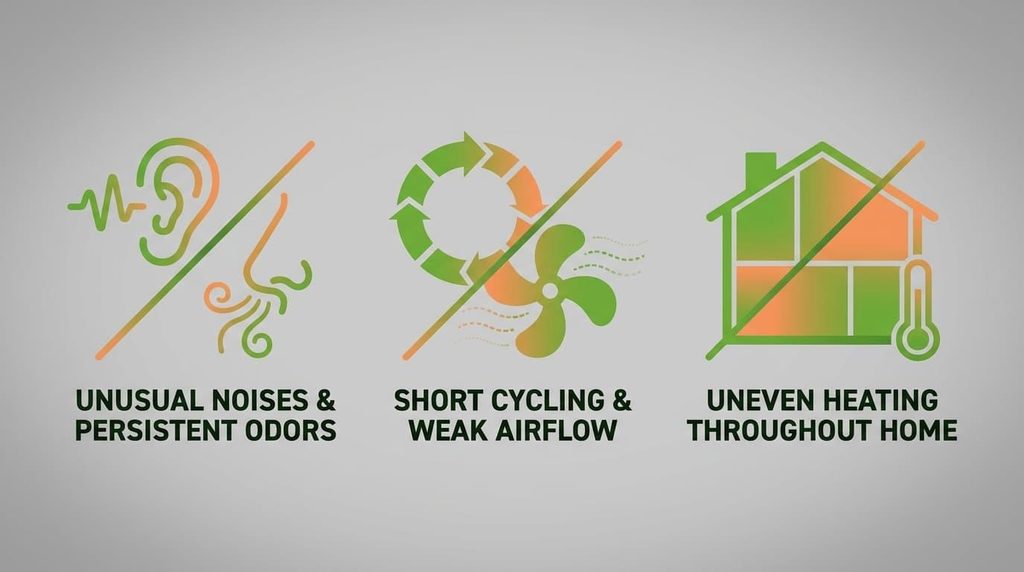
Not every furnace issue means an immediate breakdown, but changes in how your system sounds, cycles, or heats the home are worth paying attention to. Some problems are easy to overlook when the furnace still produces heat, yet they can point to airflow restrictions, worn components, or control issues that should be checked before the heating season gets demanding.
Unusual Noises and Persistent Odors
Rattling, banging, screeching, or intermittent noise, as well as a burning smell that continues beyond the first heating cycle, deserves attention.
A dusty smell during the first few uses in October can be normal as accumulated dust burns off, but metallic, sharp, or persistent sounds or odors can indicate a loose component, worn bearing, or another developing problem that can lead to a breakdown if ignored.
Short Cycling and Weak Airflow
A furnace that repeatedly starts, runs briefly, and shuts off is short cycling. If the registers also produce noticeably weak airflow, possible causes include a loaded filter, blocked return, failing blower motor, dirty flame sensor, or limit-switch issue.
- A clogged filter can restrict the airflow the furnace needs.
- A failing blower motor or capacitor can reduce air movement.
- A dirty flame sensor can interrupt the heating cycle.
- A limit switch can shut the furnace down when it detects unsafe conditions.
If these symptoms continue after replacing a dirty filter and clearing blocked vents, have a technician inspect the system rather than repeatedly restarting it.
Uneven Heating Throughout the Home
Rooms that consistently feel warmer or colder than others can point to a thermostat, ductwork, or airflow problem rather than a furnace failure. A technician can compare temperatures across different registers and inspect the system to determine where the imbalance starts.
If uneven heating has continued for more than one winter, it may also be worth reviewing the signs your HVAC system needs an upgrade before committing to another repair.
What a Professional Fall Furnace Tune-Up Includes
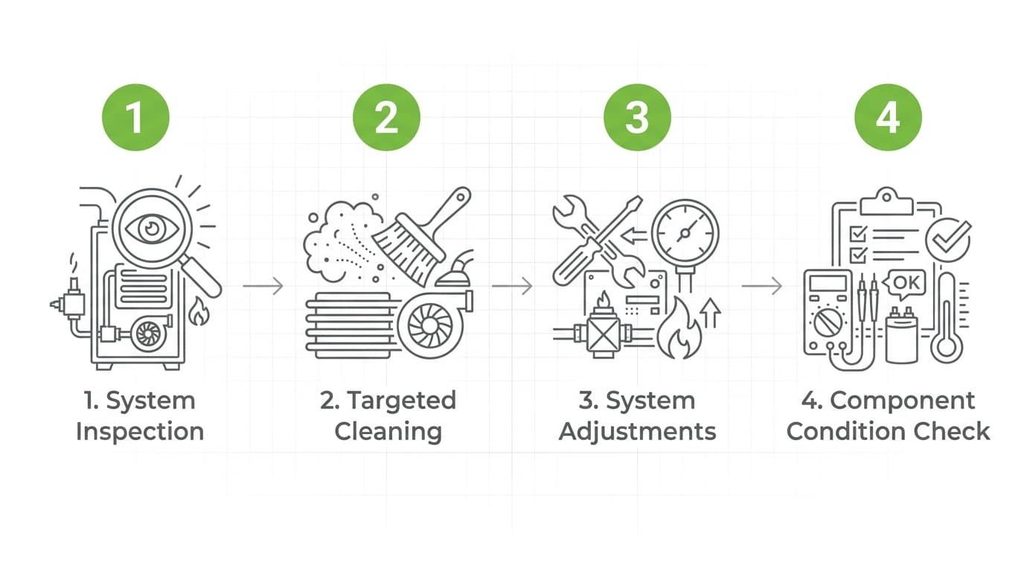
A fall furnace tune-up is not a fixed checklist that looks identical in every home. The technician inspects the system, cleans or adjusts components when needed, and checks that the furnace is operating safely and as intended.
A typical visit includes:
- System Inspection: The technician checks the burners, heat exchanger, blower, wiring, draft, and safety controls while the system is running and de-energized.
- Targeted Cleaning: Components such as burners, coils, and flame sensors are cleaned when buildup is affecting operation or airflow.
- System Adjustments: Thermostat settings, gas pressure, and airflow are checked and adjusted to the equipment’s specifications when necessary.
- Component Condition Check: The technician identifies worn or aging components and explains which ones are operating normally and which may need attention.
The practical benefit is finding developing problems while the weather is still mild. A weak component can be addressed through a planned repair instead of becoming a heating failure during the coldest part of winter.
Efficiency also deserves some context. Field measurements in HVAC cleaning energy impact research show that real-world efficiency improvements from cleaning can differ from laboratory results. If you’re looking at the financial side of maintenance, see our guide to the cost benefits of HVAC maintenance.
SameDay Green Team Furnace Tune-Ups
SameDay’s Green Team performs furnace tune-ups across the Wasatch Front. Our technicians are trained, NATE-certified, licensed, insured, background-checked, and drug-free, with flat-rate pricing provided before work begins. You approve the job before we start, so there’s no pressure to decide on the spot.
Prepare Your HVAC System for the Season
Late summer through early fall is a practical time to have your furnace checked, while spring is a good window for air conditioner maintenance.
Scheduling ahead gives you more flexibility and gives your technician time to address any issues before extreme weather arrives. In Utah, a standard HVAC tune-up commonly costs $89 to $189, while annual service plans often range from $199 to $299.
SameDay’s Green Team has served homeowners across the Wasatch Front since 1957, including those needing HVAC and plumbing services in Salt Lake City and Utah County. We can inspect your system, identify developing problems, and help you prepare for the season ahead.
Frequently Asked Questions About Scheduling an HVAC Tune-Up in Utah
Is fall maintenance necessary if my furnace seems to be working fine?
A furnace can have developing issues without obvious symptoms. A fall inspection gives you a chance to identify problems such as a weakening capacitor or dirty flame sensor before colder weather puts the system under greater demand.
What fall HVAC tasks can homeowners check themselves?
Homeowners can safely replace the air filter, test the thermostat, clear vents and registers, and test carbon monoxide detectors. These tasks avoid the gas, electrical, and refrigerant components that require professional attention.
How often should a Utah home get professional HVAC maintenance?
Many homeowners schedule furnace maintenance in early fall and air conditioner maintenance in spring, and many also book a spring AC tune up before heavy summer use, ideally before July. However, the right schedule depends on equipment age, usage, condition, and recommendations from your HVAC technician. Twice-yearly maintenance is especially helpful in Utah because dust and inversion conditions can affect equipment performance.
What are the warning signs that a furnace needs professional service?
Persistent unusual noises or odors, short cycling with weak airflow, and uneven heating can all justify a professional inspection. These symptoms do not confirm a specific failure, but they indicate that something has changed.
What does a professional furnace tune-up typically involve?
A professional tune-up generally includes inspecting burners, the heat exchanger, wiring, airflow, and safety controls, along with cleaning or adjustments when needed. On cooling equipment, it often also includes testing the compressor and checking key safety devices, depending on the system. The exact work depends on your furnace’s condition and equipment requirements. Skipping maintenance can lead to repair costs around $600.